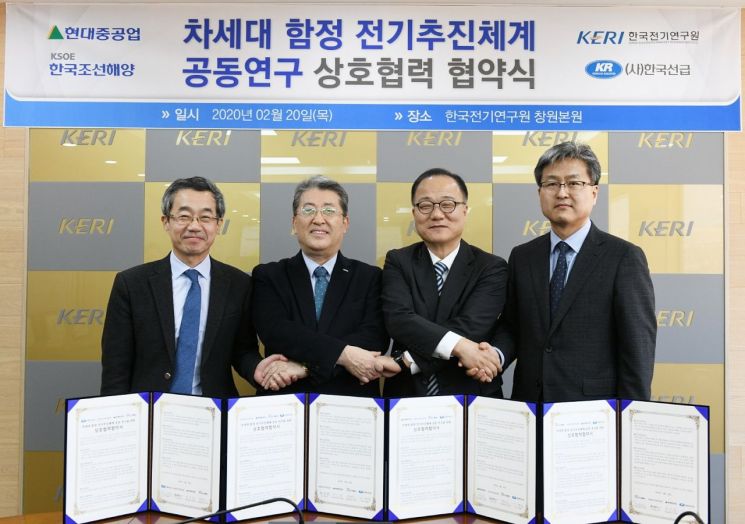
 Hyundai Heavy Industries Group recently signed a memorandum of understanding (MOU) for joint research on next-generation ship electric propulsion systems with the Korea Electrotechnology Research Institute and the Korean Register at the headquarters of the Korea Electrotechnology Research Institute located in Changwon, Gyeongnam.
[Asia Economy Reporter Hwang Yoon-joo] Hyundai Heavy Industries Group is leading the change in ship propulsion systems by developing next-generation electric propulsion technology for naval vessels.
Korea Shipbuilding & Offshore Engineering and Hyundai Heavy Industries recently signed a Memorandum of Understanding (MOU) for joint research on electric propulsion technology for next-generation advanced naval vessels at the headquarters of the Korea Electrotechnology Research Institute in Changwon, Gyeongnam, together with the Korea Electrotechnology Research Institute and Korean Register.
Under this agreement, the four parties plan to collaborate across various fields related to electric propulsion, including ▲research on the application of electric propulsion systems for next-generation naval vessels ▲construction of a Land-Based Test System (LBTS) for surface ships ▲mutual cooperation to launch a new domestic research association for ship electric propulsion systems.
Electric propulsion systems operate propulsion motors using electricity supplied from generators. They feature a simple engine configuration, excellent maintainability, and integrated power usage, making them advantageous for applying advanced weapons and systems. As a result, they are gaining attention as the propulsion system of future advanced naval vessels.
Moreover, electric propulsion systems can reduce carbon dioxide emissions and fuel costs compared to conventional mechanical propulsion and hybrid propulsion systems, while minimizing noise and vibration, thereby enhancing ship survivability and anti-submarine capabilities.
In particular, Hyundai Heavy Industries Group plans to utilize the results of the joint research for reviewing the application and system development of electric propulsion systems in Korea’s next-generation combat vessels, such as the Korean Aegis Destroyer (KDDX) and Large Transport Ship-II.
Nam Sang-hoon, Head of the Special Ship Business Division at Hyundai Heavy Industries, stated, "It is significant that we have proactively initiated research on electric propulsion technology, one of the leading propulsion systems for next-generation naval vessels. We will continue to develop related technologies to advance the capabilities of the Republic of Korea Navy’s ships."
Meanwhile, key officials attending the signing ceremony included Nam Sang-hoon, Head of the Special Ship Business Division at Hyundai Heavy Industries; Kwon Byung-hoon, Director of the Digital Technology Research Institute at Korea Shipbuilding & Offshore Engineering; Choi Kyu-ha, President of the Korea Electrotechnology Research Institute; and Ha Tae-beom, Head of the Research Division at Korean Register.
© The Asia Business Daily(www.asiae.co.kr). All rights reserved.
![Clutching a Stolen Dior Bag, Saying "I Hate Being Poor but Real"... The Grotesque Con of a "Human Knockoff" [Slate]](https://cwcontent.asiae.co.kr/asiaresize/183/2026021902243444107_1771435474.jpg)











