Game Advertising Self-Regulation Committee Actively Responds as a Private Organization
Announces Review Regulations and Other Measures
Points Out Limitations of Regulation on Chinese Game Companies
![[Exclusive] Embarrassing Chinese Game Faces Pressure Through Korea-Japan Cooperation](https://cphoto.asiae.co.kr/listimglink/1/2020030622113398992_1583500293.jpg)
[Asia Economy Reporter Buaeri] As controversies over provocative advertising marketing by Chinese game companies continue, the Game Advertising Self-Regulation Committee has begun preparing countermeasures through cooperation with Japan. This strategy is interpreted as an effort to pressure Chinese game companies based on cooperation between South Korea and Japan to achieve effective results. Previously, the Game Rating and Administration Committee requested YouTube to delete video advertisements for the Chinese game "Wangbi-ui Mat" (The Queen's Taste), which was embroiled in controversy over sexual objectification. (See page 13 of the 11th issue of this paper)
◆Pressuring China through Korea-Japan cooperation= Moon Cheolsu, chairman of the Game Advertising Self-Regulation Committee, said in a phone interview with Asia Economy on the 19th, "Japan is also facing difficulties due to China's provocative advertisements," adding, "We are in contact with Japanese organizations to enable international cooperation." Since restricting advertisements of Chinese game companies at the government level involves diplomatic burdens and other limitations, this means actively responding at the level of private organizations. Chairman Moon believes that since the provocative nature of Chinese games is also a social issue in Japan, the need for cooperation between the two sides is significant. Regarding specific countermeasures, joint announcements of positions by both countries or the formation of a consultative body to respond are being discussed. Chairman Moon emphasized the significance of Korea-Japan cooperation, saying, "China often stirs up trouble in the Asian region, so we need to cooperate with Japan."
The Game Advertising Self-Regulation Committee, launched in September last year, is also creating review regulations for game advertisements, aiming to announce them in March. Along with this, efforts are being made to remove provocative Chinese advertisements with the cooperation of platform operators such as YouTube. Chairman Moon explained, "Even if the committee creates advertising review regulations, the help of overseas platforms is important," adding, "It is difficult to forcibly block (provocative advertisements), but we are working to raise awareness of the harm caused by Chinese advertisements and persuade platforms to strive for healthy advertisement distribution."
Within the Game Advertising Self-Regulation Committee, there are also ideas at the conceptual level to damage the external image of Chinese game companies through media disclosure. A committee official said, "We are also considering regularly disclosing game advertisements that do not meet standards in Korea, similar to the public disclosure of non-compliance with 'probability-type item' self-regulation."
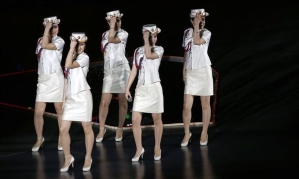
◆Limitations in regulating Chinese game companies= The reason the Game Advertising Self-Regulation Committee has taken such actions is that while controversies over 'sexual objectification' and 'misogyny' in advertisements by Chinese game companies are increasing, there are limitations in regulating them under current laws. "Wangbi-ui Mat" uses a Japanese AV actress as a model for promotion and explicitly exposes specific body parts with descriptions such as "rose flavor," "lemon flavor," "peach flavor," and "milk flavor" attached to female characters, causing controversy. Another Chinese game, "Wang-i Doeneun Ja" (The One Who Becomes King), had its advertisement blocked by the Game Rating and Administration Committee in 2018. This game aired an advertisement that gave the impression of buying and selling women wearing signs with their ages around their necks.
Under current laws, the punishment Chinese game companies can receive is limited to small fines, which has been criticized as a slap on the wrist. Choi Jaeyoon, a lawyer at Taeil Law Firm, said, "According to the Game Industry Act, the penalty for Chinese game companies is about a 10 million won fine, which is not a large amount," adding, "It is practically difficult to punish overseas operators under domestic law."
In the National Assembly, a bill to regulate provocative advertisements has also been proposed. The amendment to the Game Industry Act, proposed by Min Kyungwook of the Liberty Korea Party, stipulates that advertisements or promotional materials related to games must first be checked by the Game Rating and Administration Committee for harmfulness to youth, and advertisements or promotional materials confirmed to be harmful cannot be distributed or posted. However, it has been pending for two years in the relevant standing committee, the Culture, Sports and Tourism Committee.
© The Asia Business Daily(www.asiae.co.kr). All rights reserved.
![User Who Sold Erroneously Deposited Bitcoins to Repay Debt and Fund Entertainment... What Did the Supreme Court Decide in 2021? [Legal Issue Check]](https://cwcontent.asiae.co.kr/asiaresize/183/2026020910431234020_1770601391.png)