Ministry of Justice: "Weakening Qualcomm's Competitiveness Will Negatively Impact National Security"
FTC: "Qualcomm Forces Contracts Through Monopoly Power"
Likely to Escalate into Conflict Among Government Agencies
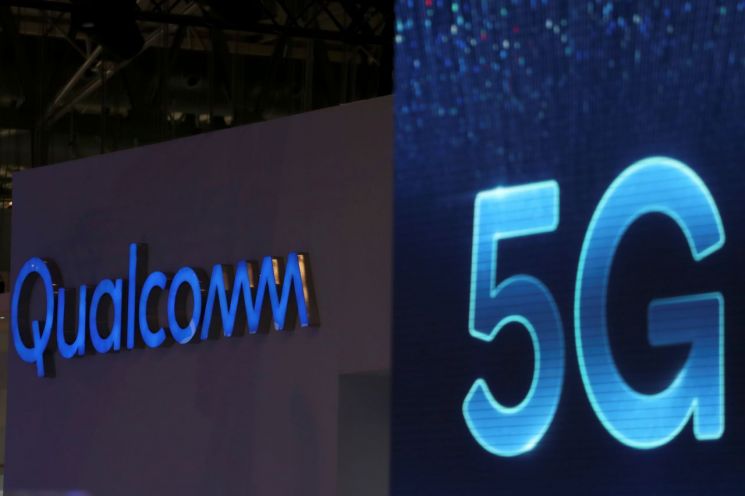
[Asia Economy Reporter Kwon Jaehee] Amid fierce US-China competition over technological supremacy surrounding 5G, American tech company Qualcomm has emerged as a political focal point. The US administration views Qualcomm as a key player capable of restraining Huawei, which has led the global 5G network. Recently, with the overlapping appeal trial against the US Federal Trade Commission (FTC), tensions appear to be escalating into conflicts among US government agencies.
According to The Wall Street Journal (WSJ), Qualcomm began its antitrust appeal trial against the FTC on the 13th, concerning allegations of abusing monopoly power. This was the first trial held after Qualcomm chose to appeal following its loss in the first trial. At the hearing held at the San Francisco Circuit Court of Appeals, Qualcomm’s attorney Thomas Goldstein maintained the company’s stance, stating, "Was there any problem in the competition process? No problem at all," denying any abuse of monopoly power to hinder competition.
On the other hand, the FTC focused its attack on how Qualcomm’s 'no license no chips' policy weakens competitors. The FTC claims that Qualcomm used its market-dominant position to force licensing agreements by refusing to sell modem chips unless a license contract was signed.
Interest in Qualcomm’s second trial has grown because the US Department of Justice (DOJ) has started to defend Qualcomm, which lost in the first trial. From the Trump administration’s perspective, Qualcomm is one of the few American companies capable of countering China’s Huawei in 5G technology. If Qualcomm loses again in the appeal, it could significantly damage US national security. Therefore, the DOJ referenced Judge Lucy Koh’s ruling in the first trial, arguing that it "threatens national security" and pointed out that "from the administration’s viewpoint, weakening Qualcomm’s competitiveness in 5G innovation will have a major impact on US national security." US Attorney General William Barr also expressed concern, stating, "Allowing Chinese companies (Huawei) to dominate the telecommunications infrastructure market could pose a serious risk to national security."
With support from the Department of Energy and the Department of Defense, the lawsuit between Qualcomm and the FTC is expanding into a proxy battle between the administration, led by the DOJ, and the FTC. The FTC’s persistent pursuit of Qualcomm is based solely on the interests of domestic consumers, which differs from the administration’s national security perspective on Qualcomm.
As the US administration supports Qualcomm in the appeal, the second trial is expected to be fiercely contested. Especially as the UK, a long-time US ally, has adopted Huawei, and Germany is reportedly considering introducing Huawei equipment, the US administration is intensifying its comprehensive pressure campaign to boycott Huawei.
The US’s efforts to prevent Chinese technology theft are comprehensive. On the 13th, the New York federal prosecutors added 16 new charges against Huawei, and the US government is working to prevent a Chinese national from being appointed as head of the World Intellectual Property Organization (WIPO), fearing that such an appointment could lead to WIPO regulations being altered in favor of China.
Meanwhile, according to market research firm Dell'Oro, Huawei held the top position in the 5G telecommunications equipment market with a 31.2% share as of the third quarter of last year.
© The Asia Business Daily(www.asiae.co.kr). All rights reserved.

![User Who Sold Erroneously Deposited Bitcoins to Repay Debt and Fund Entertainment... What Did the Supreme Court Decide in 2021? [Legal Issue Check]](https://cwcontent.asiae.co.kr/asiaresize/183/2026020910431234020_1770601391.png)