[Asia Economy Reporter Choi Dae-yeol] With the emergence of the 29th and 30th patients, signs of community spread of the novel coronavirus infection (COVID-19) have become clear, prompting health authorities to reorganize their response system. This measure is taken with the possibility of an outbreak at any time, similar to seasonal influenza (flu), in mind. While the main approach so far has been to block inflow from overseas and trace and isolate contacts of existing patients, going forward, frontline medical institutions such as clinics and hospitals will also be able to detect patients early, reflecting the same background.
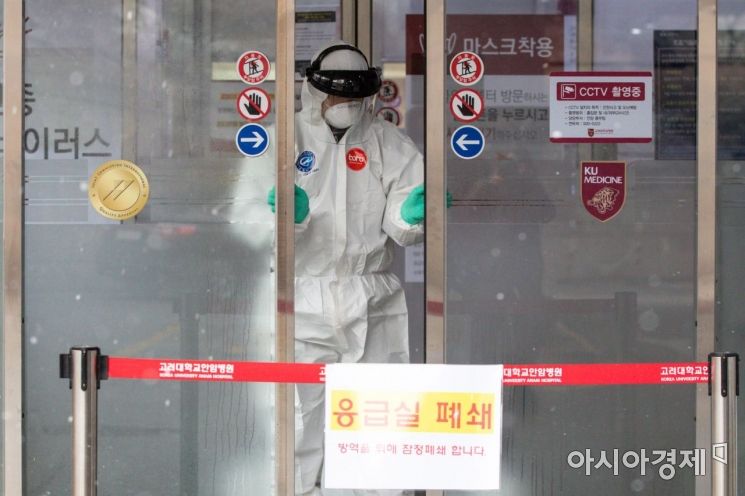 On the 16th, the Regional Medical Emergency Center at Korea University Hospital in Seongbuk-gu, Seoul, where the 29th COVID-19 patient visited, is conducting disinfection after implementing access control measures. Photo by Jinhyung Kang aymsdream@
'Unclear Transmission Routes' Increase Risk of Community Infection
According to the Central Disease Control Headquarters on the 17th, after the 29th patient was confirmed in the morning, his wife was also diagnosed positive late in the afternoon and isolated. The 30th patient is a 68-year-old Korean woman who was under self-quarantine after her husband was confirmed positive and then underwent testing. She is currently hospitalized and receiving treatment at Seoul National University Hospital, which has a nationally designated inpatient treatment bed, along with her husband.
The 29th patient had no history of overseas travel and no contact with existing patients. When he visited Korea University Anam Hospital on the morning of the 15th, he was treated in the emergency room for chest pain, suspected of myocardial infarction, rather than fever or cough, which are early symptoms of COVID-19. During treatment, a computed tomography (CT) scan showed signs of pneumonia, leading to a COVID-19 test and a confirmed diagnosis.
After the 28th patient was confirmed on the 10th, two more patients were added within six days, bringing the total number of confirmed domestic cases to 30. The problem is that cases with unidentified infection routes have appeared, similar to Japan and Singapore. The previous 28 patients were exposed to infection sources overseas, including Wuhan, China?the initial outbreak site?as well as Japan, Thailand, and Singapore, or contracted the virus through contact with existing patients. All were detected within the health authorities’ surveillance network. Until now, efforts have focused on strengthening quarantine upon entry to block overseas inflow, but now attention must also be paid to widespread community transmission.
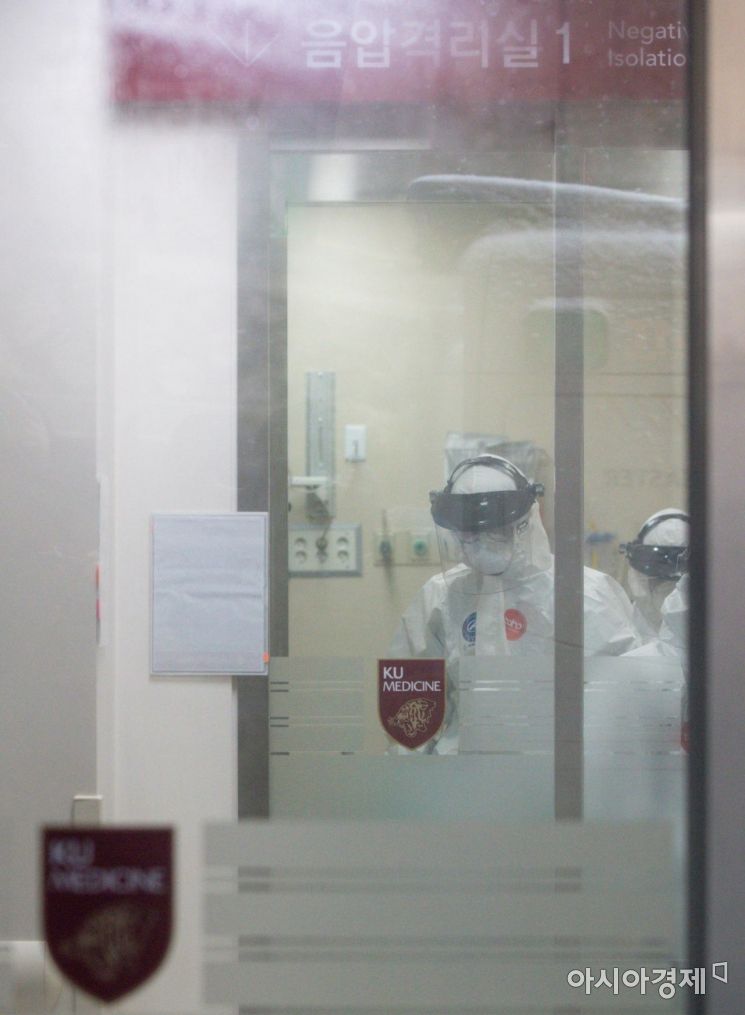 On the 16th, after closing the emergency room of Korea University Hospital in Seongbuk-gu, Seoul, where the 29th COVID-19 patient had visited, disinfection measures were initiated. Photo by Jinhyung Kang aymsdream@
COVID-19 Could Become a Seasonal Epidemic Like the Flu
The COVID-19 Central Clinical Task Force (TF), composed of primary care physicians and hospitals treating existing patients, pointed out, "Although it is a disease with low severity, asymptomatic infections that go unnoticed and the practical difficulty of blocking community transmission, as seen in Japan, must be taken into account." The U.S. Centers for Disease Control and Prevention recently warned regarding the increasing number of domestic cases that "person-to-person transmission is likely to continue."
Health authorities have judged that there is a high possibility of additional COVID-19 patients with unclear transmission routes, like the 29th patient, and have begun establishing a continuous surveillance system. Even if patients have not traveled overseas, those with pneumonia of unknown cause will be able to receive COVID-19 diagnostic tests. Additionally, COVID-19 testing will be added to the severe respiratory infectious disease surveillance system targeting certain hospitals and the influenza laboratory sentinel surveillance system targeting clinics.
For influenza, the degree of outbreak is monitored weekly by tracking the number of cases, and the same management approach will be applied. To this end, the number of specimen collection and testing institutions for diagnostic tests will be increased to build the capacity to test up to 10,000 people per day by the end of this month. Epidemiological investigation personnel at the local government level, who conduct on-site quarantine work and trace patient movements when cases occur, will also be significantly increased.
© The Asia Business Daily(www.asiae.co.kr). All rights reserved.


















