The 29th Patient Has No Overseas Travel History and No Contact with Existing Patients
Authorities "Discussing Expansion of Virus Testing for Existing Pneumonia Patients"
Highly Contagious COVID-19 Considered for Inclusion in Existing Virus Surveillance System
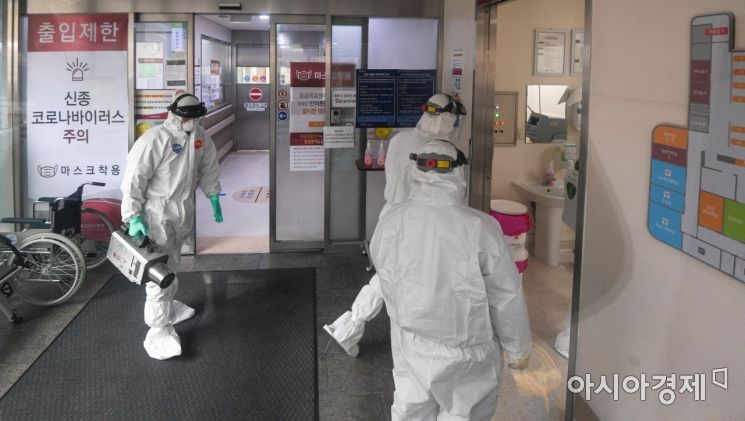 On the 16th, after closing the emergency room of Korea University Hospital in Seongbuk-gu, Seoul, where the 29th COVID-19 patient had visited, disinfection measures were initiated. Photo by Jinhyung Kang aymsdream@
[Asia Economy Reporter Choi Daeyeol] On the 16th, the 29th confirmed case of the novel coronavirus infection (COVID-19) was reported to have no history of overseas travel nor contact with existing patients, raising concerns that community transmission could be spreading domestically. Health authorities are considering expanding testing for all pneumonia patients and including COVID-19 in the existing respiratory virus surveillance system, similar to influenza monitoring.
According to the Central Disease Control Headquarters on the 16th, the 29th patient (82-year-old male) stated during the investigation after confirmation that he had not traveled abroad. He was also not on the contact list of the 28 domestic COVID-19 patients confirmed since February 20. While previous cases like the 18th patient (21-year-old female) or the 28th patient (31-year-old female) had unclear infection routes but allowed for rough inference, this is the first time a patient’s infection route cannot be clearly identified.
Director Jung Eun-kyung said at a briefing, "It is difficult to definitively state the infection route such as contact with contacts of existing patients," adding, "An epidemiological investigation is ongoing to determine any epidemiological links and to identify the source and route of infection."
Among countries other than China, some cases with unclear infection routes have already been identified in Singapore and Japan. Director Jung revealed that the authorities had anticipated such cases occurring domestically and have been preparing accordingly. He stated, "We are considering strengthening surveillance for community infections, expanding selective testing for patients without epidemiological links, and proactively isolating them to enhance overall response measures."
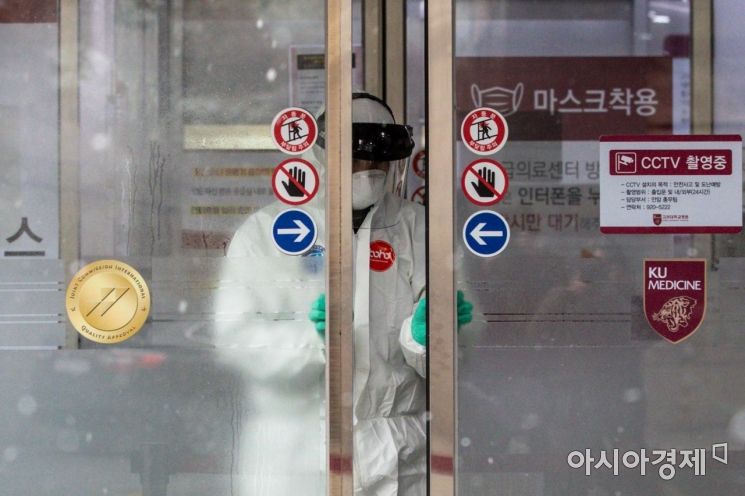 On the 16th, the Regional Medical Emergency Center at Korea University Hospital in Seongbuk-gu, Seoul, where COVID-19 patient number 29 had visited, is conducting disinfection after implementing access control measures. Photo by Jinhyung Kang aymsdream@
Cases with Unclear Infection Routes Increasing in Singapore, Japan, etc.
Existing Screening Clinics and Virus Surveillance Systems to be Revised
Testing for COVID-19 in pneumonia patients of unknown cause is also being considered against this backdrop. Health authorities are reviewing options including conducting comprehensive investigations together with expert groups such as the Infectious Diseases Society and the Respiratory Society. Currently, testing is possible for those who have traveled to China and exhibit fever or respiratory symptoms or based on a physician’s opinion, but the plan is to test all pneumonia patients. Director Jung said, "We will discuss with relevant experts and the Central Accident Response Headquarters (comprising the Ministry of Health and Welfare and other related agencies), and once specific details are finalized, we will provide explanations."
Among medical staff treating patients, there are also concerns that COVID-19 can be transmitted even in the early stages when symptoms are minimal, necessitating a response to community spread. The Central Clinical Task Force, composed of attending physicians and hospital officials treating COVID-19 patients, concluded in a recent meeting that "asymptomatic infections that go unnoticed and community transmission, as seen in Japan, may realistically become difficult to contain," and "U.S. health authorities have also expressed concerns that COVID-19 may not be completely eradicated and could continue to circulate in the community like influenza and other viral diseases."
Director Jung said, "Until now, management focused on overseas travel history, but if community transmission expands, it will be necessary to screen many respiratory patients," adding, "We believe a response system that proactively isolates and strengthens testing for hospitalized or severe respiratory patients is needed."
He further explained, "To prevent hospital infections, all medical institutions including large hospitals, small and medium hospitals, and nursing hospitals must strengthen infection control, and we are discussing related education and support measures with the Central Accident Response Headquarters," adding, "There are limitations to collecting specimens and testing all mild patients, so roles need to be divided among private medical institutions and public health centers, and overall roles must be adjusted."
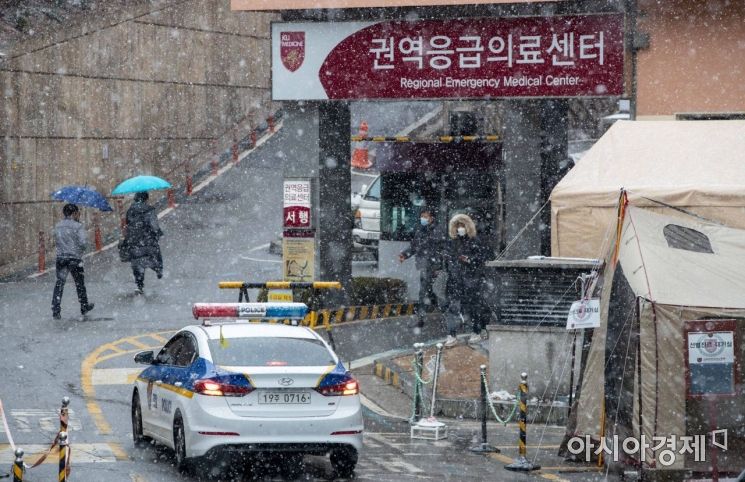 On the 16th, after closing the emergency room of Korea University Hospital in Seongbuk-gu, Seoul, where the 29th COVID-19 patient had visited, disinfection measures were initiated. Photo by Jinhyung Kang aymsdream@
© The Asia Business Daily(www.asiae.co.kr). All rights reserved.
![User Who Sold Erroneously Deposited Bitcoins to Repay Debt and Fund Entertainment... What Did the Supreme Court Decide in 2021? [Legal Issue Check]](https://cwcontent.asiae.co.kr/asiaresize/183/2026020910431234020_1770601391.png)


















