High-Intensity Business Restructuring Including Sale of Non-Core Business Units Expected This Year
Successful Evaluation of Workforce Restructuring and Organizational Efficiency Efforts Since Inauguration
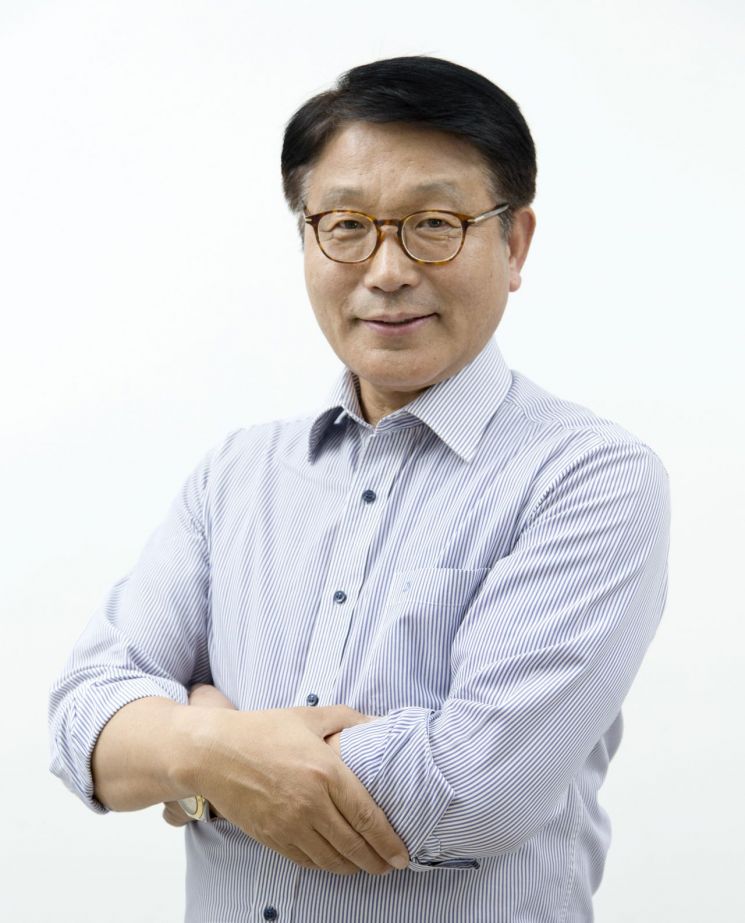
[Asia Economy Reporter Park So-yeon] Amid the prolonged challenges in the steel industry, Andong-il, President of Hyundai Steel, marks his first anniversary since taking office.
Over the past year, President Ahn has focused on streamlining business structures, and in his second year in office, he is expected to accelerate the sale of non-core business units and undertake more intensive restructuring.
According to the steel industry on the 12th, President Ahn will celebrate his first anniversary on the 15th. Ahn, who hails from POSCO, drew attention as a reform appointment by Chung Eui-sun, Executive Vice Chairman of Hyundai Motor Group.
Carrying high expectations, President Ahn concentrated on workforce restructuring and organizational efficiency during his first year. He played the role of a "surgeon" tightening Hyundai Steel’s business structure, which had been loosely managed around businesses closely related to Hyundai Motor Group’s finished car division.
At the end of last year, Hyundai Steel implemented an unprecedented voluntary retirement program in the manufacturing industry, offering three years’ worth of salary, performance bonuses, consolation payments, and 10 million KRW in education expenses per child. This was a self-help measure to overcome profitability deterioration and the overall downturn in the steel industry. About 100 employees retired through this program.
Additionally, the company undertook a major organizational overhaul and established task forces (TFs) in each division to strengthen business competitiveness. This was part of an effort to unify the scattered organizations across regional business sites into a company-wide operational process.
Examples include the "Steel Business Competitiveness Enhancement TF" for strengthening automotive-related business capabilities and quality improvement, and the "Global Strategy TF" for reinforcing overseas networks. Furthermore, the existing Process Innovation (PI) TF under the Management Support Headquarters was repositioned directly under the president, allowing President Ahn to oversee the entire business progress at a glance.
He also leveraged his experience at POSCO. A representative case is the promotion of management efficiency through the establishment of a smart factory benchmarked from POSCO. During his tenure at POSCO, Ahn introduced smart factory processes to improve productivity and cost competitiveness. Hyundai Steel plans to apply artificial intelligence (AI) and the Internet of Things (IoT) to all processes by 2025.
In his second year, President Ahn is expected to focus on tasks such as the sale of non-core business sectors, continuing from last year. He will also emphasize business aspects like steel price normalization and performance recovery. Hyundai Steel recorded quarterly operating losses last year for the first time since joining Hyundai Motor Group in 2001.
To recover performance, President Ahn has set a tangible goal of selling 1 million tons of global steel sheets this year. This volume corresponds to 20% of Hyundai Steel’s total automotive steel sheet sales. The number of developed steel grades is also planned to increase significantly from 216 last year to 250 this year. To improve profitability, sheet metal prices were raised by about 20,000 KRW per ton last month, and this month, bar steel prices will be increased by 30,000 to 50,000 KRW per ton.
This year, a full-scale business restructuring will also begin. Business units excluding core areas related to finished cars are being sequentially considered for sale. The plan is to focus capabilities as a specialized steel mill for automotive materials to proactively respond to future demand. While concentrating on expanding material and component certifications for major global automakers, internal reviews are also underway to consolidate overseas facilities, such as merging the Beijing and Tianjin steel service centers in China into Tianjin, and adjusting workforce and production efficiency.
A Hyundai Steel official stated, "We are reviewing business structure optimization plans to strengthen corporate health, and based on a growth strategy centered on the core business of automotive steel sheets, we plan to reorganize the product portfolio."
© The Asia Business Daily(www.asiae.co.kr). All rights reserved.
![User Who Sold Erroneously Deposited Bitcoins to Repay Debt and Fund Entertainment... What Did the Supreme Court Decide in 2021? [Legal Issue Check]](https://cwcontent.asiae.co.kr/asiaresize/183/2026020910431234020_1770601391.png)















