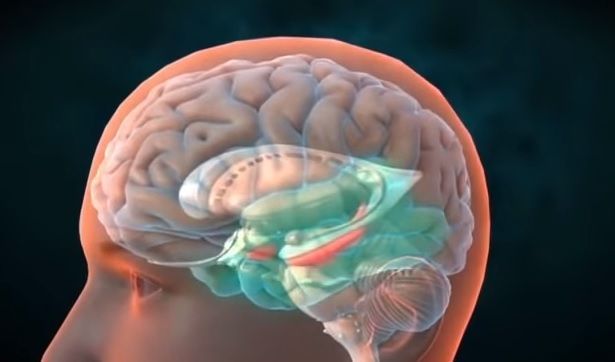
[Asia Economy Reporter Junho Hwang] A domestic research team has developed a sensor capable of real-time monitoring of seizures caused by epilepsy, one of the three major brain disorders. The team expects that this technology will provide a foundation for understanding the pathological mechanisms of neurological diseases such as Alzheimer's and Parkinson's disease.
On the 10th, the Institute for Basic Science announced that a research team led by Hyuntaek Hwan, head of the Nanoparticle Research Group (Distinguished Professor at Seoul National University), developed a highly sensitive nanosensor that simultaneously measures potassium ion (K+) concentration changes in multiple brain regions.
Measuring Potassium Ion Concentration to Predict 'Seizures' in Advance
The research team stated that by measuring potassium ion concentration in real time, it is possible to detect the onset of epilepsy in advance. Epilepsy occurs due to irregular excitation of brain nerve cells. Brain excitation relaxes by releasing potassium ions outward. However, if potassium ions fail to exit during this process, the excitation state of brain nerve cells is maintained, causing seizures and convulsions, symptoms of epilepsy.
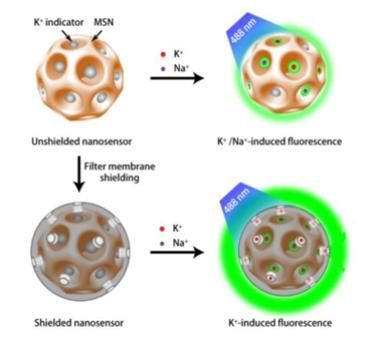
The research group developed a highly sensitive nanosensor that selectively measures only changes in potassium ion concentration. They embedded a dye that emits green fluorescence when bound to potassium ions inside silica nanoparticles with nanometer-sized pores. These silica nanoparticles have a structure similar to potassium channels in cell membranes, allowing only potassium ions to selectively pass through. The researchers enabled the measurement of potassium ion concentration based on the intensity of fluorescence emitted when potassium ions bind to the dye.
The team injected the sensor into the hippocampus, amygdala, and cerebral cortex of experimental mice. Then, they applied electrical stimulation to the hippocampus to intentionally induce seizures and measured potassium ion concentration. The results showed that during partial seizures, the concentration sequentially increased from the stimulated hippocampus to the amygdala and cerebral cortex. In contrast, during generalized seizures, potassium ion concentrations in all three regions increased simultaneously, and the duration was longer.
Used for Elucidating Pathological Mechanisms of Brain Disorders Such as Epilepsy, Alzheimer's Disease, and Parkinson's Disease
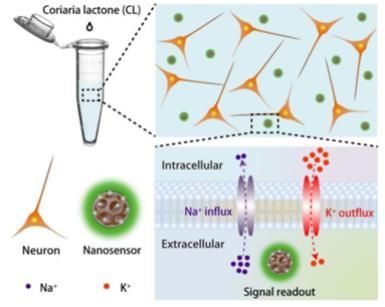
The significance of the research lies in the development of technology that can measure only potassium ion concentration. Currently, active research is underway to detect changes in potassium ion concentration for accurate diagnosis of brain diseases caused by nerve cell activation, including epilepsy. However, it has been difficult to selectively measure changes in potassium ion concentration among various ions such as potassium, sodium (Na), and calcium (Ca) that move through ion channels in the cell membrane during nerve cell excitation.
The research team stated, "This technology allows real-time measurement of brain nerve cell activity in freely moving states and simultaneous monitoring of concentration changes in multiple brain regions, contributing to a precise understanding of seizure onset mechanisms." Hyuntaek Hwan, the group leader, said, "It is expected to be used for elucidating pathological mechanisms and diagnosis of brain diseases such as epilepsy and Alzheimer's disease in the future."
The research results were published in Nature Nanotechnology at 1 a.m. on the 11th (Korean time).
© The Asia Business Daily(www.asiae.co.kr). All rights reserved.



















