Due to the impact of the new coronavirus, last month's increase was limited to 0.4%... No 'January Effect' for KOSDAQ
[Asia Economy Reporter Minji Lee] The phenomenon of stock indices rising in the first month of the new year, known as the 'January effect,' was not prominent in the KOSDAQ market this year. Over the past decade, the KOSDAQ index's rate of increase has outperformed the KOSPI, but this year, the rise appears to have been limited due to the novel coronavirus infection (Wuhan pneumonia).
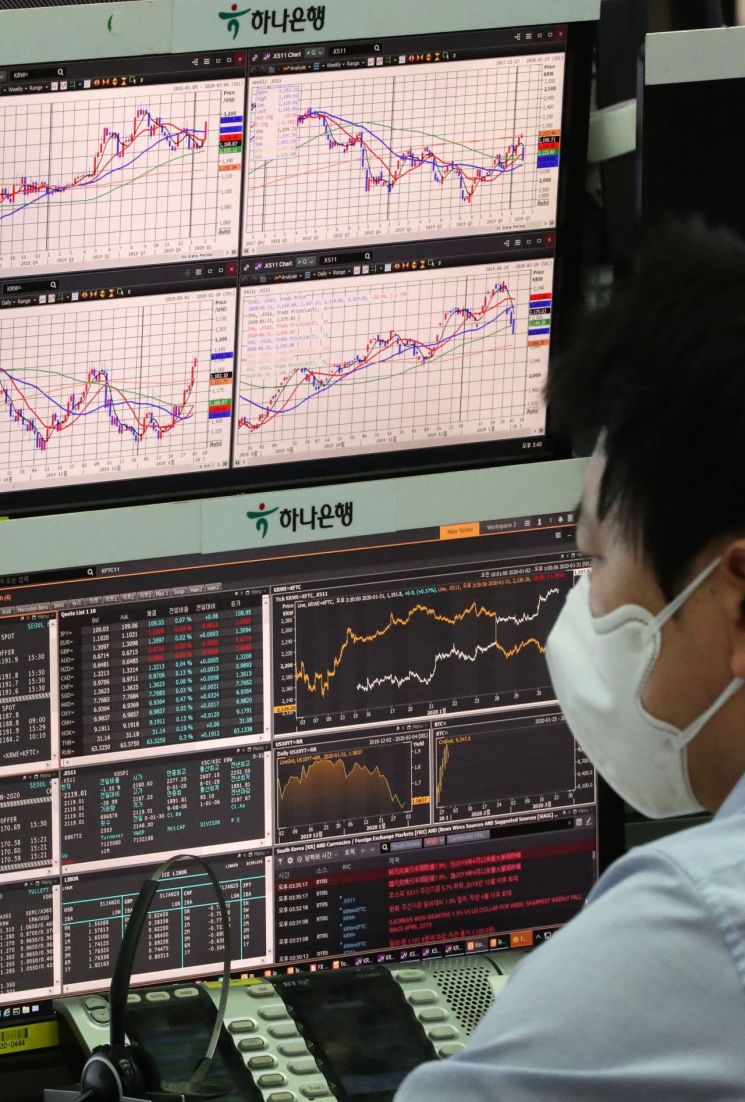
According to the Korea Exchange on the 10th, the KOSPI rose by 0.6%, from 2197.67 last month to 2211.95. During the same period, the KOSDAQ index increased by only 0.4%, from 669.83 to 672.63.
From 2010 to last year, the KOSDAQ index outperformed the KOSPI's rate of increase seven times in total, enjoying the January effect. In January 2018, the KOSDAQ index rose 14.42% over the month, significantly surpassing the KOSPI's 4% increase. Last year, the KOSPI and KOSDAQ indices rose by 8% and 6%, respectively. Investors who bought KOSDAQ stocks aiming for short-term gains this year did not see much profit.
The January effect refers to the phenomenon where stock market returns in the first month of each year tend to be higher. Both the KOSPI and KOSDAQ indices typically see increased gains, but the KOSDAQ index usually has a higher rate of increase. The reason the KOSDAQ index's rise stands out is that the issue of personal capital gains tax related to major shareholder equity requirements was resolved, attracting investors back to the KOSDAQ market. Additionally, buying funds that had flowed into large-cap stocks for dividends moved into mid- and small-cap stocks with greater price movements after the ex-dividend date.
This year, both the KOSPI and KOSDAQ indices saw limited gains due to the impact of the novel coronavirus, and thus the January effect was not realized. According to the Korea Exchange, foreign investors and institutional investors net sold stocks worth 545.4 billion KRW and 1.1277 trillion KRW, respectively, in the KOSDAQ market during January. Meanwhile, individual investors alone purchased stocks worth 1.789 trillion KRW during the same period.
Labor Gil, a researcher at NH Investment & Securities, said, "It should be considered that the January effect did not appear in the domestic stock market this year," adding, "Although the market was not greatly shaken by geopolitical variables such as the US and Iran at the beginning of the year, the stock market sharply declined after the impact of the novel coronavirus." He added, "Currently, the domestic stock market is showing a rebound trend due to the coronavirus impact, but since the US stock market is falling, additional factors are needed to drive further stock price increases."
Stock market experts warned against investing with the expectation of the January effect in the KOSDAQ market. They advised focusing investments on stocks expected to improve earnings. Dongchan Yeom, a researcher at Ebest Investment & Securities, said, "The probability of an increase in cumulative returns in January and February is the lowest during the year, so blindly trusting the January effect is risky," and added, "Attention should be paid to the semiconductor IT sector, which is expected to see a turnaround in earnings this year."
© The Asia Business Daily(www.asiae.co.kr). All rights reserved.
![Clutching a Stolen Dior Bag, Saying "I Hate Being Poor but Real"... The Grotesque Con of a "Human Knockoff" [Slate]](https://cwcontent.asiae.co.kr/asiaresize/183/2026021902243444107_1771435474.jpg)
















