Temporary Export Ban on Masks Possible During Level 1 Infectious Disease Outbreaks
Provisions for Contact and Suspected Case Management, and Workplace Loss Compensation Also Established
[Asia Economy Reporter Wondara] The Democratic Party of Korea has proposed a bill that prohibits the export of masks and hand sanitizers during outbreaks of first-class infectious diseases such as the novel coronavirus infection (Wuhan pneumonia). In addition, if not only infected individuals but also 'contacts' and 'suspects (people who have visited areas where contacts or contaminated persons have stayed or passed through)' fail to comply with quarantine measures, they may be fined up to 3 million won.
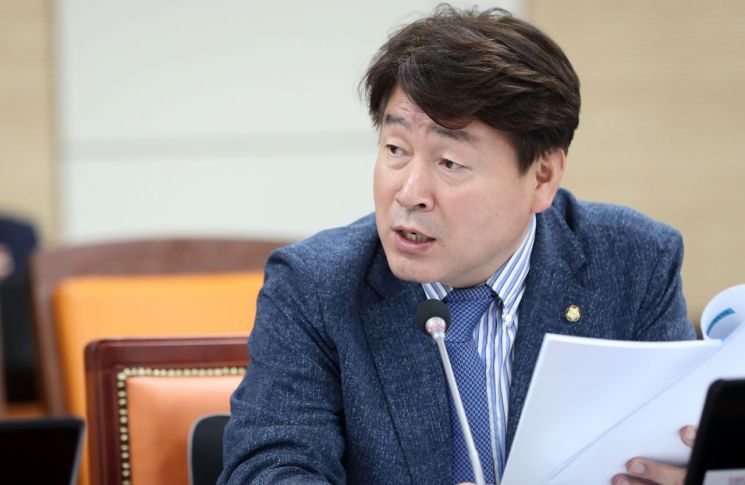
On the 7th, Democratic Party lawmaker Ki Dong-min, a member of the National Assembly's Health and Welfare Committee, announced that he had jointly proposed an amendment to the Infectious Disease Prevention Act based on these contents.
According to the amendment, the Minister of Health and Welfare will be able to temporarily ban the export of pharmaceuticals such as masks, hand sanitizers, and thermal cameras when urgent prevention, quarantine, and treatment of first-class infectious diseases are necessary. Recently, the mass export of masks has become controversial amid domestic shortages. Under current law, exports of 300 or more items (worth 2 million won) are classified as export declarations and must be reported to the government, but this is the first time a law has been established to restrict this.
A new provision for contacts and suspects, which did not exist in the current law, has also been added. The government has recently been disclosing the movement paths of contacts who met infected individuals to prevent the spread of the novel coronavirus. According to the law, if contacts and suspects refuse quarantine measures, they will be fined up to 3 million won under the "compulsory measures related to infectious diseases" clause, which previously applied only to infected patients. If contacts or suspects refuse investigation, the relevant official will accompany them to an infectious disease control agency for investigation and examination. In addition, if necessary, the local police station will be involved to ensure suspects undergo investigation and examination.
The number of epidemiological investigators will also be significantly increased. Previously, there had to be at least 30 epidemiological investigators who were public officials under the Ministry of Health and Welfare, but the amendment expands this number to 100. Furthermore, from now on, heads of cities, counties, and districts must hire at least one epidemiological investigator as a public official.
Since the novel coronavirus situation is expected to cause damage to exporters, small and medium-sized enterprises, and self-employed individuals, the amendment also allows workplaces, corporations, organizations, and nursing institutions to receive compensation. The office of lawmaker Ki Dong-min explained, "We have established grounds for compensation for institutions other than medical institutions to enable voluntary participation from the private sector and the full mobilization of social capabilities." He added, "This is also the legal basis for supporting the 3.4 trillion won contingency fund decided by the ruling party, government, and Blue House on the 4th to be allocated to the economic and industrial sectors."
This bill is expected to pass through the National Assembly's Health and Welfare Committee and the Legislation and Judiciary Committee and may be enacted as early as the February extraordinary session. Lawmaker Ki said, "The current law lacks institutional devices and grounds to support rapid responses to infectious diseases," adding, "This Infectious Disease Prevention Act proposal is additional legislation for swift and efficient infectious disease response following the Quarantine Act."
© The Asia Business Daily(www.asiae.co.kr). All rights reserved.