Notice of Cultural Heritage Registration for Busan Na Hospital Monument
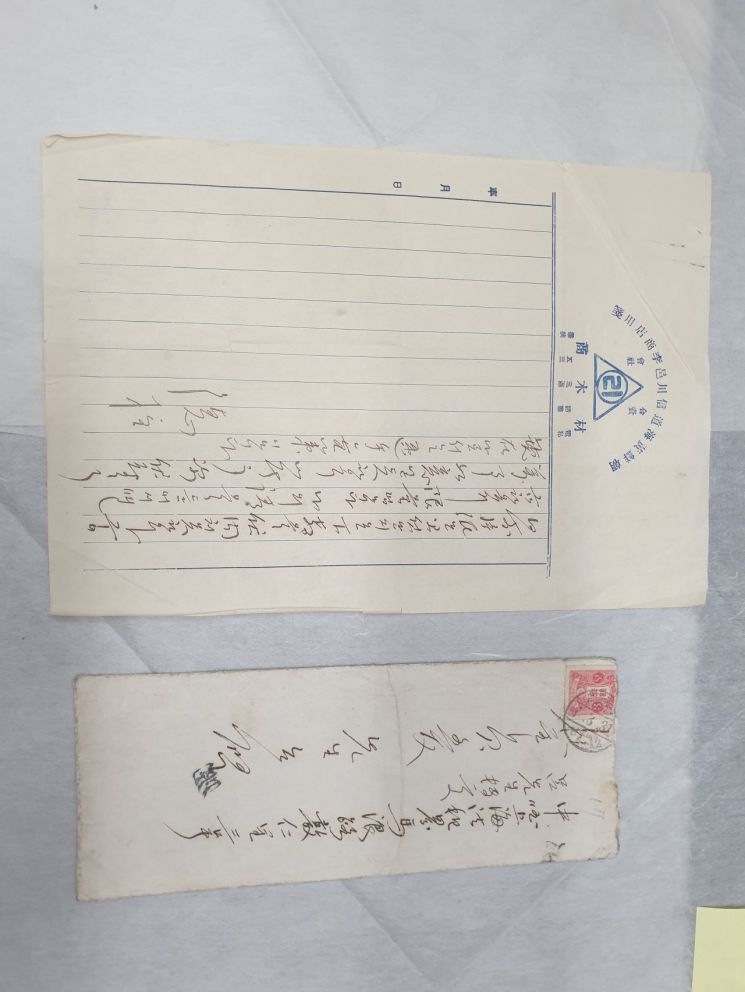
Letters and envelopes of Korean Patriotic Corps members, secretly organized by Kim Gu to assassinate Japanese leaders, have been designated as cultural heritage. On the 5th, the Cultural Heritage Administration announced the registration of five anti-Japanese heritage items, including the ‘Letters and Envelopes of Korean Patriotic Corps Members,’ and announced the preliminary registration of the ‘Busan Leprosy Hospital Monument.’ In addition to the ‘Letters and Envelopes of Korean Patriotic Corps Members,’ the registered cultural heritages include ‘Resumes and Envelopes of Korean Patriotic Corps Members,’ ‘Delegation Letter of Lee Gyo-jae and Shanghai Telegram of the Provisional Government of the Republic of Korea,’ ‘Condolence Letter for Moon Young-bak and Special Letter for Moon Won-man of the Provisional Government of the Republic of Korea,’ and ‘Special Letters, Condolences, Letters, and Small Envelopes of the Provisional Government of the Republic of Korea.’
The ‘Letters and Envelopes of Korean Patriotic Corps Members (National Registered Cultural Heritage No. 773-1)’ are letters and envelopes of members of the Korean Patriotic Corps secretly organized by Kim Gu in the early 1930s. It consists of seven items, including ‘Letter and Envelope from Kim Young-gu to Kwak Yoon’ and ‘Letter and Envelope from Lee Deok-ju to Kim Jeong-ae.’ It confirms the communication system with Kim Gu, who was staying in Shanghai, the preparation status of the planned action, and the activities of the Korean Patriotic Corps. Given their significant role in the history of the independence movement, these items are evaluated as having high historical value.
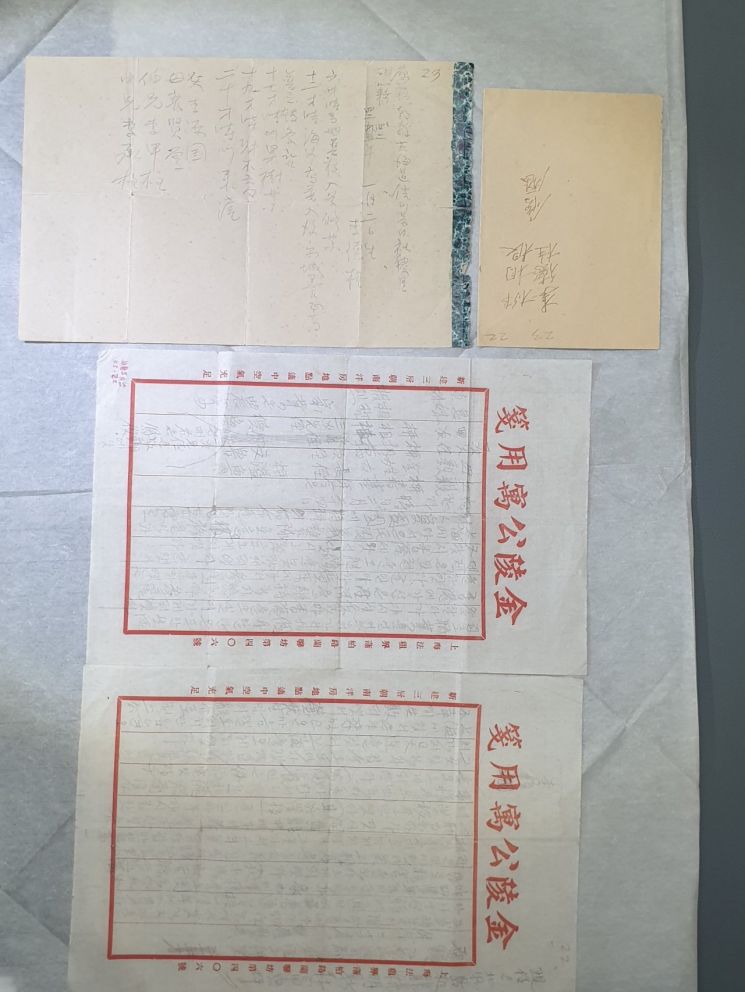
The ‘Resumes and Envelopes of Korean Patriotic Corps Members (National Registered Cultural Heritage No. 773-2)’ refer to six items including the resumes and envelopes of Korean Patriotic Corps members Yoo Sang-geun, Lee Deok-ju, and Yoo Jin-sik. The resumes contain detailed personal information such as handwritten birthplace, name, education, and career. As original documents revealing the identities of young independence activists who took part in anti-Japanese armed struggles and were arrested, they hold important value for research on the history of the independence movement.
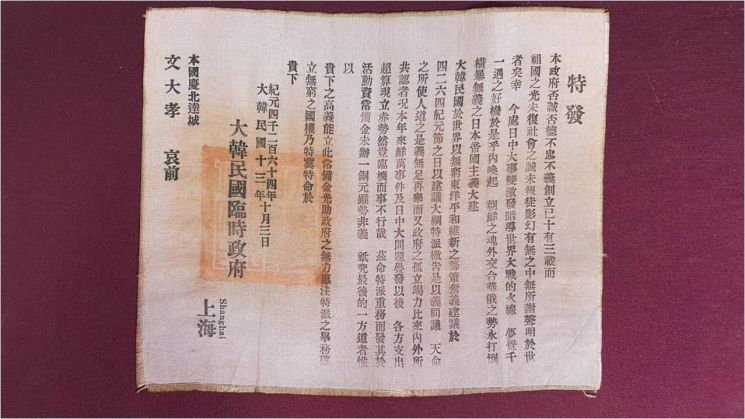
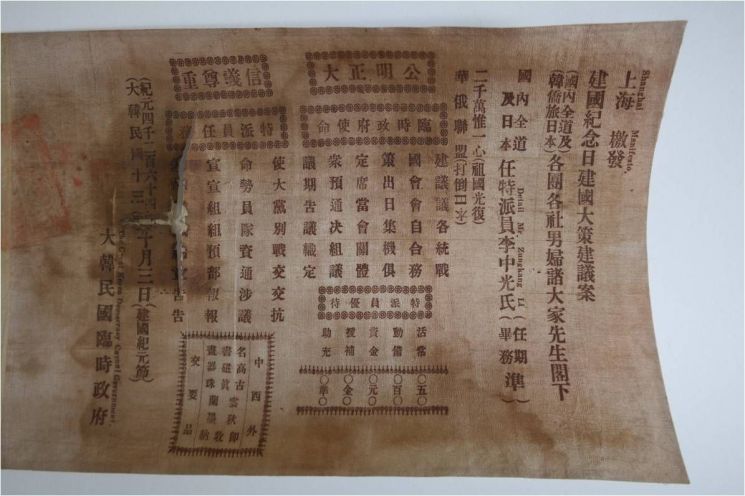
The ‘Delegation Letter of Lee Gyo-jae and Shanghai Telegram of the Provisional Government of the Republic of Korea (National Registered Cultural Heritage No. 774-1)’ are documents brought into the country by independence activist Lee Gyo-jae (1887?1933) during his visit to the Shanghai Provisional Government. The delegation letter appoints Lee Gyo-jae as the resident representative for Gyeongsangnam-do and Gyeongsangbuk-do. The Shanghai telegram appoints Lee Jung-kwang as a special correspondent to Japan and domestic areas, including a request to inform compatriots at home and abroad about the correspondent’s duties and the mission of the Provisional Government. These are concrete evidence of the Provisional Government’s efforts to maintain steady communication with domestic groups and secure organization and funds.
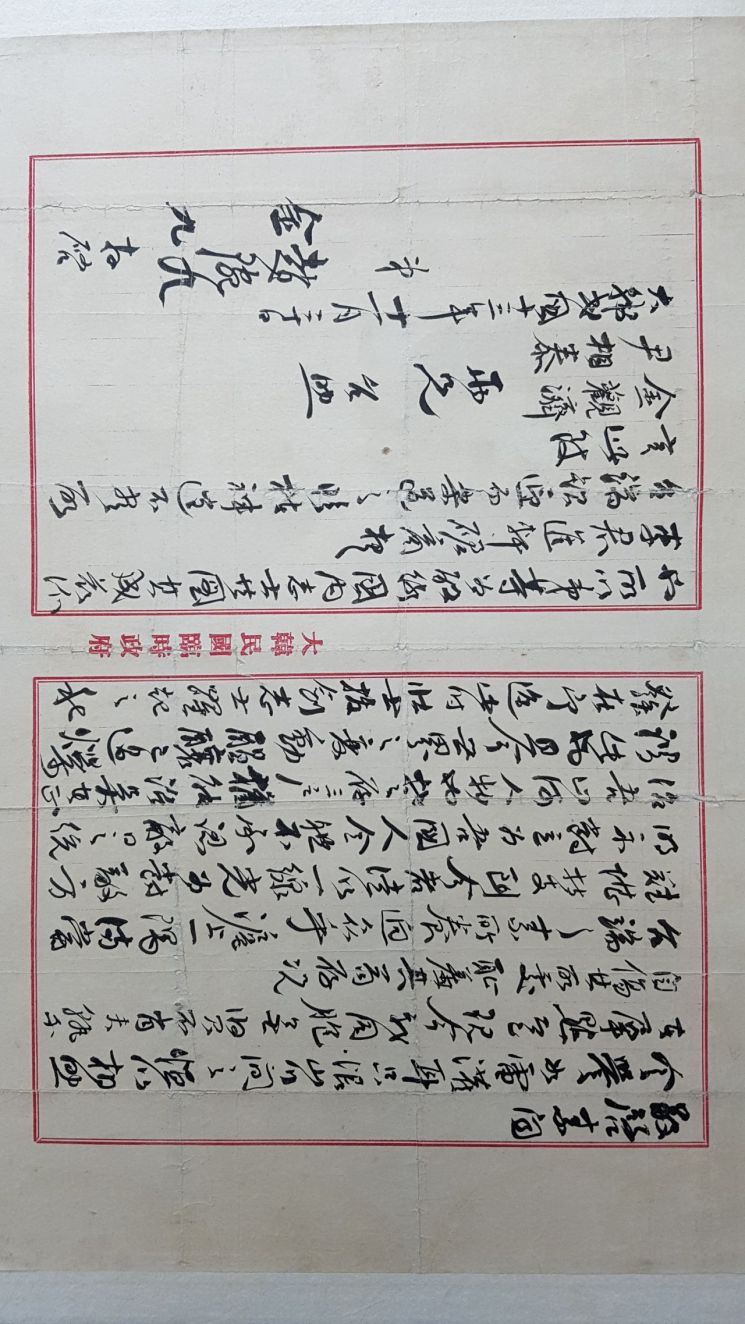
The ‘Condolence Letter for Moon Young-bak and Special Letter for Moon Won-man of the Provisional Government of the Republic of Korea (National Registered Cultural Heritage No. 774-2)’ are a condolence letter expressing sympathy to the family of Moon Young-bak (1880?1930), who died in Dalseong, Gyeongbuk, in 1931, and a special letter requesting support funds for Moon Won-man, Moon Young-bak’s son, for his activities. These documents provide insight into how the Provisional Government raised reserve funds and how it contacted influential figures within the country at the time.
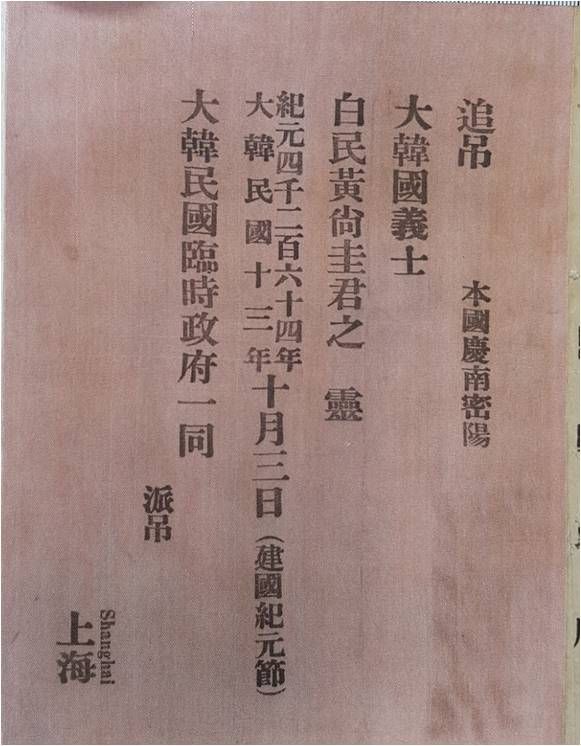
The ‘Special Letters, Condolences, Letters, and Small Envelopes of the Provisional Government of the Republic of Korea (National Registered Cultural Heritage No. 774-3)’ are documents received by independence activist Lee Gyo-jae from the Provisional Government. They include requests for support funds for Provisional Government activities and condolences for deceased independence activists. These documents allow us to infer how the Provisional Government planned to secure funding for the independence movement amid financial shortages. The Cultural Heritage Administration plans to systematically preserve and manage these cultural heritages in cooperation with the relevant local governments and owners (managers).
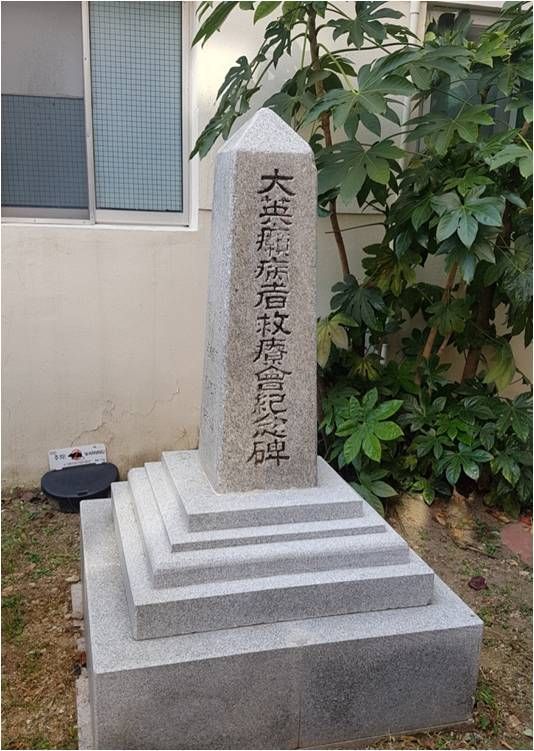
The ‘Busan Leprosy Hospital Monument,’ preliminarily registered as cultural heritage on this day, was created in 1930 to commemorate the establishment of the Leprosy Hospital founded in 1909. The Busan Leprosy Hospital was the first hospital established in Korea to treat leprosy patients. The monument offers a glimpse into the history of Hansen’s disease treatment and missionary work, a special medical field in Korea. The Cultural Heritage Administration plans to collect opinions for 30 days and finalize the registration as cultural heritage after review by the Cultural Heritage Committee.
© The Asia Business Daily(www.asiae.co.kr). All rights reserved.



















