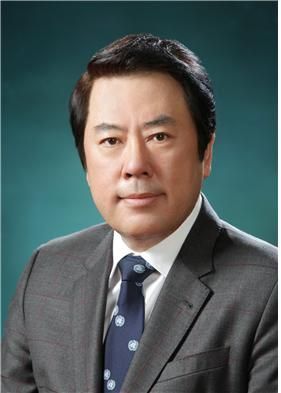
 Dr. Junhee Park, Chairman of Inet Broadcasting
Trot music, which has consistently enjoyed national love, experienced a period of stagnation for over 20 years as it was overshadowed by new genres of popular music, but it is now experiencing a "second renaissance."
Traditional trot music, sung by many young singers participating in comprehensive programming channels like 'Miss Trot' and 'Mr. Trot,' has begun to regain nationwide popularity.
Following young trot singers Jang Yoon-jeong, Park Hyun-bin, and Hong Jin-young, last year’s 'Miss Trot' stars Song Ga-in and Hong Ja, along with 2020's 'Mr. Trot' stars Jang Min-ho and Young Tak, have risen as popular stars, sparking a boom.
Amid this process, Park Joon-hee, chairman of Inet Broadcasting, Korea’s leading adult popular song broadcaster, who has quietly played a role in the development of Korean trot music, is at the center of renewed attention.
Inet Broadcasting launched its station in 2002, initially broadcasting trot music 24 hours a day. Regardless of ratings, Chairman Park Joon-hee started trot music broadcasting driven by a mission to revive Korea’s traditional folk songs, the spirit of the nation. He stated, “From childhood, watching famous singers’ recital performances hand-in-hand with my mother sparked my deep affection and nostalgia for trot music. Beyond economic gain, I have walked a singular path dedicated solely to expanding the base of trot music and preserving traditional folk songs.”

Top Korean trot singers such as Nam Jin, Tae Jin-ah, Song Dae-gwan, and Seol Woon-do have consistently appeared on Inet Broadcasting, spreading trot music nationwide alongside viewers at concert halls. Recognizing the talents of outstanding trot singers like Jin Sung, Hong Jin-young, Jang Min-ho, Young Tak, and Song Ga-in, Inet Broadcasting featured them, producing some of the best trot stars recently. This success is attributed not only to the efforts of singers, composers, lyricists, music professionals, and arrangers but also to Chairman Park Joon-hee’s leadership, which contributed significantly to revitalizing trot music. Moreover, Inet Broadcasting has created numerous performance opportunities for many trot singers and contributed greatly to job creation for managers, sound engineers, lighting technicians, chorus members, orchestras, dance troupes, record companies, entertainment firms, security personnel, and stage installers.
Inet Broadcasting, which possesses a vast amount of content related to the trot music genre, is known as a broadcaster equipped with top-tier personnel and equipment, capable of producing new programs independently. Thanks to these efforts, Inet Broadcasting consistently ranks high in viewership ratings in multi-use facilities such as beauty salons, jjimjilbangs (Korean saunas), senior centers, nursing hospitals, driver’s restaurants, and silver towns, according to filtered rating surveys. Based on its infrastructure owning 100% self-produced content, Inet Broadcasting launched a 24-hour real-time YouTube channel in 2018, enabling viewers to watch from anywhere nationwide?from hiking and camping to farming?and worldwide. Overseas Korean expatriates and K-POP fans who love traditional Korean folk music can easily watch via smartphones, with view counts increasing to over 2 million.
Following 2018, Inet Broadcasting signed an agreement with the World Korean Women’s Foundation (KOWINER) last year, connecting networks in over 30 countries to promote trot music content globally. Chairman Park Joon-hee, registered as the sole male director of the Korean Women’s Foundation, is building networks with Korean female leaders worldwide, focusing on the globalization of trot music.
Notably, on May 18, 2011, in Jakarta, Indonesia, Inet Broadcasting held a ceremony commemorating its overseas expansion, attended by Korea’s then Chairman of the Korea Communications Commission, Choi Si-jung, and Indonesia’s Minister of Communication and Information Technology, Tifatul Sembiring.
For the first time in Korea, Inet Broadcasting partnered with Indonesia’s Razel Group LBS-TV to launch LBS-INETV music broadcasting, featuring Korean trot music, 70s and 80s music, and Indonesia’s popular genre, Dangdut.
In July of that year, as part of the LBS-INETV launch, a concert was held at Wadong Gymnasium in Ansan City to support Indonesian workers residing in Korea, attended by about 3,000 people, including Indonesian Ambassador to Korea Nicholas T. Dammen, Migrant Workers’ Rights Chairman Pritno Ramlan, and Inet Broadcasting Chairman Park Joon-hee. Korean idol groups such as T-ara, 4Minute, Aurora, and Gayarang, along with top Indonesian pop bands, performed successfully.
In February 2012, to commemorate the 50th anniversary of Brazilian immigration, a “Korea Night and World Carnival Samje Festival” was held for local Korean expatriates. Singers Lee Chi-hyun, Kim Se-hwa, Hwang Sun-min, and Gayarang performed warmly, comforting the expatriates’ patriotism and longing for their homeland. The world’s top samba festival was also filmed and broadcast to Inet Broadcasting viewers.
In May 2014, Inet Broadcasting prepared for six months and visited the Himalayas to honor Korean mountaineers, including the late Park Young-seok and female climber Ko Mi-young, who tragically remain missing. Together with renowned Korean shamans, they held a requiem ceremony and broadcast the event, paying tribute to the souls of the climbers.
In October 2016, Chairman Park Joon-hee visited Ukraine and signed an MOU with Yuri Artemenko, Chairman of the Ukrainian Broadcasting Commission, to promote bilateral broadcasting exchanges. To commemorate this, a concert was held at the Ukrainian Stereo Sports Complex featuring Korean idol singers Eddy Kim, Tahata, K-MUCH, and six top Ukrainian teams, attracting over 10,000 citizens and leading the Korean Wave in Eastern Europe.
Inet Broadcasting was the first in Korea to create a world tour special, providing affordable cruise trips to China, Japan, Russia, and more for disadvantaged and first-time overseas travelers. Over five years, more than 100,000 viewers enjoyed travel and performances with singers, expanding opportunities for artists and introducing trot music to local populations. This contributed to trot music becoming a symbol of the Korean Wave, a source of national pride, and a pioneer in globalizing trot music through private exchanges for national interest.
Inet Broadcasting also has experience supplying trot music content through MOUs with overseas Korean broadcasters: TVK24 in the Americas (2007), KNN-TV in New York (2010), KEMS-TV in North America, and Yanji TV in China (2011), including a free supply of 500 million KRW worth of content.
In 2008, Inet Broadcasting signed Korea’s first MOU with the U.S. Embassy’s Public Affairs Section to provide broadcasting content, including “World Music Break,” “Mountain Stage,” old pop, country music, and hundreds of other programs. Through a project promoting rare traditional music worldwide, Inet Broadcasting introduced genres such as Mongolian Khoom, Indonesian Dangdut, Japanese Enka, and Portuguese Fado to viewers, playing a leading role in cultural exchange and globalizing Korean music.
Chairman Park Joon-hee said, “The Korean people's passion for music dates back to the Silla Dynasty’s Hyangga, Goryeo Dynasty’s Japga, and Joseon Dynasty’s Danga, reflecting a history of singing, dancing, and group games like Ganggangsullae. The emergence of BTS (Bangtan Sonyeondan) is not accidental but rooted in this historical love of music.”
Regarding the claim that Korean trot music is a derivative of Japanese Enka, Chairman Park, who has made extraordinary efforts to study trot music history, personally planned and produced a two-part documentary titled “Soul Music of Koreans - Trot” in Japan from 2010 to 2011. With a production team of over 30 and a budget of 180 million KRW, he interviewed Takagi Ichiro, chairman of the Japanese Enka Association. Takagi stated that Masao Koga, born in 1904 in Fukuoka, Japan, who lost his father early and moved to Korea in 1912 for schooling, spent over ten years in Korea influenced by Korean folk songs before returning to Japan. Koga founded the Japanese Composer Association in 1959 and is recognized as the founder of Japanese Enka, which was inspired by Korean trot music. Enka played a crucial role in restoring hope to the Japanese people after World War II. Takagi Ichiro affirmed that Korean trot music is the origin of Japanese Enka, which influenced Japan’s post-war reconstruction.
Inet Broadcasting’s special project “110 Years of Korean Popular Music” was directly planned to trace the origins of trot music, reorganizing and compiling Korean traditional songs by era, creating an encyclopedia of Korean popular music.
The “110 Years of Korean Popular Music” project consists of four content series: “Nostalgia” (1907?Black & White Era), “Youth” (1907?Early K-POP Era), “Reminiscence” (1907?SD Era), and “Happy Songs” (1907?HD Era), each aiming to produce 500 episodes for a total of 2,000 episodes. The “Nostalgia” series has completed 500 episodes, with the others nearing completion and currently airing.
The “Nostalgia” program digitally restored over 5,000 old songs from 1907 to the black-and-white TV era, uniquely combining audio with video. It includes expert interviews from over 50 professionals?composers, lyricists, religious figures, journalists, professors, music experts, general viewers, public officials, and veteran singers?and excerpts from period newspapers like Chosun Ilbo, Dong-A Ilbo, and Sunday Seoul, making the content accessible and engaging for viewers.
Since 2008, the program has continuously sourced and digitized rare video footage from the Korean War, Vietnam War, and other historical events, with cooperation from the National Archives. The 1907 starting point reflects the fact that during the Japanese colonial period, Korea lacked recording equipment and technology, so records were made in Japan by companies like Columbia and Victor Records.
The record was invented in 1887 by Emile Berliner as a flat disc, the precursor to today’s turntable records, though early recordings lasted only 30 seconds to one minute, making them difficult to consider as full music pieces.
From 1907, Japan began recording mainly songs transitioning from Chang (traditional Korean narrative singing) to trot, including “Pungnyeonga” and “Jeokbyeokga.” Many consider 1907 as the starting point of Korea’s traditional music based on these recordings.
During the Japanese colonial period, Korea mainly performed Chang, but Japan institutionalized the Kwonbeon (traditional music schools) to collect taxes and monitor independence movements. Numerous Kwonbeon such as Pyongyang Kwonbeon, Hanyang Kwonbeon, Mokpo Kwonbeon, and Jinju Kwonbeon became famous nationwide, with Pyongyang Kwonbeon gaining particular renown.
At that time, Wang Su-bok, daughter of a Hwajeonmin (landless farmer) and a Pyongyang Kwonbeon alumna, created hit songs like “Sinbanga Taryeong” and “Godo’s Jeonghan.” She won first place in the only joint North-South Korea National Singing Contest, with Lee Nan-young, famous for “Mokpo’s Tears,” in second place, and Go Bok-su in third.
Later, at age 16, Wang Su-bok moved to Japan to study classical music but switched to trot and pursued a singing career. She fell in love with writer Lee Hyo-seok, author of “When Buckwheat Flowers Bloom,” and returned to Korea to marry him. After Lee fell ill and passed away, she returned to Japan and continued her music career in divided Pyongyang until her death.
Trot music embodies historical facts and poignant stories from the Japanese colonial period and Korea’s division. Many Koreans served as kamikaze pilots during the colonial era. In a tavern in Yamaguchi Prefecture, Japan, a Korean sang songs expressing longing for their homeland and left trot and Arirang lyrics on the walls before going to war and dying in battle. These tragic stories remain recorded and have become tourist sites, offering important opportunities to learn about the forgotten sorrowful history of popular songs through programs like “Nostalgia” and “Youth.”
Especially, in August 1926, soprano Yun Sim-deok and her then-married lover Kim Woo-jin committed joint suicide by jumping into the Korea Strait from the Gwanbu ferry traveling from Japan to Busan. Their love story, following Yun’s recording of 25 songs for a Japanese record company and an additional recording of “Praise of Death” at her suggestion, remains shrouded in mystery with many rumors, including sightings in Italy. After their death, “Praise of Death” became a massive hit, selling over a million records, and some consider it the beginning of popular music.
“Youth” (1907?Early K-POP Era) shares memories of the 70s and 80s generation, featuring stories and music from about 200 mainstream artists of the time, including keyboardist Yoon Hang-gi, Sanulrim, Yang Hee-eun, Sesibong, Lee Moon-se, Yoon Hyung-ju, Hye Eun-i, Ha Chun-hwa, and original idols like HOT and Shinhwa, extending to future stars like BTS.
“Reminiscence” (1907?SD Era) features programs with beautiful footage and music from artists who are no longer active or less active, such as Cho Yong-pil, The Pearl Sisters, the late Kim Hyun-sik, the late Kim Kwang-seok, and Deulgukhwa.
“Happy Songs” (1907?HD Era) offers viewers a variety of colorful and spectacular shows in the high-definition era.
Worldwide, no country has comprehensively compiled its traditional music into programs, and it is difficult to do so. Korea also faced challenges, but Chairman Park prepared and planned for 15 years to produce and broadcast 500 episodes of the “Nostalgia” program.
The “110 Years of Korean Popular Music” “Nostalgia” program won the Korean Cable TV Association’s Program of the Year award in 2019.
Inet Broadcasting currently produces about 30 fixed programs and has received the highest ratings for five consecutive years in the entertainment genre from the Korea Communications Commission, ranking alongside channels like tvN and Mnet among 160 channels.
Chairman Park has nearly completed 2,000 episodes of programs like “Nostalgia” and “Youth” and plans a second phase of 1,500 episodes covering HD, UHD, and K-POP, totaling 3,500 episodes and organizing about 40,000 songs by era. Inet Broadcasting is thoroughly preparing special programs that allow viewers to see the history of Korean popular music at a glance, with no set deadline for planning, production, and broadcasting. He emphasized, “The ‘110 Years of Korean Popular Music’ is an encyclopedia of our music, and singers who appear on Inet Broadcasting will be eternally recorded in Korean music history.”
Inet Broadcasting owns about 50,000 pieces of content, including self-produced content, permanently owned purchased content (excluding temporary purchases), and terrestrial broadcast content from Gyeongin Broadcasting (itv). Visitors touring Inet Broadcasting’s headquarters are amazed by the vast content storage facilities.
The station operates large relay trucks, UHD cameras, three UHD master control rooms, a CG room, recording studios, a studio, an in-house call center, and a permanent content archive system, all housed in the Inet Building in Yangjae-dong, Seocho-gu, Seoul, covering 3,300 square meters across all floors, comparable to a terrestrial broadcaster’s scale.
Inet Broadcasting adheres to self-production principles, employing over 15 PDs who plan programs independently without purchasing content from terrestrial or comprehensive programming channels. These programs will continue to feature trot music that resonates with overseas Koreans from first to third generations in the U.S., Canada, Mongolia, China, and beyond.
Inet Broadcasting’s flagship program, the Adult Popular Song Concert, has been produced and broadcast since 2005, with over 500 large-scale concert programs held to date, marking its 16th year. It is recognized as the most excellent and longest-running adult popular song program, including terrestrial broadcasts. Chairman Park also consistently produces and broadcasts about ten large concert programs such as the Love for Popular Songs Concert, Star Show, Show Hanmadang, Star Show Show Show, Power Concert, Open Family Music Concert, and Baramgaebi. Notably, the spiritual documentary program “Mystery Theater: Dangerous Invitation,” tailored for today’s era, has produced over 300 episodes. Inet Broadcasting uniquely produces and broadcasts this series, which embodies the Korean people’s life and emotions with themes of good triumphing over evil, scientifically unprovable but culturally significant.
Inet Broadcasting’s concerts attract thousands to tens of thousands of attendees nationwide, providing venues for individuals to express their passion and share joy. Local governments recognize Inet Broadcasting’s influence and actively participate in hosting concerts.
Chairman Park said, “Trot music is breaking the stereotype of being old songs sung by older people and is now embraced by multiple generations. After 19 years of active investment in producing Korean traditional popular music content, trot music, which had not received proper recognition, is now experiencing a second musical renaissance. I take great pride in playing a pioneering role in this revival.”
He added, “We will continue to nurture many successors and globalize trot music, promoting patriotism and national unity through the widespread practice of trot music nationwide. We will dedicate ourselves with the Inet Broadcasting staff to serve the nation and people through music.”
Inet Broadcasting has registered the Inet Life channel, specializing in music and variety genres, currently launched on IPTV, Skylife, and cable TV, expanding its viewing rights. To accommodate viewers who want reruns, a station broadcasting trot music and retro-style comedy programs has been launched. Inet Broadcasting and Inet Life are expected to play a leading role in introducing Korean trot music and traditional comedy programs to viewers worldwide.
Chairman Park said, “Despite countless hardships and agonies over 19 years, I am delighted to have reopened the golden age of trot music. Trot music, which embodies the spirit of our nation, will remain eternal with Inet Broadcasting.”
 Inet Building headquarters located at 34, Yangjaecheon-ro 11-gil, Seocho-gu, Seoul. Photo by Inet Broadcasting provided.
© The Asia Business Daily(www.asiae.co.kr). All rights reserved.
![Clutching a Stolen Dior Bag, Saying "I Hate Being Poor but Real"... The Grotesque Con of a "Human Knockoff" [Slate]](https://cwcontent.asiae.co.kr/asiaresize/183/2026021902243444107_1771435474.jpg)

















