[Subscription Economy Part 1] The Membership Society Living with Subscriptions
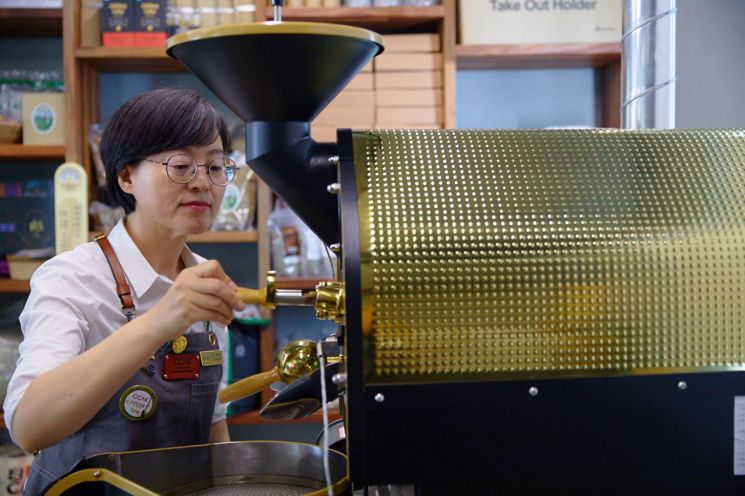 The subscription economy has closely integrated into our daily lives at some point. Gyoengim Ko, CEO of T Point Studio (Photo by Gyoengim Ko), said, "If coffee is sent randomly and information about the coffee is provided together, excitement, experience, and knowledge about various coffees are shared."
#. Yumi Kyung (48, pseudonym), a working mom living in Jongno-gu, Seoul, started subscribing to whole bean coffee this month. Until last year, she used to buy whole bean coffee from nearby cafes or large supermarkets, but she began ordering delivery, i.e., subscribing, upon recommendation from those around her. Looking into Yumi’s household, where both parents work and raise two middle and high school children, there is abundant evidence of the 'subscription economy' in our daily lives. Every morning, newspapers are delivered to the front door, and rental companies for water purifiers and dishwashers visit every three months to replace filters and perform cleaning services. Fresh foods such as vegetables and side dish ingredients are delivered to the home. Yumi has been using a service that regularly delivers fresh vegetables and grains from the production site for three years. She said, "It saves shopping time, but the satisfaction is high because I can check the origin and producers, so I can trust the food I give to my children," adding, "I also prefer rental services because I can replace products with new ones every three years while paying the same price."
The subscription economy market is receiving explosive responses from consumers. There are various usage methods and forms such as unlimited use, regular delivery, and rental types. Since the period and amount are fixed, it is easy to use and easy to cancel. From traditional subscriptions like newspaper subscriptions and study materials to water purifier rentals, media content business models such as 'Netflix' are expanding the service area beyond consumer goods and durable goods to luxury goods and spaces.
◆The Power of Subscription Penetrating Every Aspect of Life= Go Kyung-im, CEO of the shared roastery cafe T-Point Studio, said, "We started the coffee subscription service earlier than planned due to requests from around us," adding, "The user base is diverse, from ordinary people to enthusiasts looking for unique coffee." CEO Go operates a shared roastery cafe in a space of about 120㎡ in Bongcheon-dong, Seoul, offering space rental, roaster sharing, coffee-related education, and running a coffee subscription business simultaneously. Coffee subscription involves sending a fixed amount of coffee weekly or biweekly by courier and receiving a subscription fee.
Choi Jung-yoon (pseudonym), who teaches video-related lectures at a cultural center, has been using the U.S.-based Dropbox cloud file storage service for work sharing with others for five years. By paying $11.99 monthly, she can use 2 terabytes (TB) of data storage. Experiencing the advantages of the subscription economy, Choi expanded her usage range. She subscribes to about ten services including Netflix, Watcha Play, Amazon Prime Video, SmallPDF, Nintendo Switch Online, Market Kurly’s Kurly Pass, and YouTube Premium. She said, "I currently spend about 70,000 won per month on subscription economy services," adding, "I plan to subscribe to electronic book-related subscription services like Ridiselect soon."
The subscription economy is a new model created based on 'subscription' that surpasses the traditional business model of 'ownership,' achieving great success. It has also changed people’s daily lives. It has become so ingrained in everyday life that people experience the subscription economy without realizing it. For example, office worker Seo In-seok (pseudonym) once hesitated when he came home and saw a bouquet of flowers placed in the living room. He casually assumed someone had gifted flowers to his family, but new flowers continued to appear regularly, sparking his curiosity. Seo said, "Later, I found out my wife had subscribed to a flower subscription service through a company, and flowers were delivered every two weeks," adding, "From a certain point, seeing new flowers always made me feel refreshed."
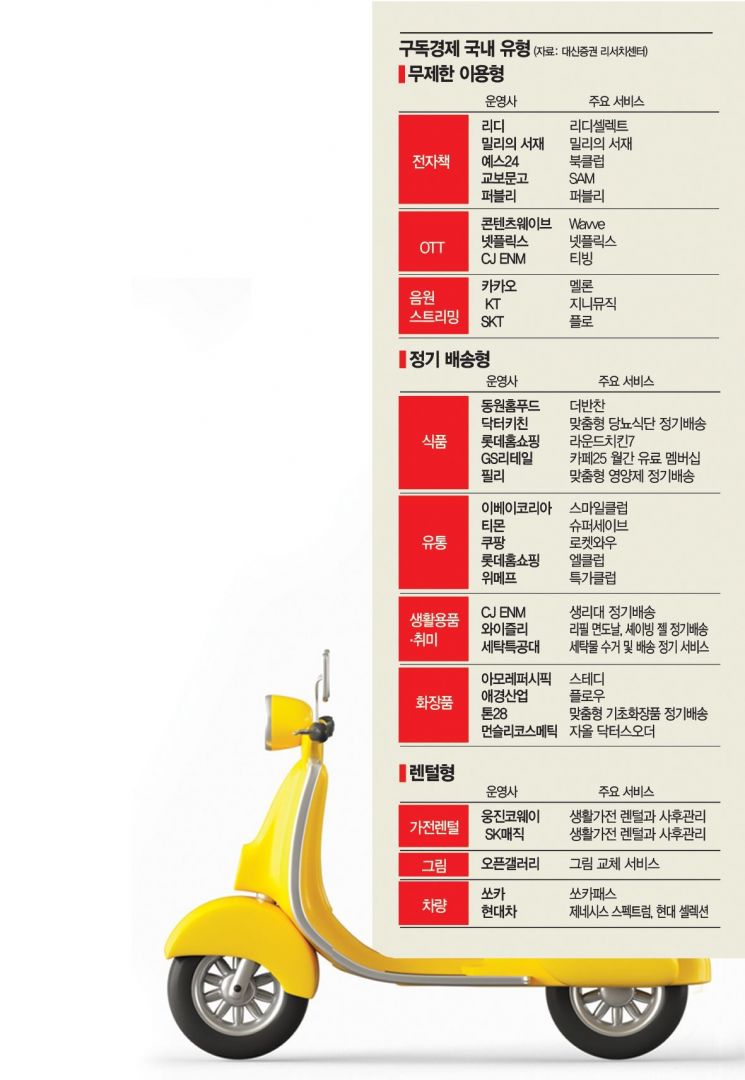
◆Rapid Growth Through Sharing 'Experience' Rather Than Simple Purchase= The subscription economy market continues to grow sustainably as it is a win-win model for both consumers and companies. Companies that adopt the subscription economy benefit from recurring sales, improving profitability through stable cash flow. Various subscription economy ecosystems have been established in daily necessities, software, e-books, food, and automobiles. German luxury sports car brand Porsche introduced a subscription service model where members pay a $500 registration fee and $2,000 monthly to choose from eight car models.
According to a report released by the Future Industry Team of the Long-Term Strategy Research Department at Daishin Securities, the subscription economy market is growing rapidly. They forecast that the economy will evolve from a model where suppliers produce and sell products and consumers purchase and own them, to a 'membership economy' where all consumers have their own 'account (ID)' to use products and services, and suppliers continuously manage them. They also expect that curation services using artificial intelligence (AI) and big data will maximize consumer satisfaction. The subscription economy market is expected to continue high growth through increased investment in information and communication technology (ICT), venture capital, and more.
Professor Kim Yong-jin of the Department of Business Administration at Sogang University explained, "The subscription economy is another name for a service-centered economy," adding, "The core is that people's consumption tendencies have shifted from ownership to usage, and from ownership to pursuing intrinsic value." Professor Kim emphasized, "From the companies' perspective, the subscription economy model is expected to continue expanding because it helps improve resource utilization efficiency and secure revenue stability." Kim Ik-sung, president of the Korea Distribution Science Association, said, "The subscription economy is one of the hottest issues in the distribution industry both online and offline," adding, "If subscription economy companies can manage demand forecasting in manufacturing and sales, it will also greatly benefit their partner companies."
© The Asia Business Daily(www.asiae.co.kr). All rights reserved.


















