ERP System Improvement, Focus on QSC Enhancement, and Metropolitan Area Logistics Center Construction
Establishing New Management System This Year... Growth Through Strengthening Core Business Capabilities

[Asia Economy Reporter Lee Seon-ae] "Although there were many difficulties, we focused heavily on infrastructure improvement last year to secure core competitiveness. This year, we aim to make it a year of establishing a new management system that prioritizes customer satisfaction management above all else."
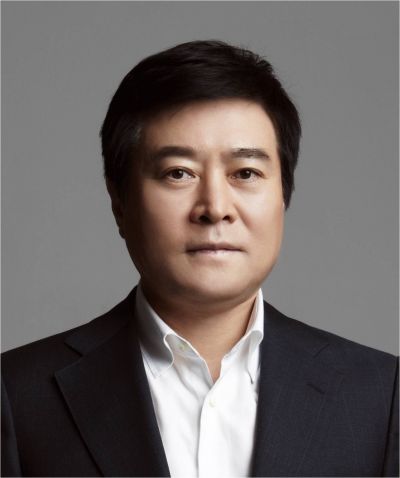
So Jin-se, chairman of Kyochon F&B, who is approaching his first anniversary in office this April, emphasized this by presenting this year's management strategies: realizing customer satisfaction through strengthening QSC (Quality, Service, Hygiene), enhancing core business capabilities and securing new growth engines, and innovating corporate organizational culture to flexibly respond to changes. He said, "The technological changes, distribution structure changes, and service changes brought about by the 4th Industrial Revolution and demographic shifts are by no means someone else's issue, and especially the consumption trends of future generations will be completely different from before," adding, "It is necessary to accurately read the changes, prepare in advance, and adopt a creative attitude that breaks away from existing practices."
Having held key distribution positions within Lotte Group for 40 years, he is known as a '40-year Lotte man.' Upon his appointment as chairman of Kyochon F&B on April 22 last year, he immediately judged that everything must be changed to find growth opportunities amid crisis and focused on organizational reform. As the first chairman appointed after the founder Kwon Won-kang stepped down from frontline management and the company transitioned to a professional management system, the responsibility on his shoulders was heavy, but he concentrated on improving management efficiency without being obsessed with immediate performance.
The first area he tackled was the improvement of the ERP system (Enterprise Resource Planning system). ERP refers to integrating systems such as production, finance, and human resources within a company into one system to improve work speed and maximize management efficiency. Kyochon plans to strengthen its ability to respond to external environmental changes through a major overhaul of the ERP system.
Additionally, the foundation for strengthening QSC was expanded. To this end, a new R&D Education Center was opened near the headquarters, spanning four floors above ground with a total floor area of 3,719㎡ (approximately 1,125 pyeong). In particular, the franchisee training facility replicates the actual franchise environment, enabling more professional and realistic training. An organizational restructuring was also carried out to strengthen related organizations so that R&D and QSC-related teams can perform more systematic and specialized roles.
Following the expansions completed a few years ago at the Eastern Logistics Center (Gyeongbuk) and Western Logistics Center (Gwangju), a new metropolitan area logistics center is also being established. Chairman So believes that expanding logistics centers will serve as a foundation for securing the core competitiveness of the franchise.
Alongside investments in infrastructure improvement, inefficient sectors were boldly reformed. Food service brands deemed difficult to expand through franchising (Damgimssam, Sookseong72) were discontinued, and underperforming affiliates (Suhyun F&B, KC Way) were merged. The focus was placed more on strengthening the core chicken business capabilities, with new business challenges planned after improving the management system. The improvements in inefficient sectors are expected to enhance Kyochon's profitability. Thanks to efforts to strengthen core business competitiveness, Kyochon's sales last year are projected to grow by more than 10% despite the challenging external environment. Operating profit is also expected to improve significantly this year, achieving qualitative growth. The industry evaluates that Kyochon, which declared a professional management system last year and recruited Chairman So, has laid the foundation for securing the company's core competitiveness by promoting organizational reform.
As this year marks the first year of establishing a new management system, Chairman So plans to strengthen the company's leading and unique position in the market. To this end, new growth engines will be secured through overseas and distribution businesses. The overseas business will officially enter the Taiwanese market, where an MOU was signed last year. The Malaysian franchise business, approved last year, will also be actively promoted this year, with expectations for its successful establishment. The distribution business will diversify HMR (Home Meal Replacement) products this year, building on the encouraging performance of the 'Dakgalbi Fried Rice' HMR product launched last year, and plans to establish its own online mall in the second half of the year.
Furthermore, Kyochon plans to focus on successfully completing its targeted IPO this year. A Kyochon official explained, "We are currently conducting an employee stock ownership plan and preparing for listing, and if the IPO succeeds this year, it will be recorded as the first direct listing case in the franchise industry." Kyochon is highly likely to go public as both the headquarters and franchise stores continue to grow. Kyochon Chicken's sales per franchise store are the highest among chicken franchises registered with the Fair Trade Commission's franchise business transactions. The annual sales per store amount to approximately KRW 618.27 million (based on 2018), which is more than three times higher than the average KRW 189.28 million of registered chicken franchises, representing a growth of over 47% from KRW 419.46 million in 2014 over four years.
© The Asia Business Daily(www.asiae.co.kr). All rights reserved.
![Clutching a Stolen Dior Bag, Saying "I Hate Being Poor but Real"... The Grotesque Con of a "Human Knockoff" [Slate]](https://cwcontent.asiae.co.kr/asiaresize/183/2026021902243444107_1771435474.jpg)












