KCDC Strengthens Quarantine Measures Against Wuhan Pneumonia Spread Starting from the 28th
"Third Confirmed Patient Active in Community Two Days Before Isolation...Tracing Movements and Contacts Underway"
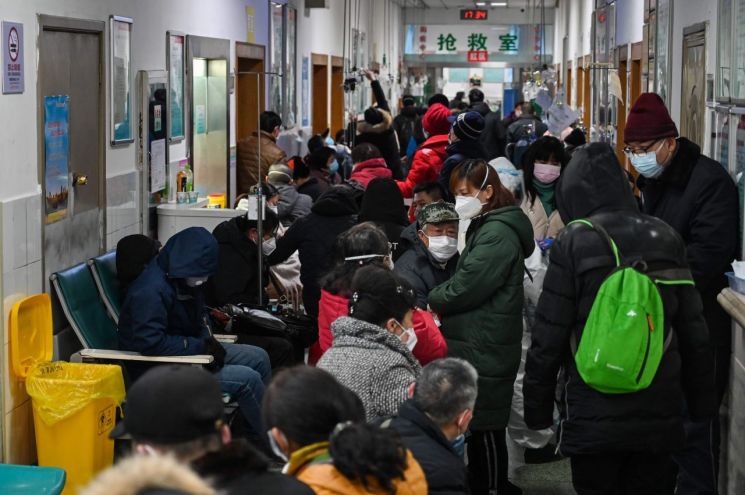 Patients wearing masks are crowding the hallway of the Red Cross Hospital in Wuhan, China, on the 25th, waiting for their turn for examination.
 [Asia Economy Reporter Choi Dae-yeol] From now on, all travelers entering South Korea from China must fill out and submit a health status questionnaire, and if they exhibit symptoms such as fever, they must undergo separate quarantine inspection. Previously, this applied only to those arriving on direct flights from Wuhan, but this measure has been expanded due to the increased possibility of the novel coronavirus infection, known as 'Wuhan pneumonia,' entering the country.
The Korea Centers for Disease Control and Prevention (KCDC) announced on the 26th that starting from the 28th, the entire territory of China will be designated as a quarantine target contaminated area. A contaminated area refers to a region where quarantine infectious diseases have occurred and are designated according to relevant regulations. Previously, 65 countries worldwide, including Wuhan City, were designated. In China, Guangdong, Yunnan, Jiangsu, and Hunan provinces were designated due to avian influenza (AI), and Wuhan City was designated for Wuhan pneumonia. From now on, the entire region of China will be subject to this designation. According to KCDC, as of the previous day, there were 1,975 cases in China, with more than half, 1,052 cases, occurring in Hubei Province, where Wuhan City is located.
Travelers entering from contaminated areas must fill out and submit a health status questionnaire. This includes checking symptoms such as fever, vomiting, sore throat, and cough, as well as listing countries visited in the past three weeks and the areas where they will stay in South Korea. If symptoms such as fever are present, quarantine inspection will be conducted. Suspected patients will be immediately isolated or linked to the relevant local government for enhanced management based on the judgment of epidemiological investigators.
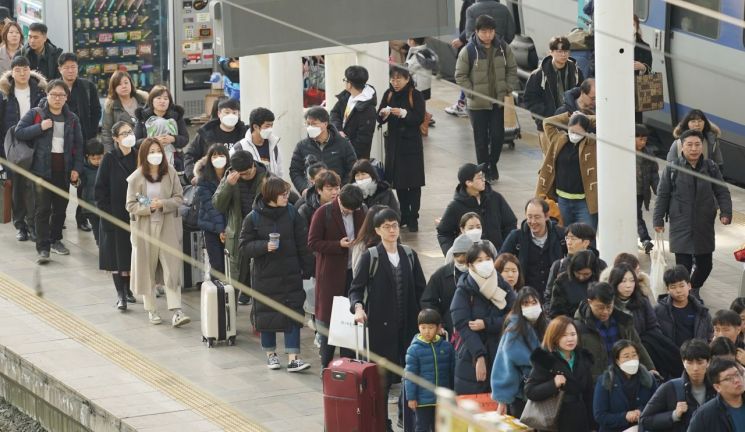 On the third day of the Lunar New Year holiday and the day the third confirmed case of Wuhan pneumonia was reported in South Korea, a homecoming traveler wearing a mask is leaving the platform at Seoul Station.
 Contaminated Area Expanded from Wuhan to Entire China...Case Definition Strengthened
Health Status Questionnaire Submission and Stricter Pre-Entry Quarantine Procedures
The first confirmed domestic case of the novel coronavirus was a Chinese woman residing in Wuhan who was classified as symptomatic and transferred for isolation immediately after disembarking the plane and undergoing quarantine inspection. The second confirmed patient had been in Wuhan and entered the country via Shanghai but was classified as a self-monitoring subject without undergoing such procedures and returned home. Subsequently, monitoring was conducted via phone calls through the local health center, and after symptoms worsened, additional testing confirmed the diagnosis.
By strengthening the contaminated area designation, stricter quarantine procedures will be applied to all entrants from China. Jeong Eun-kyung, Director of KCDC, stated, "We plan to deploy about 200 additional quarantine personnel supported by the Ministry of National Defense, the National Police Agency, and local governments," adding, "The time required for entry from China is expected to increase significantly."
To enable frontline medical institutions to respond more quickly, the case definition will also be revised. The case definition identifies targets requiring infectious disease surveillance, response, and management, and changes according to the characteristics of the pathogen or outbreak patterns. Previously, visitors to Wuhan City showing pneumonia or suspected pneumonia symptoms were classified as suspected patients, but this will be expanded to include the entire Hubei Province, including Wuhan City. Anyone with fever or any respiratory symptom will be immediately classified as a suspected patient.

Ministry of National Defense, National Police Agency, and Local Governments to Support 200 Additional Quarantine Personnel
"Significant Increase in Entry Processing Time Expected from China"
Third Confirmed Patient Active in Community Two Days Before Isolation
KCDC Verifying Detailed Movements, Patient's Activities, and CCTV Footage
Visitors to other regions of China excluding Hubei Province who are diagnosed with pneumonia will be included as symptomatic subjects for investigation and isolated, and if they have both fever and respiratory symptoms, they will be managed through self-quarantine or active monitoring based on epidemiological investigators' judgment. Director Jeong emphasized, "Expanding the quarantine target contaminated areas and revising the case definition will significantly increase the number of surveillance targets," adding, "Local governments must proactively respond by expanding screening clinics and isolation hospitals and actively mobilizing personnel and facilities for surveillance and isolation management to prevent community spread."
Meanwhile, KCDC confirmed that the third domestic confirmed patient diagnosed on this day had been active in the community for about two days before isolation. The patient is a 54-year-old Korean male who had been in Wuhan, traveled through Qingdao, China, and returned to Incheon Airport on the 20th. He showed no symptoms upon entry but developed fever and chills from the 22nd.
On the 23rd and 24th, epidemiological investigations revealed that he had multiple contacts, including meeting acquaintances. Detailed movements and activities are currently being investigated. From the 25th, he reported respiratory symptoms such as cough and sputum to KCDC and was classified as symptomatic based on the local health center's investigation. He was isolated and tested at Myongji Hospital in Goyang, which has nationally designated inpatient treatment beds, and was confirmed positive the following day. Director Jeong stated, "Myongji Hospital has nationally designated negative pressure isolation beds, and the medical staff are trained, so it can be considered 100% safe."
In the case of the previously confirmed second patient, the initially reported number of contacts was 69, but after some coworkers who worked with him in China returned, the number of contacts increased to 75.
© The Asia Business Daily(www.asiae.co.kr). All rights reserved.
![Clutching a Stolen Dior Bag, Saying "I Hate Being Poor but Real"... The Grotesque Con of a "Human Knockoff" [Slate]](https://cwcontent.asiae.co.kr/asiaresize/183/2026021902243444107_1771435474.jpg)


















