Bill Gates Warns of Virus Threat at 2017 Munich Security Conference in Germany
"Pandemics More Dangerous Than Nuclear Bombs or Climate Change"
"Risk of Pandemic Spread Increasing Every Year"
China's 'Wuhan Pneumonia' Deaths and Confirmed Cases Surge, Approaching 2,000
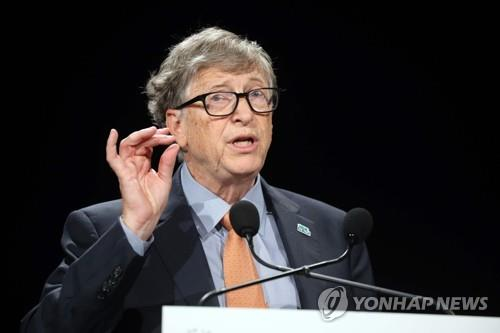
[Asia Economy Reporter Han Seung-gon] As the number of deaths and confirmed cases of the novel coronavirus, known as 'Wuhan pneumonia,' rapidly approaches 2,000 in China, attention is turning to a past warning by Microsoft (MS) founder Bill Gates, who said that "a pandemic could be far more dangerous than a nuclear bomb or climate change."
On February 18, 2017 (local time), at the 'Munich Security Conference' held in Germany, Bill Gates stated, "Intelligence agencies take nuclear weapons seriously because they can kill millions, but if terrorists use viruses, they could kill hundreds of millions."
He emphasized that viruses, whether naturally occurring epidemics or those engineered by terrorists, could kill hundreds of millions, not just millions. "It is probably the only thing that could kill 1 billion people," he said.
Bill Gates warned again, "The technology to create artificial infectious viruses, once handled only at the national level, is now becoming widespread enough that ordinary biologists can handle it," adding, "The likelihood of an outbreak is increasing every year."
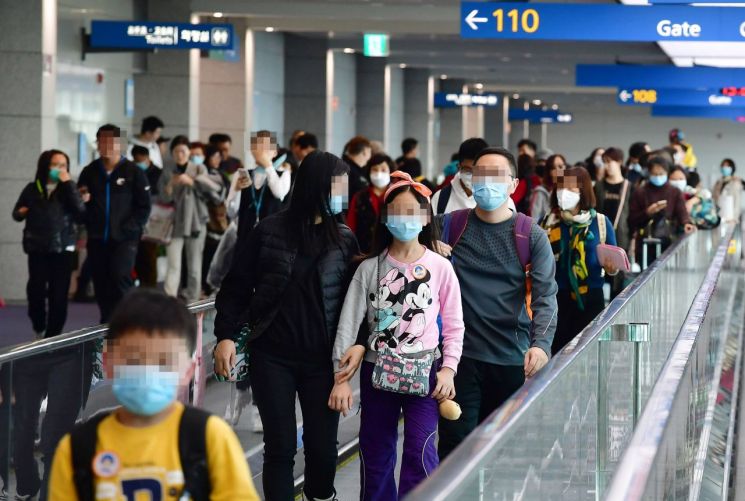 As the number of deaths from the novel coronavirus, known as 'Wuhan pneumonia,' rapidly increases in China, passengers are seen walking while wearing masks at Incheon International Airport on the 23rd.
 [Image source=Yonhap News]
He argued that security officials focus intensely on nuclear materials that can kill millions but are not adequately prepared for bio-terror attacks that could have even more severe consequences than nuclear weapons.
Gates said that in the event of an outbreak, there needs to be readiness to quickly and massively produce new vaccines, and he hoped that more biological warfare drills would be conducted so that governments and militaries can respond swiftly to epidemics.
The conference was attended by major world leaders including U.S. Vice President Michael Pence, United Nations (UN) Secretary-General Ant?nio Guterres, and German Chancellor Angela Merkel.
Meanwhile, on the 26th, China's National Health Commission announced that as of midnight, including Hong Kong, Macau, Taiwan, and mainland China’s 29 provinces, there were 1,975 confirmed cases of Wuhan pneumonia and 56 deaths nationwide.
This represents an increase of 688 confirmed cases and 15 deaths in just one day. Among these, 324 patients are in serious condition, and there are 2,684 suspected cases. Only 49 patients have recovered and been discharged.
Wuhan pneumonia is spreading globally. Confirmed pneumonia cases have been reported in Asia and Europe, including 2 each in Japan, the United States, and Vietnam; 3 each in Singapore and Malaysia; 1 in Nepal; 3 in France; and 1 in Australia.
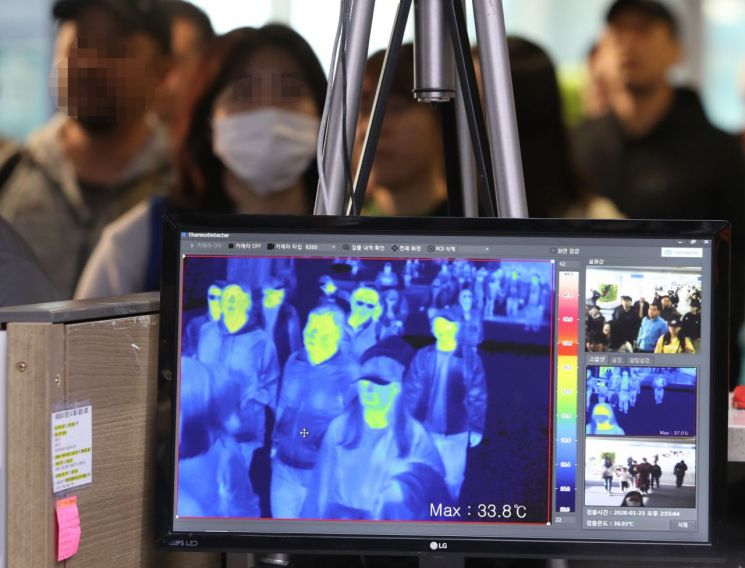 On the afternoon of the 23rd, employees of the National Quarantine Station under the Korea Disease Control and Prevention Agency are measuring passengers' body temperatures with thermal cameras at the arrival hall of Terminal 1, Incheon International Airport.
 [Image source=Yonhap News]
The number of confirmed cases in South Korea increased by one to a total of three. The Korea Centers for Disease Control and Prevention (KCDC) announced on the 26th that one new case of novel coronavirus infection had been confirmed.
The patient is a 54-year-old Korean male who had been residing in Wuhan, China. According to the KCDC, this confirmed case temporarily returned to Korea on the 20th.
At the time of entry, the patient showed no symptoms but began experiencing fever and chills from the 22nd, took antipyretics, and on the 25th developed intermittent coughing and sputum, reporting these symptoms through the infectious disease hotline 1339.
He was immediately isolated at the nationally designated inpatient treatment hospital, Myongji Hospital in Gyeonggi Province, on the 25th, tested, and confirmed positive on the morning of the 26th.
Thus, following the first confirmed case of a Chinese female patient who entered the country on the 19th and was diagnosed on the 20th, the total number of confirmed Wuhan pneumonia cases in South Korea has risen to three. So far, there are 48 symptomatic individuals under investigation excluding confirmed cases; among them, 47 have tested negative and been released from isolation, and one is still undergoing testing.
© The Asia Business Daily(www.asiae.co.kr). All rights reserved.
![Clutching a Stolen Dior Bag, Saying "I Hate Being Poor but Real"... The Grotesque Con of a "Human Knockoff" [Slate]](https://cwcontent.asiae.co.kr/asiaresize/183/2026021902243444107_1771435474.jpg)


















