[Asia Economy Reporter Junho Hwang] "Another choice, Chinese AI."
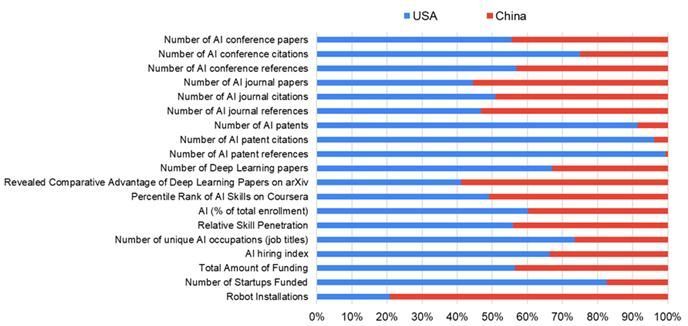
Recently, the Electronics and Telecommunications Research Institute (ETRI) of Korea announced through this year's report on the 7 major artificial intelligence trends that "the rapid rise of Chinese AI" and the "hegemonic competition between the United States and China" will officially begin. It emphasized the need to pay attention to China, which has built an AI world different from the US, which has led AI so far.
China, AI Hegemonic Competition
China has 15 major AI open platform companies. The Chinese government, calling these companies the "AI national team," is promoting technological innovation and commercialization through public-private cooperation.
For example, companies like WeChat fall into this category. WeChat collects behavioral flow data from real life, enabling AI to independently read consumer desires and predict actions.
The institute stated, "China has begun to express its unique AI characteristics by utilizing data not only in terms of quantity but also quality," adding, "The Chinese government's technocratic approach has led to policies of co-evolution between technology and market. Although many countries are pursuing national AI strategies, it is difficult to find any country that has achieved results in such a short period as China."
Chinese AI: 'State-led', 'Personal Data', 'Government as Consumer'
The biggest characteristic of Chinese AI is that the government exists at both the top and bottom of the AI industry's food chain. The Chinese government boldly provides personal data to AI companies to grow the AI industry, while simultaneously acting as the largest consumer of products or services developed by AI companies.
For example, SenseTime, a company developing facial recognition platforms, created an AI system that can be used to catch criminals. In this process, it used 2 billion facial data points. These data came from 176 million surveillance cameras owned by the Chinese government.
ETRI researchers view that such strong AI policies and successes in China are stimulating neighboring major powers. They expressed concern that this could trigger an arms race among major powers aiming to dominate data hegemony and take the lead in the Fourth Industrial Revolution.
AI Hegemonic Competition... Vigilance of Neighboring Countries

China's goal is to raise its AI capabilities to the level of advanced countries by this year. Furthermore, it announced that by 2030, it aims to surpass the United States and become the global center of AI innovation.
The country most wary of China is the United States. In October last year, the US added representative Chinese AI companies such as SenseTime, Megvii, and iFlytek to the Entity List of trade-restricted companies. This followed previous additions like Huawei and Hikvision. The Trump administration also signed an executive order in February last year titled "Maintaining American Leadership in Artificial Intelligence." It stated that the US must protect its AI technological superiority and create an environment that safeguards critical AI technologies from competitors and hostile nations.
AI Nationalism
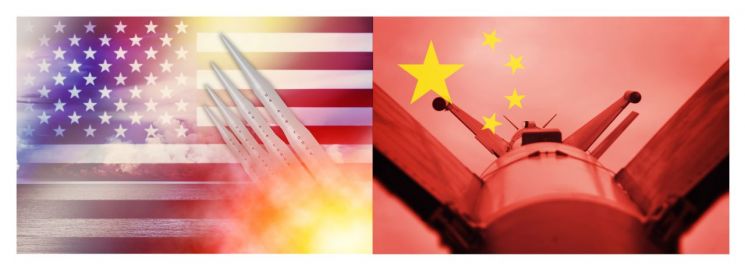
ETRI researchers see the AI strategies and implementations of these two countries as a new form of data nationalism, aiming to protect their own data and services while reducing foreign influence.
It is not only the US and China. Europe, trying to survive amid the hegemonic competition between the two, is implementing various policies to build its own AI ecosystem. Korea also completed preparatory work to fully promote its AI national strategy, with the government announcing the AI national strategy last year and the National Assembly passing the three data-related laws.
Kim Myung-jun, president of ETRI, explained, "This report aims to assist in setting directions for AI R&D strategy formulation following the government's announcement of the 'AI National Strategy' in December last year. If AI strategies are understood superficially or their scope is not properly set at the national level, the country may fall behind in the global hegemonic competition."
© The Asia Business Daily(www.asiae.co.kr). All rights reserved.



















