[Asia Economy Reporter Jeon Jinyoung] “Eunjung, the client says the meal doesn’t suit their taste...”
Kim Eunjeong (26, pseudonym), who was leisurely drinking coffee at a cafe in Seoul during the holiday, had to urgently check her email after receiving a KakaoTalk message from her boss.
Working at a travel agency, Kim receives work instructions from her boss regardless of holidays, such as “Please check because the customer doesn’t like the hotel room,” or “Find out because the food doesn’t suit their taste.” Kim said, “Among my colleagues, some even have a separate work phone that they leave at the office when they leave work,” adding, “I’m planning to do the same soon.”
Office worker Son Minji (25, pseudonym) also brought her company laptop on this trip home. Son sighed, saying, “I naturally bring it because I’m anxious not knowing when or where work instructions might come,” and “It has become a habit to keep messenger apps on 24 hours a day.”
The partial amendment to the Labor Standards Act that prohibits work-related contact outside working hours (the “No KakaoTalk After Work Act”) has been pending in the National Assembly for four years. Proposed by Assemblyman Shin Kyungmin of the Democratic Party, the bill aims to prohibit work instructions via phone calls, text messages, or social network services (SNS) outside of legally defined working hours. This guarantees the so-called “right not to be connected.”
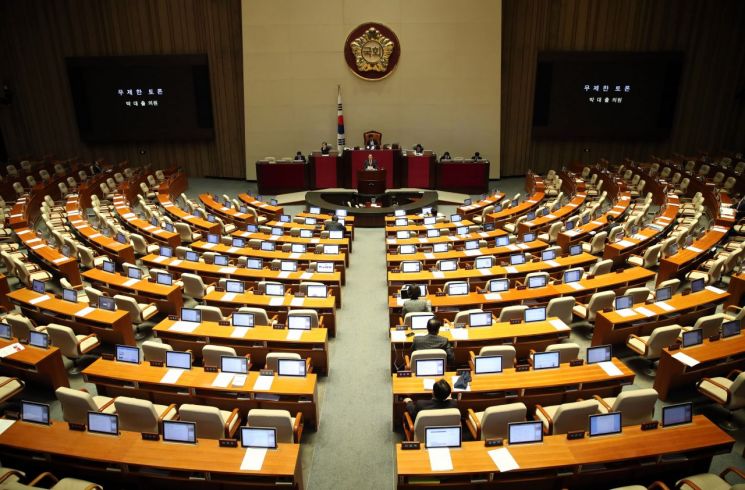
Assemblyman Shin explained the legislative intent in his proposal, saying, “There is a growing public demand to legally guarantee the ‘right not to be connected,’” and “It aims to protect citizens’ basic rights as defined by the Constitution, including the freedom of private life.”
France has already codified the “right not to be connected” in its labor law amendments. In France, labor and management must negotiate regarding work instructions after working hours. This applies to companies with 50 or more employees. Germany issued guidelines in 2013 that prohibit supervisors from contacting employees outside working hours. Companies are also joining in. For example, German automaker Daimler introduced a program that automatically deletes emails received on holidays.
Following Assemblyman Shin, independent Assemblyman Lee Yongho and Assemblyman Yoo Seungmin of the New Conservative Party have also proposed related bills, but none have passed the standing committee stage. A National Assembly Environment and Labor Committee official said, “Discussions have not progressed because the subcommittee has not been convened due to failure to reach consensus between the ruling and opposition parties.”
Assemblyman Shin said, “The ‘No KakaoTalk After Work Act’ was the first bill proposed in the 20th National Assembly. Even though four years have passed since the bill was proposed, the KakaoTalk prison still torments office workers through Lunar New Year, which is regrettable.”
He added, “As the movie line goes, ‘It’s not over until it’s over,’ I will reintroduce the bill with improvements in the 21st National Assembly to protect the public’s right not to be connected.”
© The Asia Business Daily(www.asiae.co.kr). All rights reserved.
![Clutching a Stolen Dior Bag, Saying "I Hate Being Poor but Real"... The Grotesque Con of a "Human Knockoff" [Slate]](https://cwcontent.asiae.co.kr/asiaresize/183/2026021902243444107_1771435474.jpg)
















