Office Workers Spend 540,000 Won on Lunar New Year Holiday... New Employees Face 164,000 Won Sebaetdon Burden
Experts Say "Sebaetdon Culture Must Be Eradicated"
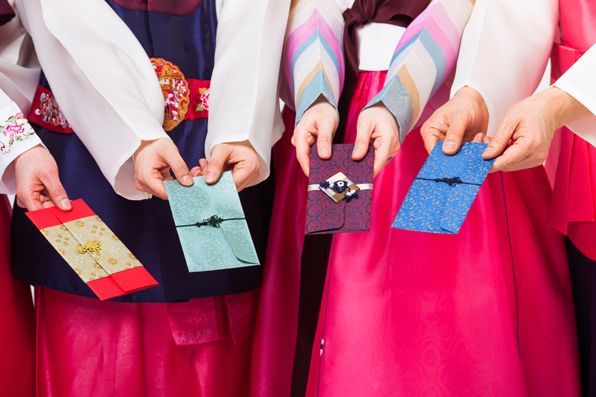
[Asia Economy Reporter Heo Midam] "Of course, I want to give a lot from the heart. But reality is really tough."
Kim (28), who recently got a job as an intern at a company, is deeply worried ahead of the Seollal holiday. He sighed, saying, "Even just the fixed monthly expenses like living costs, maintenance fees, and utility bills are a lot, and thinking about giving New Year's money to my nephews and nieces adds to the stress."
He continued, "I have about 10 nephews and nieces," and confessed, "I can't not give New Year's money, but I also feel awkward giving too little."
As the Seollal holiday approaches, more office workers are feeling burdened by the expenses of giving New Year's money. Especially for young adults who lack financial capacity, the burden of giving New Year's money is even greater. Experts suggest that instead of focusing on the culture of giving New Year's money, we should revisit the original meaning of 'Seollal.'
The proportion of New Year's money expenses in Seollal costs is not small. According to a recent survey conducted by job portal JobKorea together with AlbaMon on 1,035 office workers about 'Seollal expenses,' the average expected spending during this Seollal holiday was 540,000 KRW.
Among this, the budget for New Year's money was 164,000 KRW. In particular, the average expected New Year's money for unmarried office workers was 123,000 KRW, while for married office workers it was 283,000 KRW, which is 160,000 KRW more than that of unmarried workers.
Because of this, office workers are voicing their burdens about giving New Year's money. A 4-year employee, A (30), said, "I usually don't keep in touch with relatives personally, so I wonder 'Do I really have to give it?'" and confessed, "I'm barely making ends meet, so I don't have the capacity to take care of relatives as well."
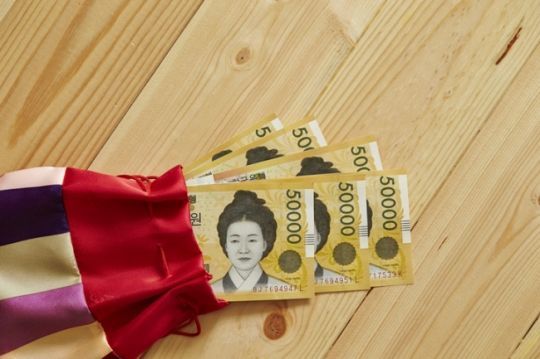
Especially young adults who have just entered society expressed significant burden about giving New Year's money. B (28), a first-year employee, said, "I have never given money to relatives during holidays," adding, "Once you give it once, you feel pressured to keep giving, and since I have more than five nephews and nieces, even giving 30,000 KRW each adds up to quite a lot."
This phenomenon is related to the financial difficulties of young adults. According to the '2019 Ordinary People's Financial Life Report' published by Shinhan Bank last year, 44% of young adults in their 20s and 30s had loans. The average loan balance per person was 33.91 million KRW, an increase of 4.32 million KRW (15%) compared to the previous year.
C (27), who was hired as an intern at a company in the second half of last year, said, "I don't have any savings yet, so the very situation of giving money to someone is a burden," and confessed, "Since I have received money from relatives until now, I feel awkward not giving New Year's money to my nephews and nieces."
He added, "If my life were more comfortable, I would gladly give as much as I want. But my current salary is low, so I'm worried," and said, "Because of the burden of giving New Year's money and relatives' nagging, I probably won't go back to my hometown this holiday."
Experts emphasize that the culture of giving New Year's money should be eradicated. Professor Kwak Geumju of the Department of Psychology at Seoul National University explained, "For unemployed youth, economic problems are even more severe, but even if they are employed, financial tightness cannot be ignored," adding, "Especially as society has become more materialistic than in the past, the money that needs to be spent has also increased. Overall, consumption tendencies have grown compared to the past, so the burden has also increased."
She continued, "Especially during the Seollal holiday, economic expenditures such as gifts and New Year's money increase, so it can be burdensome," and added, "Since many people avoid the culture of giving New Year's money, this culture should be eradicated in our society."
© The Asia Business Daily(www.asiae.co.kr). All rights reserved.
![Clutching a Stolen Dior Bag, Saying "I Hate Being Poor but Real"... The Grotesque Con of a "Human Knockoff" [Slate]](https://cwcontent.asiae.co.kr/asiaresize/183/2026021902243444107_1771435474.jpg)

















