Jongno-gu to Promote '2020 Donhwamun-ro Revitalization' by December... Utilizing Local Historical and Cultural Resources to Preserve Donhwamun-ro's Identity and Create a 'Second Insadong' through Resident Participation, Implementing Resident Contest Projects, Car-Free Street Initiatives, and Streetscape Improvement Projects
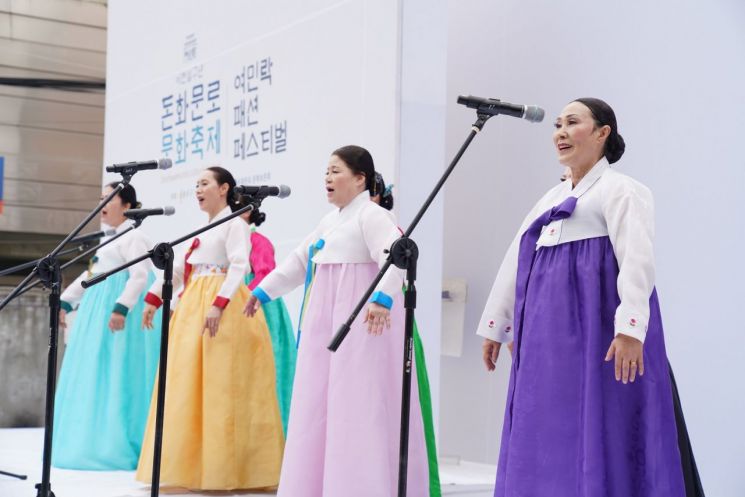
[Asia Economy Reporter Park Jong-il] Donhwamun (敦化門), located in the heart of Seoul’s city wall, is the main gate of Changdeokgung Palace and the starting point of Donhwamun-ro. Known as the "King’s Road," Donhwamun-ro was the path the king traveled during the Joseon Dynasty to directly meet his people. True to its name, the king listened to the voices of the people here, and the road was also used for royal processions to Jongmyo Shrine, secondary palaces, and for welcoming envoys.
Jongno-gu (District Mayor Kim Young-jong) will undertake the "2020 Donhwamun-ro Revitalization Project" from January to December to transform the historic King’s Road area into a vibrant city where people and commerce grow together, creating a second Insadong that blends tradition and modernity.
To this end, a community-led resident participation governance will be formed to combine traditional cultural heritage with various contents, promoting unique cultural events that can only be experienced on Donhwamun-ro.
Additionally, resident participation contest projects and car-free street initiatives will be implemented to revitalize Donhwamun-ro.
First, active support will be given to the ‘Donhwamun-ro Cultural Preservation Society,’ which was voluntarily formed in March last year by local residents, merchants, building owners, and representatives of various councils.
The Cultural Preservation Society provided opinions on major street maintenance projects in the Donhwamun-ro area last year, monitored their progress, and organized the 2019 Donhwamun-ro Cultural Festival. They hold regular and ad hoc board meetings twice a month to continuously generate ideas for revitalizing Donhwamun-ro, which the district office plans to incorporate as a foundation for regional revitalization.
Next, various distinctive cultural events and festivals utilizing village resources will be held and supported. Events such as the ‘2020 Donhwamun-ro Cultural Festival’ and ‘Donhwamun-ro Outing with Family’ will be organized, linked with local institutions like the Woori Sori Library, Woori Sori Museum, and Donhwamun Gugakdang (traditional Korean music hall) to operate traditional culture programs. Diverse events such as the Donhwamun-ro Gugak Grand Festival in May and the Korea Gugak Festival in September will also be held.
From March to November, a resident contest project for the 2020 Donhwamun-ro revitalization will be conducted. Last year, three projects were selected and implemented, including publishing a newsletter introducing the cultural resources of Donhwamun-ro, holding a children’s drawing contest, and running a Nanta experience program, all of which received positive responses from residents.
The resident contest project evaluation will be conducted in two stages: a first written review and a second subsidy review committee. Upon final selection, project costs will be supported up to 5 million KRW per organization.
Starting in May, efforts will focus on the ‘Donhwamun-ro Car-Free Street Project,’ targeting a 520-meter-long, 22-meter-wide section from in front of Changdeokgung Palace to Myodong Intersection. Upon completion, the district plans to operate Gugak (traditional Korean music) performances and Donhwamun-ro busking events here to captivate passing citizens.
Donhwamun-ro is considered the center of Korean traditional music (Gugak), as it was home to the Royal Music Department (Iwangjik Aakbu, the royal music institution) and the Joseon Vocal Music Research Institute. Even today, one can find traditional Korean musical instrument shops and research institutes throughout the area. It was designated as ‘Gugak-ro’ (Gugak Road) in 1994.
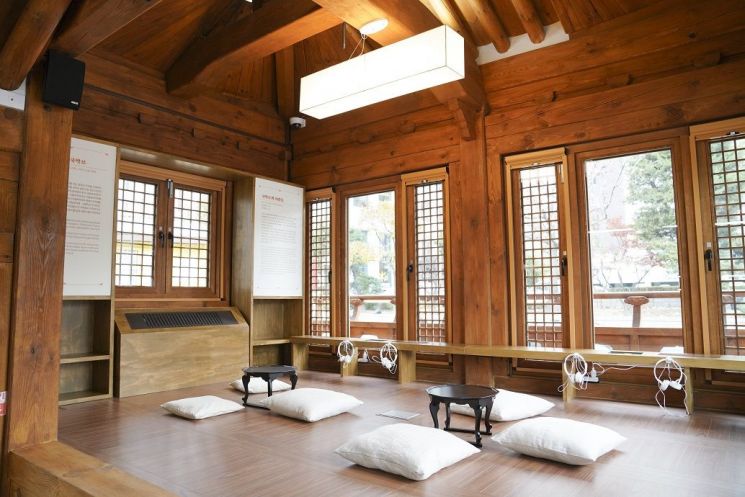
Building on these regional characteristics, Jongno-gu has held the ‘Gugak-ro Gugak Grand Festival’ since 2011 and established the specialized space ‘Woori Sori Library’ (Samildae-ro 30-gil 47) in 2017. The Woori Sori Library, the district’s 17th library, offers a wide range of Korean music from ancient recordings to contemporary compositions, and provides access to Gugak materials including royal court music and folk music.
District Mayor Kim Young-jong stated, “Donhwamun-ro, where kings once observed the lives of their people, is now a representative area in the city where Korean traditional culture and arts can be enjoyed. I hope it will become a beloved space not only for domestic and international tourists but also for local residents.” He added, “We will do our best throughout this year to revitalize the Donhwamun-ro area, where our cultural heritage remains intact.”
© The Asia Business Daily(www.asiae.co.kr). All rights reserved.


















