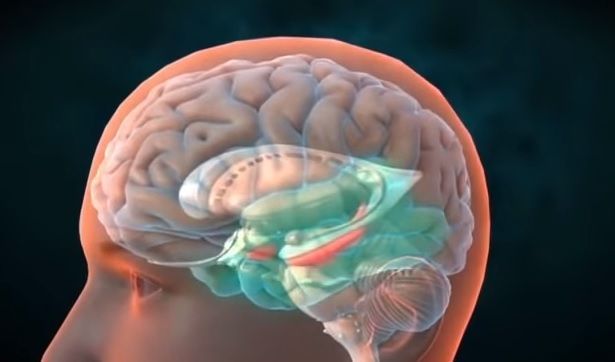
[Asia Economy Reporter Hwang Junho] Domestic researchers have developed a technology that enhances memory by shining specific light on the head. This technology increases the calcium concentration within brain nerve cells to boost memory. Although the research has currently succeeded only in animal experiments, it is expected to develop into a technology that can enhance human memory in the future.
On the 21st, the Institute for Basic Science announced that it has developed a non-invasive technology that improves spatial memory ability by shining light on the head to regulate calcium concentration within brain nerve cells.
Increasing intracellular calcium concentration without surgery
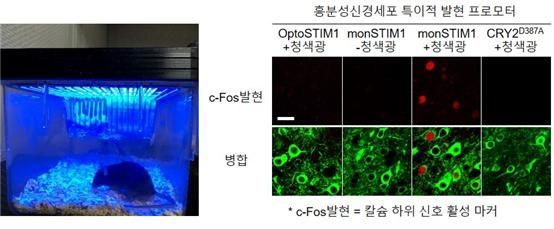
The research team led by Huh Won-do, Invited Research Fellow of the Social Brain Science Group at the Cognitive and Social Research Division (Professor of Biological Sciences at KAIST), Director Shin Hee-seop, and Research Fellow Lee Sang-gyu developed a new technology called 'monSTIM1' that increases calcium concentration in brain cells without surgery using optogenetics technology.
MonSTIM1 is an advanced technology compared to the previously developed OptoSTIM1 technology by the research team. OptoSTIM1 is a technology that increases intracellular calcium concentration by inserting an optical fiber into the head of a mouse. When blue light is shone from the inserted optical fiber onto brain cells, the intracellular blue light receptor proteins bind and absorb calcium. MonSTIM1 increases sensitivity to light by 55 times, allowing cells to open calcium channels without the need to insert optical fibers.
Calcium is a substance widely involved in cell movement, division, gene expression, neurotransmitter secretion, and homeostasis maintenance. A deficiency of intracellular calcium causes various diseases such as cognitive impairment and cardiac arrhythmia.
Memory improves just by shining light
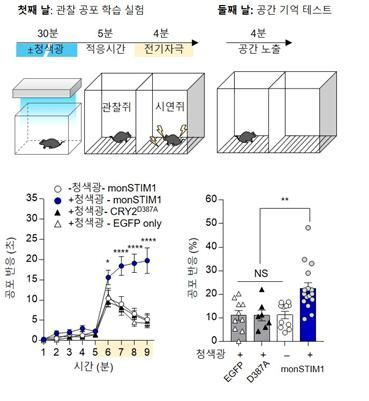
The research team conducted animal experiments using monSTIM1 and reported that the spatial perception and empathy abilities of experimental mice improved. The team controlled the calcium concentration of excitatory nerve cells in the anterior cingulate cortex (head) of living mice and conducted spatial fear behavior experiments using electric shocks. Mice exposed to light at flashlight intensity (1mW/mm) with monSTIM1 recalled the memory of the electric shock on the first day of the experiment and showed anxious behavior on the second day. In contrast, control mice did not show fear even when placed in the room where they had previously received electric shocks. Notably, monSTIM1 mice also showed fear and responded when witnessing other mice receiving electric shocks.
Professor Huh Won-do said, "The monSTIM1 technology can be applied to various parts of the brain," adding, "We will strive to conduct clinical trials on humans in the future." He further stated, "I hope this technology will be widely applied in brain cell calcium research and brain cognitive science research."
The research results were published on the 10th at 7 p.m. (Korean time) in the international journal Nature Communications.
© The Asia Business Daily(www.asiae.co.kr). All rights reserved.
!["The Woman Who Threw Herself into the Water Clutching a Stolen Dior Bag"...A Grotesque Success Story That Shakes the Korean Psyche [Slate]](https://cwcontent.asiae.co.kr/asiaresize/183/2026021902243444107_1771435474.jpg)


















