[Asia Economy Reporter Kwangho Lee] It has been pointed out that the agreed rate of return on private investment projects in South Korea does not adequately reflect the risks according to facility types and characteristics, nor the government's support. Accordingly, there is an analysis that measuring and analyzing risks based on project characteristics and establishing government support principles are necessary.
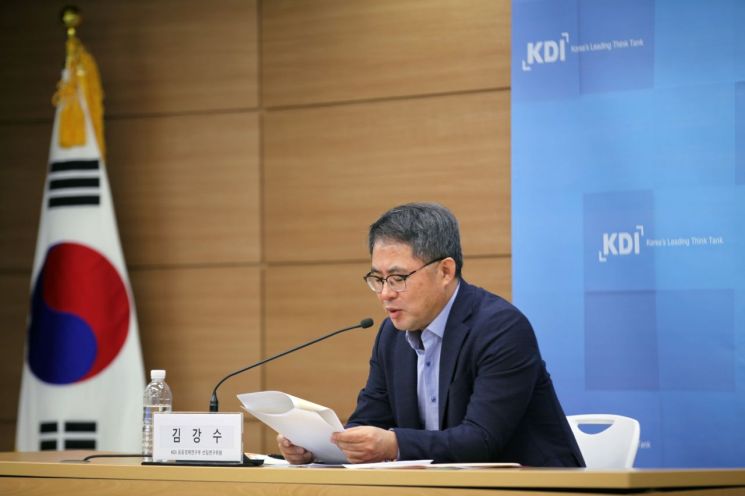
Senior Research Fellow Kangsoo Kim of the Korea Development Institute (KDI) revealed this on the 20th through a report titled "Analysis of Determinants of Agreed Rate of Return for Smooth Implementation of Private Investment Projects and Implications."
Kim stated, "The characteristics of projects such as facility type, scale of private investment costs, and operation period, as well as the associated risks, are not sufficiently reflected in determining the agreed rate of return," adding, "Government risk-sharing and support policies, such as construction subsidies, also do not appropriately contribute to lowering the agreed rate of return."
In fact, the average post-tax agreed rate of return for revenue-type private investment projects has continuously declined since the introduction of the private investment system in 1994, and since 2007, agreements have been made at around 6% based on the real post-tax agreed rate of return. The agreed rate of return for revenue-type private investment projects has tended to stabilize in line with the decline in government bond and market interest rates since 2007.
Additionally, the post-tax agreed rate of return for lease-type private investment projects was concluded at an average level of 5.96% until 2009 but has since decreased, with agreements now made at the low 4% range.
Kim explained, "Financial market conditions for funding procurement (5-year government bond market yield at the time of agreement) were analyzed to have no significant impact on the agreed rate of return for revenue-type private investment projects," adding, "This is believed to be because the agreed rate of return varies depending on the credit and funding capabilities of large construction companies and financial institutions participating as investors rather than financial market conditions."
He further added, "Moreover, since investors participating as shareholders often act as lenders directly providing loans, there is little incentive to procure funds at low interest rates to maximize investment returns."
On the other hand, he noted, "In the case of lease-type private investment projects, the higher the borrowing spread during the construction period, the more the project risk premium 'alpha (α)' increases, resulting in a higher agreed rate of return," and "It was analyzed that when the borrowing spread changes by 1 percentage point, the risk premium α changes by about 0.17 percentage points, indicating that increased funding costs due to financial market conditions affect the increase in the agreed rate of return." Therefore, considering that the implementing entities of lease-type private investment projects are mainly small and medium-sized enterprises, it is argued that efforts to reduce financial costs through policies expanding credit guarantees for these entities and thereby lowering the agreed rate of return are necessary.
Kim advised, "For the smooth implementation and revitalization of private investment projects and reduction of user fees, it is necessary to determine an appropriate agreed rate of return not only by considering the agreed rates of similar existing private investment projects but also through more active negotiation and efforts," adding, "In particular, to reduce user fees, policies that induce competition in the private investment market such as transparent information disclosure, simplification of promotion procedures, expansion of guarantee supply, and compensation for proposal costs for unsuccessful bidders are very important."
© The Asia Business Daily(www.asiae.co.kr). All rights reserved.

















