Vasily Mikheev, Director of the Asia-Pacific Research Center at the Institute of International Economy and International Relations
"North Korea says it does not need South Korea's proposals and will deal directly with the United States"
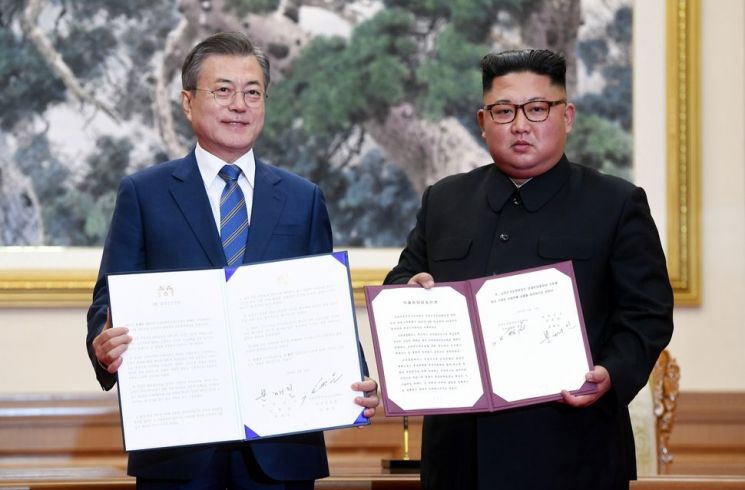
Despite the government showing a strong willingness for inter-Korean cooperation, North Korea's cold response is diagnosed to stem from its distrust of the South, believing that the South is trying to use inter-Korean cooperation as a means for the general election.
On the 21st, Vasily Mikheyev, head of the Asia-Pacific Research Center at the International Institute of Economics and International Relations (IMEMO) under the Russian Academy of Sciences, said in an interview with Voice of America (VOA), "North Korea thinks that President Moon Jae-in did not keep his promises of economic support and aid to the North, and now wants it due to some domestic issues such as the general election."
When asked why North Korea does not respond positively to South Korea's proposals for inter-Korean cooperation, he replied, "North Korea's cold reaction is neither new nor unexpected," adding, "They believe they do not need such proposals and want to deal directly with the United States."
Mikheyev explained, "The negotiation logic of the North Korean authorities is not to promote inter-Korean relations but to achieve sanctions relief through direct talks with the United States," and "President Moon wants to continue playing a mediating role in denuclearization between North Korea and the U.S. through improving inter-Korean relations, but North Korea's message to the South is 'We do not need that.'"
He added, "The North Korean authorities want to continue pressuring U.S. President Donald Trump, who is facing difficult domestic political situations such as impeachment and the presidential election, and want to deal directly with him."
Mikheyev assessed that the possibility of North Korean Supreme Leader Kim Jong-un giving up nuclear weapons remains low. He said, "North Korea believes nuclear weapons are the only best means to ensure the regime's safety," and "Complete dismantlement of nuclear weapons is understood as directly linked to regime security, so it would be difficult for North Korea to accept."
Meanwhile, the government is accelerating its independent inter-Korean relations policy after President Moon expressed his intention to pursue inter-Korean cooperation projects beyond the scope of North Korean sanctions in his New Year's address on the 7th and New Year's press conference on the 14th.
Earlier on the 20th, the Ministry of Unification emphasized the necessity of individual tourism to North Korea through a 'Reference Material on Individual Tourism' and stated, "We are reviewing various plans, including how to proceed with consultations with the North."
Likely forms of individual tourism include ▲ visits to the Mount Kumgang and Kaesong areas by separated families or social groups ▲ visits to North Korean areas by South Koreans through third countries ▲ allowing foreigners to participate in linked South-North tourism.
However, it is uncertain how much the North will respond to these government efforts. The Ministry of Unification said, "The North has not yet shown any official response to individual tourism."
© The Asia Business Daily(www.asiae.co.kr). All rights reserved.
![Clutching a Stolen Dior Bag, Saying "I Hate Being Poor but Real"... The Grotesque Con of a "Human Knockoff" [Slate]](https://cwcontent.asiae.co.kr/asiaresize/183/2026021902243444107_1771435474.jpg)
















