US Fed Interest Rate Hold Expected to Continue Internally for the Time Being
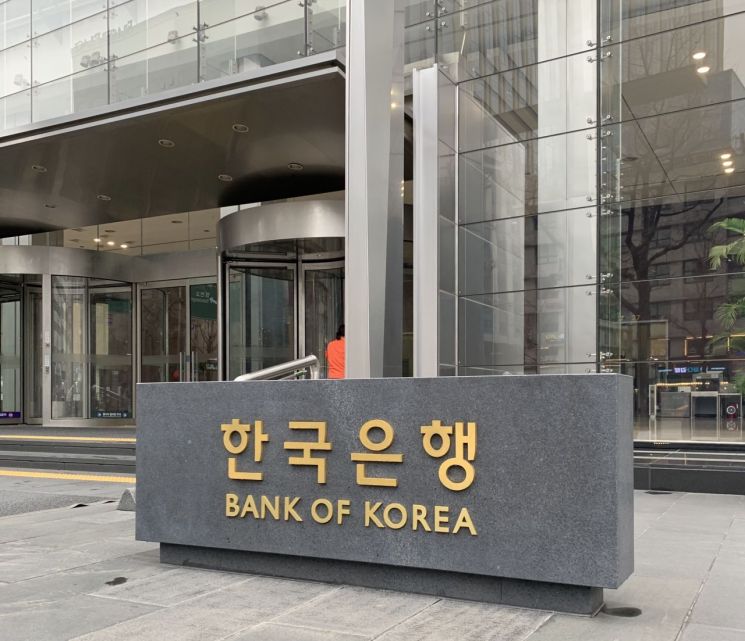
[Asia Economy Reporter Kim Eun-byeol] The Bank of Korea excluded "major countries' monetary policies" from the key points to watch in its monetary policy assessment process. It appears that there is an internal consensus within the Bank of Korea that there will be no significant changes in the monetary policy stance of advanced countries such as the United States and the European Union (EU) this year.
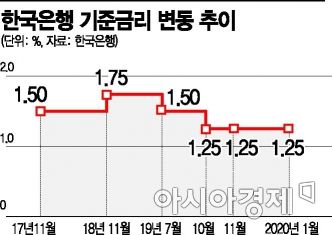
According to the Bank of Korea on the 20th, after freezing interest rates on the 17th, the Bank removed "major countries' monetary policies" from the factors to be closely monitored in the monetary policy direction statement. In the statement from November last year, it was stated, "We will carefully monitor developments such as the US-China trade negotiations, major countries' economic conditions and monetary policies, the increase in household debt, and geopolitical risks, as well as their impact on the domestic macroeconomy and financial stability, to determine whether to adjust the degree of easing." In contrast, this time, it mentioned that it would monitor "global trade disputes, major countries' economies, the increase in household debt, and geopolitical risks."
The Bank of Korea's revision of the wording is interpreted as reflecting confidence that the monetary policies of advanced countries such as the United States and the EU will proceed as expected without changes for the time being. While the US benchmark interest rate must naturally be considered, the Bank intends to pay more attention to other factors. In particular, the analysis that the US Federal Reserve (Fed), which mainly influences Korea's benchmark interest rate, will keep rates on hold for the time being has gained traction within the Bank of Korea. Based on the Federal Open Market Committee (FOMC) members' dot plot and this year's economic outlook, it was judged that the US would also keep rates steady.
Notably, the Bank of Korea reportedly paid close attention to the question about the possibility of a rate hike and Fed Chair Jerome Powell's response during the press conference after the December FOMC meeting. At that time, Chair Powell stated that "a significant and persistent increase in inflation is necessary." This means that the Fed, which believes it will be difficult to achieve its inflation target this year, is willing to tolerate inflation even at the risk of potential downsides.
Since the Fed has expressed a stance of tolerating inflation and observing the situation for the time being, it is not easy for the Bank of Korea to lower interest rates further under these circumstances. This is because the interest rate gap between the two countries could widen.
The Bank of Korea also expects that the monetary policy stance in Europe will remain unchanged for the time being. The European Central Bank (ECB) decided in September last year to lower the deposit rate and resume net asset purchases to respond to the economic downturn in the Eurozone (19 countries using the euro). The benchmark interest rate and marginal lending rate were maintained at the current levels of 0% and 0.25%, respectively. The ECB is also expected to maintain the current or lower interest rates until inflation approaches the target of 2%.
Meanwhile, the Bank of Korea internally views that the Bank of England (BOE) may cut interest rates this month. It is judged that a rate cut is necessary to prepare for Brexit (the UK's withdrawal from the EU). However, the British pound is considered to have a relatively low impact on Korea's benchmark interest rate, so the effect on monetary policy is expected to be limited. The BOE will hold a monetary policy meeting on the 30th.
In the statement, the Bank of Korea also replaced "US-China trade negotiations" with "global trade disputes" as a factor to watch. Since the Phase 1 US-China trade agreement has been reached, it was difficult to limit risk factors solely to US-China trade negotiations. In particular, the Bank of Korea is closely monitoring trade disputes between the US and the EU. Although there are trade disputes with South American countries and others, the trade negotiations with the EU are by far the most impactful for Korea.
Bank of Korea Governor Lee Ju-yeol stated, "Although it is only Phase 1, the US and China have made progress, and with the semiconductor market expected to recover by mid-year, we anticipate that our economy will improve compared to last year." He added, "While there may be negative impacts on items competing with the US in the Chinese market due to the trade agreement, the reduction in uncertainty is overall a more positive factor for our exports."
© The Asia Business Daily(www.asiae.co.kr). All rights reserved.
![Clutching a Stolen Dior Bag, Saying "I Hate Being Poor but Real"... The Grotesque Con of a "Human Knockoff" [Slate]](https://cwcontent.asiae.co.kr/asiaresize/183/2026021902243444107_1771435474.jpg)

















