Passage of the Police-Prosecutor Investigation Authority Adjustment Bill
Concerns Over 'Gongryong Police'
Distrust Persists Amid Burning Sun Scandal
Continuous Police Reform Needed
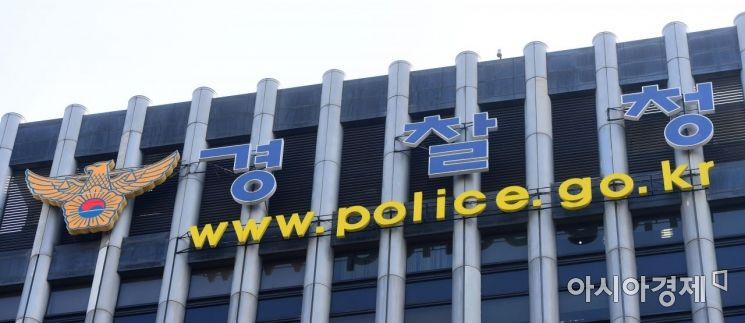
[Asia Economy Reporter Lee Gwan-ju] With the passage of the prosecution-police investigation authority adjustment bill in the National Assembly, the police have been granted unprecedentedly strong powers. However, since they have also taken on various reform tasks to dispel concerns about a 'dinosaur police,' they have now entered a full-fledged 'testing ground.'
The tasks given to the police can be broadly summarized as resolving excessive concentration of power, eradicating collusion and corruption, and strengthening expertise. A representative police reform plan to overcome these challenges is the introduction of the 'Autonomous Police System.' This plan involves sharing and decentralizing the expanded powers of the national police, following the adjustment of investigation authority, with local governments. However, since the bill was proposed in the National Assembly in March last year, proper discussions have not even taken place. There is also strong opposition from frontline police officers regarding the Autonomous Police System. Now that the adjustment of investigation authority has been finalized, an effective introduction of the Autonomous Police System through diverse opinion gathering is required. Ko Gi-cheol, head of the Autonomous Police Promotion Team at the National Police Agency, said in a phone interview with Asia Economy on the 14th, "Discussions after the adjustment of investigation authority will actively continue, focusing on the introduction of the Autonomous Police System," adding, "We will participate sincerely in the bill discussions and steadily prepare what can be done even before its passage."
Reforming the intelligence police is also an important task. The intelligence police have long been the 'Achilles' heel' of the police, having been embroiled in past controversies over illegal surveillance and political involvement. The prosecution has also pressured the police with the argument that if the police, having secured investigation authority, maintain their powerful intelligence-gathering powers, they will inevitably become a 'dinosaur.' In response, as part of intelligence police reform, the police established the 'Intelligence Police Activity Rules' in January last year as a National Police Agency directive, limiting the scope of intelligence gathering and instituting control measures such as banning constant access to civilian organizations. They also created a Compliance Support Team to preemptively check and block illegal activities by the intelligence police.
However, the concept of 'public safety information' that the intelligence police can collect remains unclear, raising concerns about intelligence gathering being conducted in a 'one size fits all' manner. There is also criticism that there are no separate regulations to punish illegal surveillance and political involvement, which is inadequate. This issue needs to be resolved through legislative processes such as the handling of the partial amendment bill to the Police Officer Act currently proposed in the National Assembly.
The fact that the police will be granted primary authority to conclude investigations also signals a major change. This is why police investigations must be fair and professional. In October last year, the police announced an investigation reform roadmap, presenting 80 detailed tasks across four major areas. The plan includes comprehensive measures to change police investigations, such as strengthening external oversight, securing accountability and ethical awareness, and establishing a smart investigation environment. Current initiatives being pursued by the police?such as realizing meaningful participation of defense attorneys, introducing warrant examiners and investigation reviewers, establishing separate case management departments, setting up joint forensic laboratories with the National Forensic Service, and handling cases centered on local police agencies?reflect efforts to enhance fairness and professionalism in investigations.
Above all, restoring public trust is an urgent priority. The Burning Sun scandal not only raised doubts about police investigative capabilities but also revealed police collusion and corruption, leaving deep wounds. In the 2019 National Social Institutions Trust Survey conducted by Realmeter last year, the police ranked lowest among surveyed institutions with a trust rating of 2.2%. The police are making every effort to restore public trust, including launching large-scale measures to eradicate collusion and corruption.
The National Police Agency stated immediately after the passage of the investigation authority adjustment bill, "We will make this year the 'first year of responsible investigations' and, through relentless police reforms, become a trusted police force for the people."
© The Asia Business Daily(www.asiae.co.kr). All rights reserved.
![Clutching a Stolen Dior Bag, Saying "I Hate Being Poor but Real"... The Grotesque Con of a "Human Knockoff" [Slate]](https://cwcontent.asiae.co.kr/asiaresize/183/2026021902243444107_1771435474.jpg)
















