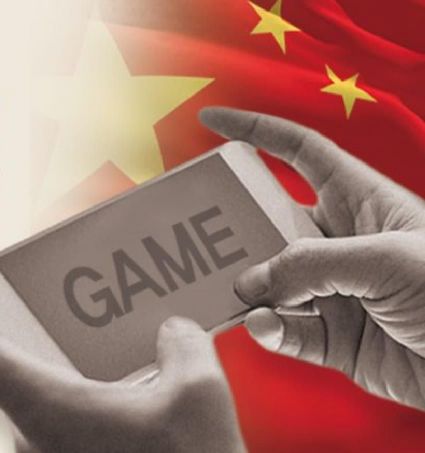
[Asia Economy Reporter Bu Aeri] As the government announced plans to mandate the disclosure of probabilities for loot box items in games, concerns are emerging within the industry that the domestic gaming sector may shrink. The government’s policy does not apply to foreign games with servers located overseas, raising fears that Korean games will face reverse discrimination.
According to industry sources on the 14th, the Fair Trade Commission’s previously announced 'Amendment to the Electronic Commerce Act Notice' includes a clause on 'displaying probability information for loot box products.' Accordingly, game companies must compulsorily disclose probability information for all loot box items in online games, moving from 'self-regulation' to mandatory disclosure. However, since it is practically difficult to apply domestic laws to foreign games without a domestic presence, concerns about reverse discrimination are surfacing.
Currently, most domestic game companies voluntarily disclose the 'draw' probabilities of loot box items. The Korea Game Industry Association, which includes major domestic game companies such as NCSoft, Nexon, and Netmarble, enforces self-regulation requiring the disclosure of probability information for loot box items.
The Korea Game Policy Self-Regulation Organization monitors and publishes monthly reports on the results. Additionally, games like Lineage 2M provide dedicated spaces within the game to display probabilities. A representative from a domestic game company stated, "Foreign game companies do not comply well with Korean game laws," adding, "If they continue to slip away like loaches, the question is whether this can be enforced. There are concerns that only domestic operators will face stricter regulations."
In fact, according to the Korea Game Policy Self-Regulation Organization, Chinese games habitually fail to disclose loot box probabilities. For example, 'Gun Age' was flagged 14 times for non-disclosure, and Clicktouch, the Chinese game company operating 'Call Me Emperor,' was previously listed 11 times for non-disclosure. Supercell’s 'Clash Royale,' in which Chinese Tencent holds an 84% stake, also accumulated 14 instances of non-disclosure.
On the same day, the Korea Game Industry Association held a 'Seminar on Self-Regulation for Loot Box Items' and expressed concerns, stating, "Since the overseas sales of the Chinese game industry are expected to increase again this year compared to last year, mandatory probability disclosure legislation could disadvantage domestic companies."
According to the '2019 Game Industry Report' by the China Audio-Visual Digital Publishing Association, Chinese game companies earned $1.657 billion (approximately 1.82 trillion KRW) in sales in Korea last year. The association pointed out, "Even if legislative regulations proceed, it is practically difficult to enforce probability disclosure for overseas games such as those from China," and warned, "Competition between Chinese companies that do not disclose probabilities in the domestic market and domestic companies that are mandated to disclose probabilities could disadvantage domestic companies every year."
There are also forecasts that game companies generating revenue through item-based monetization structures will be affected in their performance due to government legislation. An industry insider lamented, "Even if there is no immediate significant business impact, if the government demands 'make it more visible' or requires disclosure of previously undisclosed probabilities, it will inevitably influence consumers’ spending psychology."
© The Asia Business Daily(www.asiae.co.kr). All rights reserved.

















