Ministry of Agriculture, Food and Rural Affairs & aT Korea Agro-Fisheries & Food Trade Corporation 2020 Outlook
Pursuing 'Placebo Consumption' Combining Cost-Effectiveness and Emotional Value
[Asia Economy Reporter Choi Sunghye] With the increase in single-person households and the spread of solo dining and drinking culture, the food and dining industry trends are expected to change this year as well. The trend of ‘placebo consumption,’ which combines cost-effectiveness (high performance relative to price) and emotional value for money (satisfaction relative to price), is expected to expand further.
According to the report from the Ministry of Agriculture, Food and Rural Affairs and aT Korea Agro-Fisheries & Food Trade Corporation’s ‘2020 Food and Dining Industry Outlook Conference’ on the 11th, the major trends in the dining industry this year are ▲Green Ocean ▲Buy me? For me ▲Multi-streaming ▲Convenience Premium Dining.
Expansion of the Alternative Meat Market
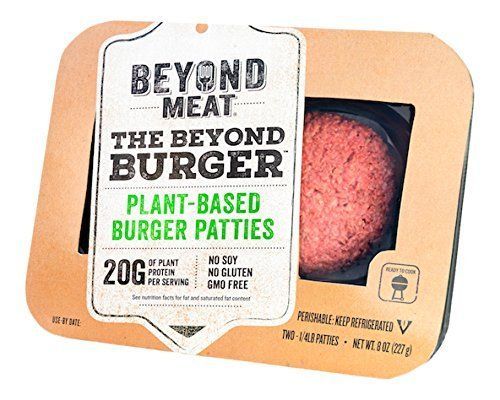
The leading figure of the Green Ocean trend is alternative meat. As claims arise worldwide that meat consumption may impact environmental destruction, alternative meat has expanded conceptually to include values of environment and bioethics. Consumers increasingly interested in health and the environment naturally focus on plant-based meat, i.e., alternative meat, pursuing the Green Ocean trend.
According to market research firm Euromonitor, the global alternative meat market is expected to grow to about 27 trillion KRW by 2023. The food and dining industry is also introducing various alternative meat-related products. McDonald’s offers the McVegan burger made from soybeans in Sweden and Finland, Burger King and Del Taco have developed and are selling new products made from soy protein instead of meat. Nestl? has launched vegetarian burgers, and plant-based alternative meat companies such as Beyond Meat, Impossible Foods, and Don Lee Farms are gaining popularity.
Although the domestic alternative meat market is still small, it is expected to expand as the government is promoting tax benefits this year to encourage R&D investment by food companies. On the 4th, the Ministry of Agriculture, Food and Rural Affairs held an Innovation Growth Strategy Meeting combined with the Economic Relations Ministers’ Meeting and selected five promising growth sectors: ▲Customized and special foods ▲Functional foods ▲Convenience foods ▲Eco-friendly foods ▲Export foods. The goal is to expand the market size of these sectors from 12.44 trillion KRW last year to 16.96 trillion KRW in 2022 and 24.85 trillion KRW by 2030 through various supports.
Lotte Food launched two types of nuggets and sausages under the Ennature Zeromitz brand in April after two years of development. These products have sold over 40,000 units so far. They plan to expand the lineup next year by releasing a new hamburger steak type product. Dongwon F&B exclusively imports and distributes Beyond Meat, a representative alternative meat brand that caused a vegan burger craze in the U.S. Since its launch in March, cumulative sales reached 25,000 packs (equivalent to 50,000 patties) by November, with monthly sales increasing by 12%. This product is sold through online malls (Dongwon Mall, Market Kurly, Orga Food, etc.) and some department stores, and since June, it has been sold as a ready-made burger at the Grand Hyatt Seoul Hotel.
Convenience store chains are also launching products using alternative meat one after another. CU announced in November that it will sequentially release a ‘Vegetarian Convenience Food Series (lunch boxes, burgers, kimbap)’ made from 100% plant-based raw materials. All meat used in these products is plant-based meat made from whole wheat or soy protein, reproducing the chewy texture, umami, and rich juice characteristic of meat. Seven Eleven also launched ‘Unlimit Dumplings’ made from plant-based meat in November. Unlimit Dumplings are frozen dumplings that can be easily enjoyed with just 3 minutes in the microwave, available in two flavors: galbi and kimchi. Developed domestically for the first time by the food tech startup ‘Jiguin Company,’ these products use ‘Unlimit,’ an alternative meat made from brown rice, oats, and nuts. Unlimit is 100% plant-based meat created using protein molding extrusion technology to replicate the texture and taste of meat. They also introduced burgers and kimbap made with 100% plant-based soy protein meat.
The number of vegetarian specialty restaurants is also increasing. As of last year, about 350 vegetarian restaurants operate nationwide. Representative places include Monk’s Butcher in Itaewon, Cook & Book in Hapjeong, Diner Jackie and Around Green in Mangwon, C’gemmureu in Songpa Songridan-gil, Chickpeas in Garosu-gil, Sinsa-dong, and Timahouse in Suwon, Gyeonggi Province. Online food malls such as Market Kurly, Hello Nature, and Oasis Market also offer a variety of products ranging from plant-based meat to sauces and convenience foods.
Buy me? For me, Consumption for Myself
Consumption for oneself has been a continuing trend for several years. The millennial generation, pursuing ‘small but certain happiness,’ tends to have segmented personal values and tastes and emphasizes work-life balance. Consumers who aim for consumption for themselves most easily approach gourmet exploration. Usually, they substitute meals with inexpensive convenience store lunch boxes, home meal replacements (HMR), or delivery food, but they willingly open their wallets to enjoy high-priced desserts or pursue small but certain happiness (sohwakhaeng) through cafe tours, craft beer tours, gourmet tours, and restaurant tours.
Sharing Emotions through SNS Channels
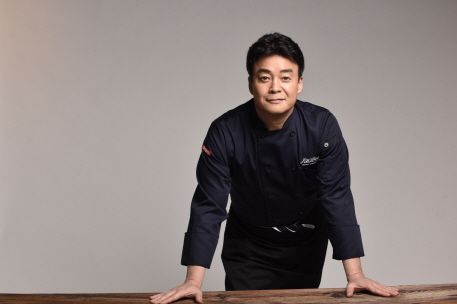
As cultures of sharing daily life, experiences, and tastes through various channels such as YouTube, KakaoStory, Facebook, and Instagram gradually spread, content and marketing that stimulate and induce dining consumption emotions through these channels are actively conducted. The most actively communicating channel recently is YouTube. Restaurateur Baek Jong-won, who started YouTube activities in June last year, launched ‘Baek Jong-won’s Cooking Secrets,’ achieving 1 million subscribers in the shortest time and securing about 3.2 million subscribers as of the end of December last year.
‘Gwaldo Neneumttin,’ released to commemorate the 35th anniversary of Paldo Bibimmyun, sold out 75,000 units in 23 hours on online shopping malls and 5 million units within a month. The product strengthened spiciness about five times compared to the original and boldly applied a word that young people used online for fun as the product name, becoming a popular product with eye-catching lettering and design.
Many dining establishments gaining attention through Instagram also exist. Konban, a tonkatsu specialty restaurant inside Dupel Center, a remodeled alley bathhouse in Jangan-dong, operated without an external signboard but became the life tonkatsu of insiders (meaning ‘insider,’ referring to people who actively participate in various events or gatherings and socialize well) and expanded to Dosan Park within five months of opening.
Consumption Tendency Pursuing Convenience + Premium
With the increase in single-person households, the tendency to pursue both convenience and premium consumption is rising. While usually enjoying simple convenience store lunch boxes or HMR, demand for convenience combined with premium according to personal values and tastes has increased.
A representative example is the trend toward premiumization of convenience store desserts. The variety and number of items such as roll cakes, chiffon cupcakes, eclairs, puddings, cheesecakes, macarons, madeleines, and financiers, which were once tasted only at specialty stores, are gradually increasing.
Also, with the fusion of dining and IT technology, delivery applications have developed, increasing delivery dining services that maximize customer convenience. Even when eating delivery food, consumers’ desire to enjoy gourmet food is reflected. The startup ‘Mirae Sikdang’ provides a service delivering regional delicacies to customers’ homes.
© The Asia Business Daily(www.asiae.co.kr). All rights reserved.
![Clutching a Stolen Dior Bag, Saying "I Hate Being Poor but Real"... The Grotesque Con of a "Human Knockoff" [Slate]](https://cwcontent.asiae.co.kr/asiaresize/183/2026021902243444107_1771435474.jpg)












