Increase in Book Review Content on YouTube and SNS... Emergence of Booktubers
Cases of Posting Actual Book Content Filmed as Is
Korea Copyright Commission: "Principle Is to Obtain Permission from Copyright Holders"
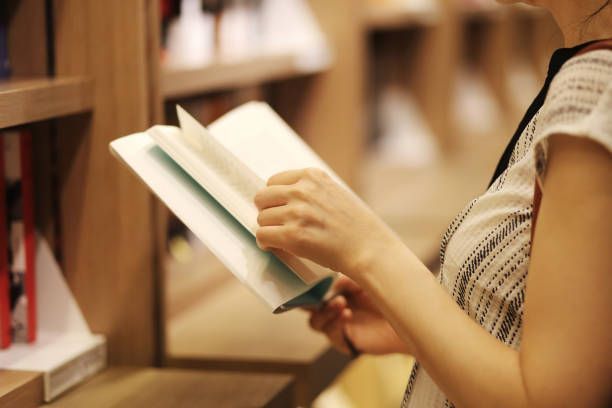
 Visitors are reading books at a large bookstore in Jongno-gu, Seoul. Photo by Heo Midam, intern reporter damdam@asiae.co.kr
[Asia Economy Reporter Kim Ga-yeon] "What happens to copyright if I upload photos of 31 pages including the introduction, main content, and conclusion?"
Author Gu Byeong-mo said this on his Twitter on the 16th of last month, asking people not to leak photos taken of his book's content.
He added, "If you think about uploading 30 pages of a single comic book, isn't that a scan leak?" and criticized, "Why do people meticulously upload photos up to the last page? Should we start a movement like 'Book review photo uploads should be under 5 pages'?"
On the 4th, he also wrote, "I hope each publisher sets clear guidelines when recruiting reviewers for anticipated new releases," and pointed out, "What are you going to do about the massive leaks of book contents that haven't even been stocked yet, as a result of providing review copies?"
In recent years, with the active use of YouTube and SNS, book review content using these platforms has increased. Readers take photos of parts of books and post them as proof on their SNS, create content summarizing the plot, or share their impressions. As a result, some publishers have recruited online review groups before official publication to promote their books.
Recently, the term "BookTuber" has also emerged. A BookTuber is a coined term combining Book and YouTuber, referring to YouTubers who specialize in posting book-related content such as introductions and reviews.
Among these, opinions have been raised that measures to prevent copyright infringement should be established. Unlike other copyrighted works such as music and movies, books are not subject to strong sanctions, which increases the likelihood that such content will spread as is.
Looking at portal site blogs and SNS, there are many cases where a significant portion of a book is photographed and posted as is, beyond simple book introductions or reviews.
A 27-year-old office worker, A, said, "I like to collect and pile up books and read them, so I often buy books," adding, "I mainly use online bookstores, so I decide whether to purchase based on other people's reviews."
He said, "When I search out of curiosity about whether a book is worth reading or if opinions are divided, I often find posts where the book's content is fully exposed," and added, "If I encounter important plot points or the ending, my interest drops. I think it's no different from movie spoilers."
One publisher also asked people to refrain from exposing key content through YouTube or other platforms without the publisher's consent.
Plain Archive, a Blu-ray and book publisher, posted on Twitter on the 15th of last month, saying, "We appreciate any interest and evaluation of our books," but also stated, "Beyond simple book introductions or recommendations, exposing a large amount of key internal content that determines the book's value without the publisher's prior permission is problematic regardless of the creator's intent."
The Korea Copyright Commission (the Commission) suggested that when distributing copyrighted works to others, permission from the copyright holder must be obtained in principle.
In the "Copyright Guide for One-person Media Creators" published last month, the Commission stated, "When uploading copyrighted works on the internet, it is a principle to obtain permission from the copyright holder in advance, and this applies even for non-profit or public interest purposes," adding, "Books such as poetry, novels, and fairy tales fall under literary works, and if you film a video reading them and post it on YouTube, you must obtain permission from the copyright holder in principle."
They continued, "Imagine if movie files currently in theaters or scanned comic book files were circulating wildly on the internet," and pointed out, "Even if the person uploading it online does not intend to make money, the damage to the copyright holder becomes immeasurable."
© The Asia Business Daily(www.asiae.co.kr). All rights reserved.
![Clutching a Stolen Dior Bag, Saying "I Hate Being Poor but Real"... The Grotesque Con of a "Human Knockoff" [Slate]](https://cwcontent.asiae.co.kr/asiaresize/183/2026021902243444107_1771435474.jpg)

















