
[Asia Economy Reporter Junho Hwang] A technology capable of implementing 8K-level ultra-high-definition displays in immersive media devices such as virtual reality (VR) and augmented reality (AR) has been developed by domestic researchers.
As immersive media content rapidly increases with the commercialization of 5G, and the resolution of related devices rises to the level of ultra-high-definition TVs, an expansion of immersive media users is expected.
KAIST announced on the 6th that a research team led by Professor Sanghyun Kim of the Department of Electrical Engineering has developed a technology that can produce ultra-high-resolution displays by increasing the resolution of existing micro LED displays to over 60,000 ppi (pixels per inch) using semiconductor process technology.
Micro LED Arranged Vertically
The research team developed a new micro LED fabrication technology utilizing semiconductor manufacturing processes. This technology stacks the red, green, and blue LED active layers in three dimensions, allowing each LED to emit its own light as much as possible.
The team stacked LEDs in three dimensions using semiconductor substrate-compatible technology. Then, they designed an insulating film with filter properties on the bonding surface to remove 97% of red-blue interference light. In particular, after vertical bonding, they used semiconductor patterning technology to achieve a resolution of over 60,000 ppi.
This research is significant in that it surpasses the limitations of micro LEDs. Previous studies mostly involved horizontally arranging RGB LEDs reduced to micro sizes. However, there were many technical challenges such as yield degradation due to horizontal arrangement and pixel miniaturization issues.
Micro LEDs refer to LEDs with a side length of less than 100 micrometers. Micro LEDs are used in small display products such as VR and AR.
8K TV Comes to VR
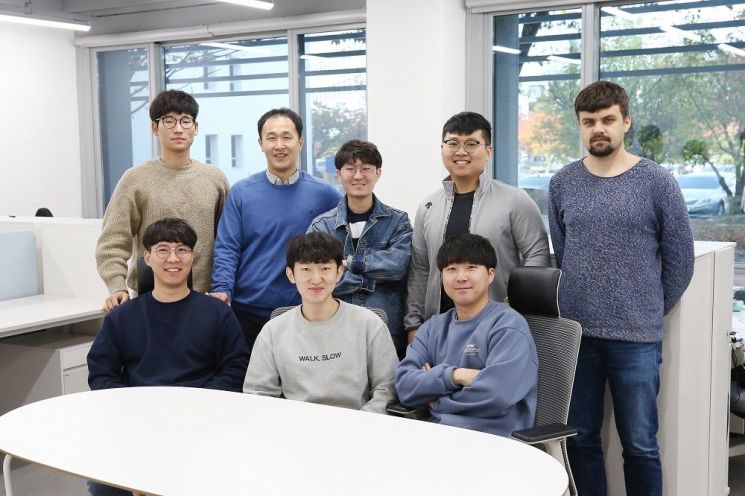
Daemyung Geum, a first author and researcher at the Electronics and Information Research Institute, stated, "This technology is expected to enable the production of displays capable of implementing 8K-level ultra-high-definition screens in VR or AR."
Currently, VR/AR devices have resolutions low enough that pixels can be seen with the naked eye. To solve this, a resolution of about 2500 ppi is required, but current technology could not achieve this.
Professor Sanghyun Kim said, "This research is the first to demonstrate the possibility of producing ultra-high-resolution pixels using semiconductor processes," and added, "It shows the importance of collaboration between the semiconductor and display industries." He continued, "We will strive to develop technologies for future ultra-high-resolution displays through follow-up research."
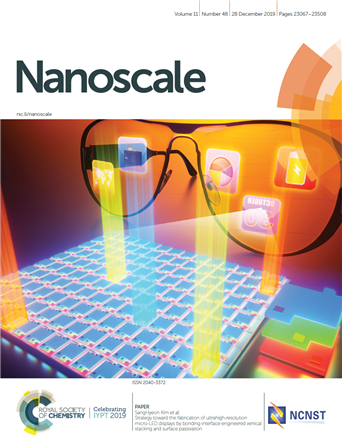
This research was published as a cover paper in the December 28 issue of the international journal Nanoscale.
© The Asia Business Daily(www.asiae.co.kr). All rights reserved.



















