Iran Vows Retaliation, Trump Warns of 52 Target Attacks... Fears of Bloody Cycle
Pro-Iran Militias in Iraq and Afghanistan May Attack US Instead of Iran
NYT: Unexpected Situations May Arise if Opponent's Intentions Are Misunderstood
[Asia Economy Reporter Naju-seok] With the death of Qasem Soleimani, the former second-in-command of Iran and commander of the Quds Force of the Iranian Revolutionary Guard Corps, due to a U.S. military strike, concerns are growing that a 'vicious cycle of bloodshed' may continue in the Middle East.
On the 5th (local time), both the United States and Iran warned of the possibility of military conflict against each other. Hossein Dehghan, senior military advisor to Iran's Supreme Leader, warned in an interview with CNN, "If the U.S. directly attacks Iran, Iran will also take direct action against the U.S.," adding, "It will target U.S. military facilities." Dehghan said, "The only way to end this war cycle is for the U.S. not to seek a new cycle of conflict after suffering the same kind of strike it inflicted on Iran." According to AFP, Mohsen Rezaee, former commander of the Iranian Revolutionary Guard Corps, warned that if the U.S. responds to Iran's retaliation, Israel would be attacked.
Earlier, U.S. President Donald Trump warned, "If Iran attacks Americans or American facilities, the U.S. will retaliate against 52 Iranian sites." Iran claims it has the right to retaliate against the U.S., but the U.S. has stated it will respond to any retaliation with even greater retaliation.
The conflict between the U.S. and Iran is expected to worsen. Although the possibility of full-scale war is currently low, concerns are rising. The increase in visits to conscription-related websites by young Americans and the rapid rise of "World War III" as a major search term clearly reflect this sense of crisis.
The nuclear threat is also expected to grow. Iran has effectively announced its abandonment of the Iran nuclear deal (JCPOA - Joint Comprehensive Plan of Action), which it had maintained nominally, and is expected to begin full-scale nuclear development. Iran, which has been pursuing nuclear weapons development, has so far enriched uranium only up to 5% concentration under the JCPOA. However, with the collapse of nuclear negotiations, enrichment to 90%?the level required for nuclear weapons production?is expected to proceed.
Iran has long been in sharp conflict with neighboring countries such as the U.S., Europe, and Israel over its nuclear development. The U.S. has pursued a strategy of suppressing Iran's nuclear development through economic sanctions and other measures. If Iran's nuclear development gets on track, the possibility of airstrikes on nuclear facilities may also arise.
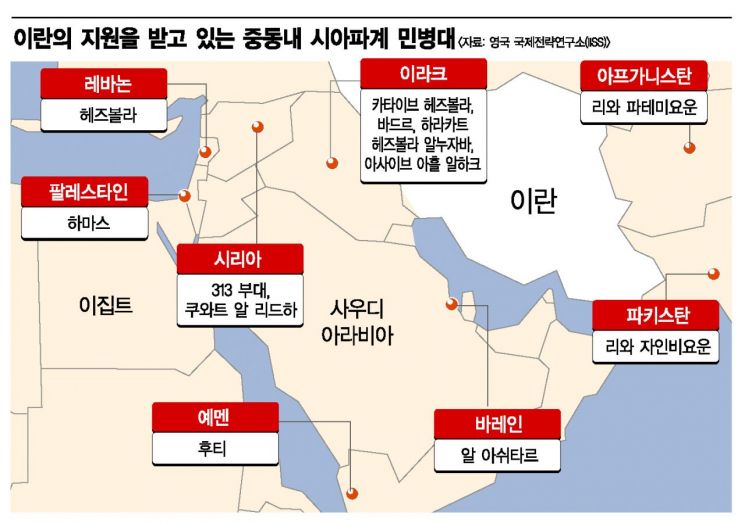
The international community largely expects proxy wars rather than direct full-scale war between the U.S. and Iran. Militias in Lebanon, Afghanistan, and other places supported by Iran are increasingly likely to launch offensives against the U.S. on Iran's behalf. These militias, mostly Shia Muslims loyal to Iran, have been trained and supported by the Quds Force led by Soleimani, who was killed this time.
If conflict breaks out, Iraq and surrounding areas are likely to become battlefields. Iran views the assassination of Soleimani as an opportunity to strengthen its influence in Iraq. Sharing a direct border with Iraq, Iran is expected to escalate tensions with the U.S. by supporting pro-Iran militias. The Iraqi parliament passed a resolution demanding the withdrawal of U.S. troops in connection with Soleimani's assassination on Iraqi soil. President Trump threatened, "The U.S. will not leave Iraq unless it is reimbursed for the costs of the airbases built there."
However, the possibility of direct military confrontation cannot be ruled out. As tensions with Iran escalate, the U.S. has begun deploying additional troops to the region. The New York Times (NYT) expressed concern, stating, "In recent months, the U.S. and Iran have misjudged each other's response levels," adding, "If misunderstandings about each other's intentions continue, the situation could develop unexpectedly."
The possibility that Europe and others may mediate could be a variable in the Middle East situation. According to the British daily The Guardian, European diplomats privately note that Iran's military and leaders are responding cautiously, which contrasts with the public slogans shouting "Death to America." Josep Borrell, the European Union (EU) High Representative for Foreign Affairs and Security Policy, has been making mediation efforts, including inviting Iranian Foreign Minister Mohammad Javad Zarif to visit Brussels, Belgium.
It is also notable that Middle Eastern countries remain silent. Saudi Arabia and the United Arab Emirates (UAE), which are close to the U.S. in the Middle East, have been reserved in their comments regarding Soleimani's death. Saudi Arabia, which has long competed with Iran for regional dominance, stated that it was not consulted in advance about Soleimani's death. The Guardian reports that Middle Eastern countries neither want to become direct targets of Iranian attacks nor ignore domestic anti-American sentiments.
© The Asia Business Daily(www.asiae.co.kr). All rights reserved.

![Clutching a Stolen Dior Bag, Saying "I Hate Being Poor but Real"... The Grotesque Con of a "Human Knockoff" [Slate]](https://cwcontent.asiae.co.kr/asiaresize/183/2026021902243444107_1771435474.jpg)















