First Nomination in 36 Days Since Lee Hyehoon's Withdrawal...
Four-term Ruling Party Lawmaker Park Hongkeun Tapped for Key Role
Emphasis on 'Pace of Governance' Over Integration Amid Prolonged Ministerial Vacancy
Career Bureaucrat from PK Region Nominated as Oceans Minister
Appointments to Regulatory Rationalization Committee Signal 'Integration and Practicality'
Non-mainstream, Conservative Academics, and Private Sector Figures Included
President Lee Jaemyung's nomination of Hongkeun Park, a four-term lawmaker from the Democratic Party of Korea, as Minister of Planning and Budget on March 2 is seen as a move to accelerate the administration's agenda. By placing a veteran lawmaker with deep insight into parliamentary budget and legislative structures at the forefront, rather than a traditional bureaucrat, the message is clear: the administration aims to seamlessly drive both the financial planning for major policies and negotiations with the National Assembly.
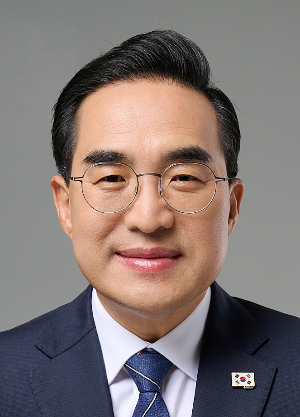
Lee Gyuyoun, Senior Secretary for Public Relations and Communications at the Blue House, introduced nominee Park as “a national budget policy expert who has served as chairman of the National Assembly’s Special Committee on Budget and Accounts and the steering committee.” He added, “He is the right person to lead government budgeting, having drawn the blueprint for the people’s government as head of the planning subcommittee of the National Policy Planning Committee.” This reflects President Lee’s intention to launch a virtuous cycle of “blueprint-budget-execution” in state affairs. It has been 36 days since the previous nominee, Lee Hyehoon, withdrew her candidacy.
The significance of Park’s nomination differs from that of the previous nominee, Lee Hyehoon, whose selection emphasized “integration.” Park belongs to the youngest group of the so-called ‘86 generation’ (students in the 1980s, born in the 1960s), and he has a background as president of the Kyunghee University Student Council and as a grassroots civic activist. Since the 2022 presidential election, he has supported President Lee and is known within the Democratic Party as a core member of the pro-Lee faction, having worked closely with him as both party leader and floor leader. Given the need to expedite state affairs, there was no room for further delay in the nomination; it is highly likely that the administration aimed to smoothly navigate the confirmation process by putting forward a well-networked, four-term senior lawmaker from the ruling party.
The Ministry of Planning and Budget, which Park will head following a parliamentary confirmation hearing, acts as the control tower for government fiscal policy and budget formulation. Traditionally, this role has been filled by bureaucrats with strong backgrounds in numbers and systems, but this time, someone with political experience capable of designing the budget has been appointed. Large-scale public and industrial policies often involve conflicting interests during the budget drafting process; a minister with extensive National Assembly experience can accelerate coordination. In particular, since Park has previously drawn the government’s blueprint within the National Policy Planning Committee, President Lee is expected to speed up the process of outlining the “blueprint for a people’s government” as concrete fiscal projects and mid-term fiscal plans.
Career Bureaucrat for Oceans Ministry, 'Non-mainstream' and Conservative Figures for Regulatory Reform... Appointments Focused on Stability, Integration, and Practicality
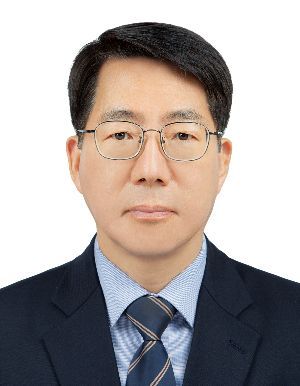
Hwang Jongwoo, chairman of the International Cooperation Committee at the Maritime Cooperation Center, has been nominated as Minister of Oceans and Fisheries. Hwang, an expert in maritime and port policy, has held key positions within the Ministry of Oceans and Fisheries. By putting forward a career civil servant from within the ministry, the administration is signaling its intent to push forward mid- to long-term projects like the Arctic route and “ocean capital” initiatives with the stable execution power of the bureaucracy. President Lee has also fulfilled his promise to appoint someone from the Busan-Gyeongnam (PK) region following the resignation of former minister Jeon Jaesoo.
In contrast, the appointments for vice chairpersons of the Regulatory Rationalization Committee, which is chaired by the president, strongly reflect the themes of “integration” and “practicality.” Namgoong Beom, advisor at S-1 Corporation, former Democratic Party lawmaker Yongjin Park, and honorary professor Lee Byungtae of KAIST have each been appointed as vice chairpersons. This arrangement brings together a former corporate management and finance executive, a politician classified as 'non-mainstream' within the Democratic Party, and a conservative academic, thus creating a regulatory reform structure that spans both political parties and the business sector. The Blue House’s selection indicates its intention to approach regulatory reform as a practical, expertise-driven task rather than a partisan agenda.
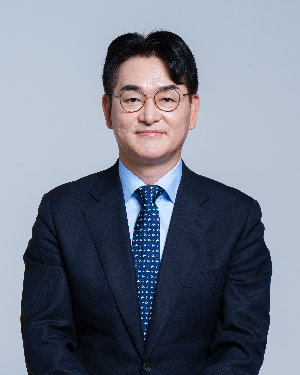
Furthermore, by appointing individuals with differing perspectives from within the ruling party and those with market-friendly backgrounds, the administration is seen as aiming to proactively buffer against the emergence of “pro-business vs. anti-business” or “pro-Lee vs. non-Lee” frames in the policy process. Former lawmaker Park, once dubbed a “chaebol sniper” during his first term, lost to former lawmaker Jeong Bongju in the party primary for Seoul Gangbuk-eul in the 2024 general election. After Jeong’s nomination was canceled, Park ran again but was defeated by lawyer Jo Sujin. Although Jo also withdrew from the race, the party leadership at the time strategically nominated Assemblyman Han Minsu.
Honorary Professor Lee Byungtae is known for his conservative views and served as head of economic policy in Hong Joonpyo’s presidential campaign during last year’s People Power Party primary. After Hong left the party, Lee Byungtae reportedly expressed his intention to join President Lee’s campaign. Advisor Namgoong Beom joined Samsung Electronics in 1989 and went on to serve as executive director of the management support team and as vice president heading the finance team. Senior Secretary Lee explained, “The appointments were made to achieve a harmonious and diverse composition by field, and to fully leverage each individual’s expertise.”
Meanwhile, for the position of vice chairman of the Basic Social Committee-also chaired by the president-President Lee named Kang Namhoon, honorary professor of economics at Hanshin University and a prominent advocate of basic income, who has served as President Lee’s mentor. Professor Kang, who has researched the “Korean-style basic income,” is connected to President Lee from his time as mayor of Seongnam and governor of Gyeonggi Province.
© The Asia Business Daily(www.asiae.co.kr). All rights reserved.














