Jeonnam Education Office Begins Medium- to Long-Term Reform
Elementary Student Benefits to Be Transferred to National Support
Welfare Shifted to Middle and High School Students with More Career Exploration
Synergy Maximized by Integrating Economic Education
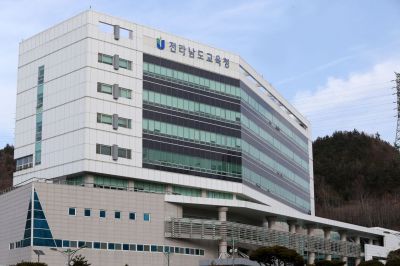
The Jeonnam Provincial Office of Education is preparing to fully overhaul the operation system of the "Jeonnam Student Education Allowance" over the medium to long term, in line with the national expansion of eligibility for the "Child Allowance." The plan is to gradually shift the resources previously allocated for elementary school students to educational welfare for middle and high school students, aiming to achieve a more balanced distribution of benefits.
The Jeonnam Provincial Office of Education announced on March 2 that, following the passage of the amendment to the "Child Allowance Act" by the National Assembly's plenary session, it will implement a reform plan for the student education allowance reflecting these changes. According to the revised Child Allowance Act, the national child allowance will be gradually expanded from the current age limit of under 8 to under 13 by 2030.
As elementary school students are sequentially incorporated into the national support system, the provincial office plans to rationally adjust the existing allowance recipients and reallocate the resulting resources to enhance educational welfare for middle and high school students.
This measure actively responds to feedback from the field, which has pointed out that, despite the concentration of career exploration, experiential activities, and advanced learning during the middle and high school years, direct educational support has been relatively limited. The provincial office intends to review support measures from a medium- to long-term perspective and develop a detailed, phased expansion plan.
In addition, the office will further strengthen its collaborative support system with local governments to establish a "Jeonnam-style customized educational welfare model" that reflects regional circumstances and needs. There is also growing attention to customized economic education that goes beyond simple cash support.
To help students take the initiative in planning and managing their allowance, the provincial office is implementing various programs: operating the "Economy Classroom for Coexistence" program that visits schools, holding contests for outstanding examples of allowance management, and developing and distributing grade-specific teaching and learning curricula, all aimed at fostering rational economic awareness and career planning skills among students.
Superintendent Kim Daejung stated, "We will proactively respond to changes in national policy and thoroughly establish a customized educational welfare system tailored to students' developmental stages. We will ensure the system is established stably by fully gathering feedback from the field and comprehensively considering financial conditions."
© The Asia Business Daily(www.asiae.co.kr). All rights reserved.












