Minority Shareholders File Derivative Lawsuit Against Former Executives
Lower Courts: "No Liability"
Supreme Court: "Management Also Responsible for SEC Fines"
In a case involving the creation of slush funds through so-called "gift certificate cashing" with company money and the illegal provision of political funds to members of the National Assembly, the Supreme Court has ruled that former KT executives, including Hwang Changgyu and Koo Hyunmo, must compensate the company for damages incurred.
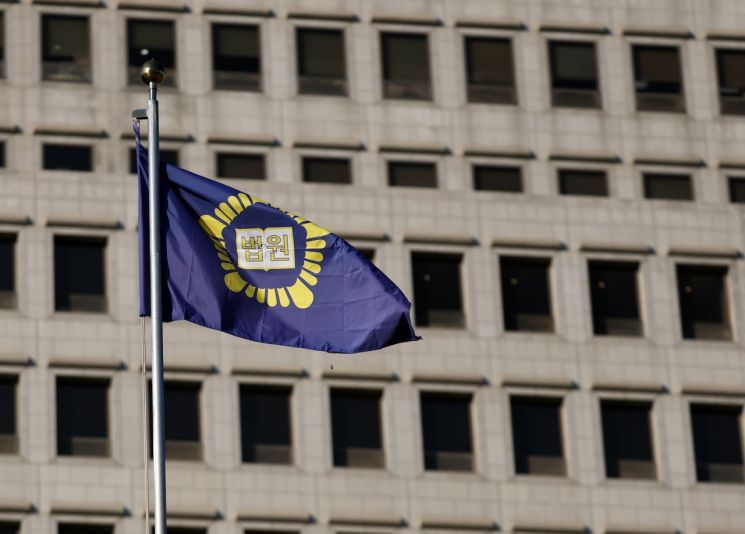
According to the legal community on March 2, the Supreme Court (Presiding Justice Lee Heungku) overturned the lower court's ruling that had dismissed the damage claim-filed by 35 minority shareholders of KT against 13 former executives, including Lee Seokchae and Hwang Changgyu-with respect to the "off-the-books funds (slush funds) creation and political donations" component, and remanded the case to the lower court for further review.
Previously, in March 2019, the minority shareholders filed a lawsuit seeking to hold the management liable for damages to the company caused by a breach of duty. The management's alleged misconduct cited in the suit included four major issues: ▲ the undervalued sale of the Mugunghwa Satellite No. 3 ▲ the illegal donation of 1.1 billion won to the Mir Foundation ▲ the Ahyeon switching center fire and the reclassification of telecom facilities ▲ the creation of slush funds and split-up donations in the External Relations (CR) division.
The central issue that emerged among these was the "slush fund creation": From 2014 to 2017, KT executives in charge of external affairs purchased gift certificates and converted them into cash, generating a total of 1.15 billion won in slush funds. Of this, 430 million won was illegally remitted to the sponsorship accounts of 111 members of the National Assembly. Former CEO Koo was also involved in this process and received a final conviction. The U.S. Securities and Exchange Commission (SEC) also took issue with this, imposing a disgorgement and a fine on KT for improper business conduct.
In both the first and second trials, the courts did not recognize any liability for damages on the part of the management. They found no violation of laws or breach of duty in the sale of the Mugunghwa Satellite, the donation to the Mir Foundation, or the Ahyeon switching center fire. Regarding the disputed slush fund allegations, they did not recognize a breach of oversight duty by former CEO Hwang, and determined that former CEO Koo was not liable, stating, "As the remitted funds were returned, the company ultimately recovered its losses."
However, the Supreme Court took a different view with regard to the slush fund creation. The court stated, "The creation of slush funds itself constitutes a breach of duty under the agency agreement with KT," and pointed out, "There is ample ground to believe that former CEO Hwang neglected his oversight duty from the day the slush funds were formed as CEO, and that former CEO Koo did so from the time he was appointed as a director."
The court also clarified the scope of former CEO Koo's responsibility, stating, "The mere return of the directly remitted funds does not mean that there was no damage; the 'entire slush fund' accumulated during the period of duty violation must be regarded as damage." Furthermore, it held that "the substantial causal relationship between the management's breach of oversight duty and the fines and disgorgement paid by KT to the SEC cannot be denied," ruling that these individuals are liable for compensation.
© The Asia Business Daily(www.asiae.co.kr). All rights reserved.












