People’s Bank of China: “Supporting Companies in Managing Exchange Rate Risk”
The People’s Bank of China, the country’s central bank, is lowering the foreign exchange risk reserve ratio for forward forex transactions to 0% for the first time in three years and five months. This move is being interpreted as an effort to encourage the purchase of dollars and slow the pace of yuan appreciation.
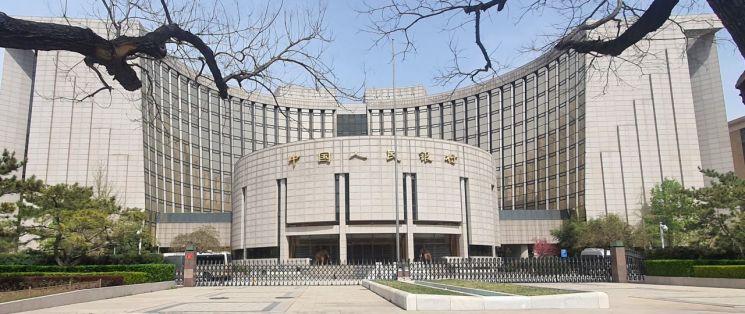
According to Chinese financial media outlet Caixin and Bloomberg News on February 27, the People’s Bank of China announced that starting from March 2, it will reduce the foreign exchange risk reserve ratio for forward forex selling transactions from 20% of the transaction amount to 0%.
Currently, when financial institutions enter into forward forex selling transactions with clients (agreements to sell foreign currency at a specified exchange rate at a future date), they are required to deposit 20% of the transaction amount with the People’s Bank of China as a risk reserve. By lowering this ratio to 0%, the requirement is effectively eliminated.
With the removal of the risk reserve, related costs disappear, leading to lower forward forex prices and increasing the incentive for companies to buy dollars in advance for hedging purposes. Banks that sell forward contracts often offset risks by buying spot forex, which increases demand for dollars and, in turn, could ease upward pressure on the yuan.
The People’s Bank of China stated, "We have taken this step to support companies in managing exchange rate risk," adding, "Going forward, we will continue to encourage financial institutions to optimize hedging services for businesses and maintain the yuan exchange rate at a reasonable and balanced level."
Previously, in September 2022, the People’s Bank of China raised the foreign exchange risk reserve ratio from 0% to 20% to curb yuan depreciation and prevent capital outflows. At that time, the aim was to increase the cost of forward forex transactions to defend the yuan’s value. In contrast, the latest move lowers those costs.
The yuan posted its highest annual appreciation against the dollar since 2020 last year, bolstered by a weaker dollar, the U.S.-China trade agreement, and an influx of foreign capital following a rally in Chinese stock markets. The currency has continued to strengthen this year. In the offshore yuan market the previous day, the yuan reached its highest level in three years since April 2023.
Fiona Lim, a strategist at Maybank Singapore, told Bloomberg that this measure is "one of the tools being used to slow the pace of the yuan’s appreciation against the dollar," adding, "Through recent exchange rate fixings, the People’s Bank of China is sending a clear message that while it does not oppose yuan appreciation, the pace should be limited." Liu Yang, Head of Financial Markets Business at Zheshang Development Group, said, "In the short term, some of the potential demand for dollar purchases through forward contracts will be alleviated, helping to balance supply and demand in the market."
© The Asia Business Daily(www.asiae.co.kr). All rights reserved.












