Concerns Grow Over Cost and Technology Leakage Amid Prolonged Barakah Nuclear Plant Settlement Dispute
Order Issued to Shift Arbitration from LCIA (UK) to KCAB (Korea)
Seeking Solutions Through Consultative Body Amid Public Institution Fiduciary Risk
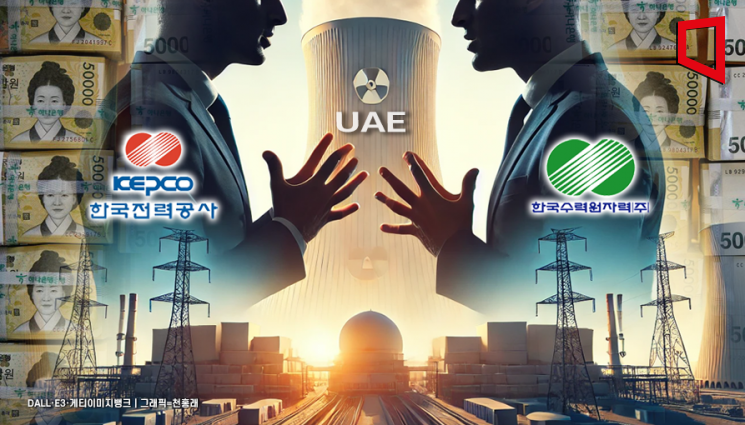
As Korea Electric Power Corporation (KEPCO) and Korea Hydro & Nuclear Power (KHNP) are at odds over the settlement of additional costs of over 1 trillion won incurred during the construction of the Barakah Nuclear Power Plant in the United Arab Emirates (UAE), the government has officially recommended relocating the arbitration venue from the United Kingdom to Korea. The government has stepped in due to rising concerns over the cost burden and potential technology leaks resulting from the escalation of a settlement dispute between public institutions to international arbitration in London, as well as the controversy over potential "breach of fiduciary duty" that may arise during the settlement process.
On the 27th, the Ministry of Trade, Industry and Energy announced that it had recommended the relocation of arbitration between KEPCO and KHNP from the London Court of International Arbitration (LCIA) to the Korean Commercial Arbitration Board (KCAB), and advised both agencies to form a regular consultative body to continue discussions on a fundamental settlement plan. This recommendation was approved following deliberation at the 29th Active Administration Committee meeting.
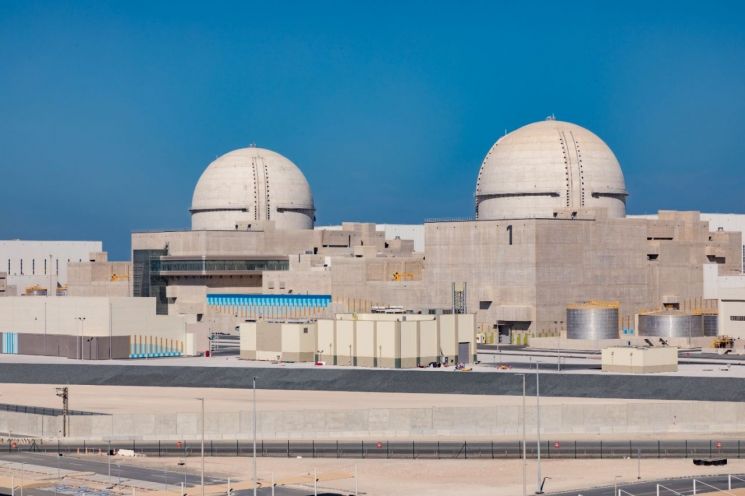
This dispute originated from the settlement issue of the Barakah Nuclear Power Plant project in the UAE. In May 2010, KHNP signed an Operations Support Services (OSS) contract with KEPCO and has since been handling tasks such as commissioning and building operational support systems. However, there were delays in the construction process, with units 1 to 3 being delayed by two to three years each. While Unit 4 began commercial operation in September 2024, some detailed settlements remain, and the project has not yet been fully completed.
While KEPCO was negotiating with the UAE's Emirates Nuclear Energy Corporation (ENEC), the project owner, to claim compensation for construction delays and associated costs, KHNP, based on the OSS contract, claimed labor and additional work expenses from KEPCO due to these delays. Despite multiple attempts at negotiation, the two organizations failed to reach an agreement, and in May last year, KHNP filed for arbitration with the LCIA.
The issue has gone beyond a simple cost dispute. During last year's National Assembly audit, concerns were raised that international arbitration between public institutions could lead to excessive litigation costs and the exposure of sensitive nuclear technology overseas during the arbitration process. Industry experts also predicted that, if prolonged, the total cost, including law firm fees, could reach several tens of billions of won.
The fundamental obstacle was the "risk of breach of fiduciary duty." If, during the arbitration process, the direction shifted toward a settlement or the amount claimed was adjusted, and the decision later resulted in unfavorable outcomes for the institution, there was concern that responsibility for such decisions could be raised. This concern has constrained both parties. A Ministry of Industry official explained, "After the arbitration was initiated, any change in procedure or settlement that could be interpreted as reducing the expected benefit for each organization could spark issues of fiduciary responsibility, thereby restricting the institutions' actions."
To minimize such risks for public officials, the Ministry of Industry explained that, through this Active Administration Committee, a protection mechanism for public officials has been established. Moon Sinhak, Vice Minister of Industry, stated, "Following the President's directive at the Cabinet meeting for agency heads to take clear responsibility so that public officials can confidently perform their duties, we have completed measures to promote active administration and protect public officials." He added, "We will provide the utmost protection and support so that responsible public officials can perform their work without unnecessary legal risks or fear of liability."
The Ministry of Industry cited three effects of this recommendation: cost, duration, and technology leakage. Transferring arbitration from the LCIA to the KCAB would likely result in lower arbitration fees and reduced reliance on UK law firms. However, the government also stated that it is difficult to quantify exactly how much costs would decrease. In the end, the total cost will depend on how much the arbitration period can be shortened.
A Ministry of Industry official said, "While cost is important, the biggest variable is the duration," adding, "If a consultative body is held regularly and decision-makers are directly involved in negotiations, it can prevent prolonged arbitration and thereby reduce costs."
This issue is also connected to the governance structure for nuclear power plant exports. Under the current arrangement, where KEPCO, as the main contractor, negotiates the overall settlement with the project owner and KHNP claims costs under a separate contract, similar conflicts could be repeated for each large-scale overseas project. The government is reviewing various options, including a KEPCO-centered system, a KHNP-centered system, and the establishment of a dedicated third organization, but acknowledges that implementing such reforms in the short term will not be easy.
The Ministry of Industry clarified that this recommendation does not mean the dispute is resolved. A ministry official said, "Except for the government’s designated role in nuclear power plant export administration, our authority to directly intervene in the management of KEPCO and KHNP is limited," and added, "We have taken all administratively feasible actions within the principle of autonomy for public institutions." The official continued, "Since the Barakah Nuclear Power Plant is Korea’s first export case and a symbol of successful achievement, it is not desirable for these two organizations to remain in prolonged conflict over settlement issues. We will work to improve systems and cooperative structures in parallel so that similar disputes do not recur during future overseas nuclear power plant projects."
© The Asia Business Daily(www.asiae.co.kr). All rights reserved.













