"2026 Gyeonggi Shared School": Three Types of Tailored Support
Strengthening Personalized Education and Growth Support Systems for Students
Business Agreements Signed with 31 Cities and Counties in the Province... Establishing a Local Cooperation System
The Gyeonggi Provincial Office of Education (Superintendent Lim Taehui) will restructure the 2026 Gyeonggi Shared School into three types - "region-customized, school-customized, and credit-recognition" - to strengthen a student-centered growth support system that connects schools, local communities, and online schools.
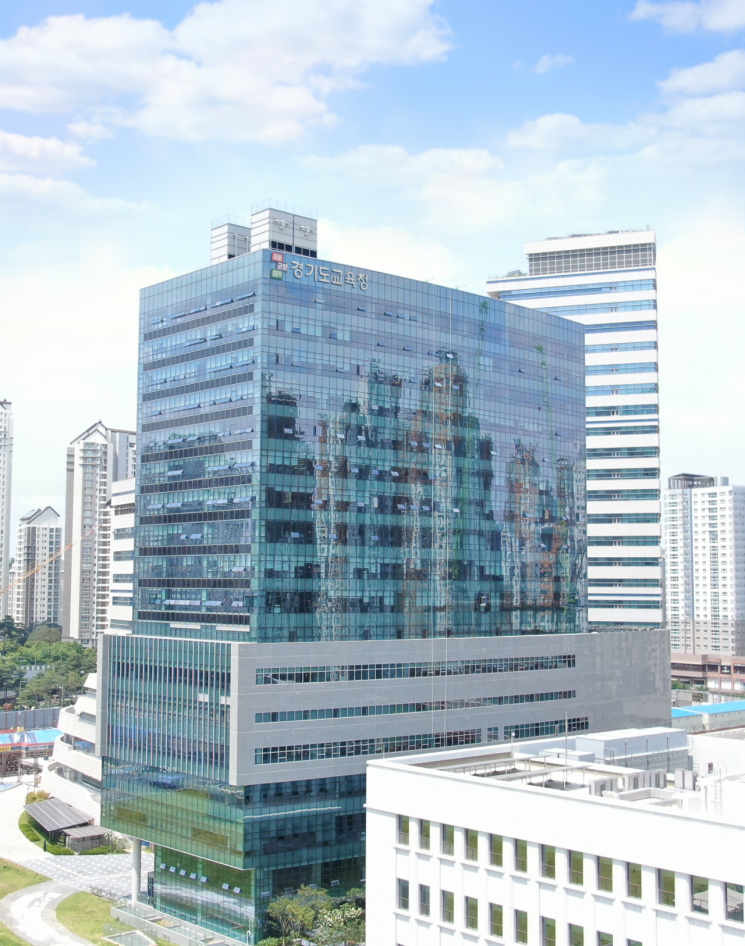 A view of the Gyeonggi Provincial Office of Education. Provided by the Gyeonggi Provincial Office of Education.
The office will reorganize the previously scattered Gyeonggi Shared School programs around these three types and establish an integrated operating system that links school curricula with the local community and online schools. The aim is to systematically design students' growth pathways by reducing overlap among types and expanding step-by-step and advanced programs.
First, the "region-customized" type connects educational resources based on local demand to support students' self-directed growth. It will integrate the existing five types and reorganize them into regularly offered and commissioned programs according to demand. In particular, it will expand long-term advanced courses of 36 sessions and actively incorporate student-proposed programs.
The "school-customized" type will restructure the existing Future Education Cooperation District project into a school-customized system based on cooperation with local governments, and will enhance region-specific programs linked to the curriculum. In addition, it will expand "bridge programs" that connect to student-choice-centered curricula. To this end, the office has completed a Gyeonggi Shared School business agreement with local governments in all 31 cities and counties in the province.
The "credit-recognition" type will utilize the expertise of community institutions and universities to expand subject choices for high school students. In 2026, it will operate with 63 high school credit subjects and 5 dual-credit subjects as recognized courses, and will expand the discovery of subjects that are difficult to open as joint curricula within schools, thereby supporting career-customized learning for students.
At the same time, the office plans to systematize program monitoring, consulting, and evaluation meetings to improve the quality of operations, and to strengthen cooperation with community institutions to help reduce educational disparities.
Cho Byungik, Director of the Regional Education Policy Division at the Gyeonggi Provincial Office of Education, said, "The 2026 Gyeonggi Shared School is not just about reducing the number of types; it is about redesigning the learning structure so that learning that begins at school can be expanded to the local community and online schools," adding, "We will continue to develop an integrated support system so that students can keep growing wherever they learn."
© The Asia Business Daily(www.asiae.co.kr). All rights reserved.












