First 100,000 Tons Supplied as Priority in Phase One
Second Supply Timing and Volume to Be Set After Market Monitoring
Return Required if Rice Prices Become Unstable
As rice prices show no sign of easing, the Ministry of Agriculture, Food and Rural Affairs has decided to gradually release government rice stocks into the market.
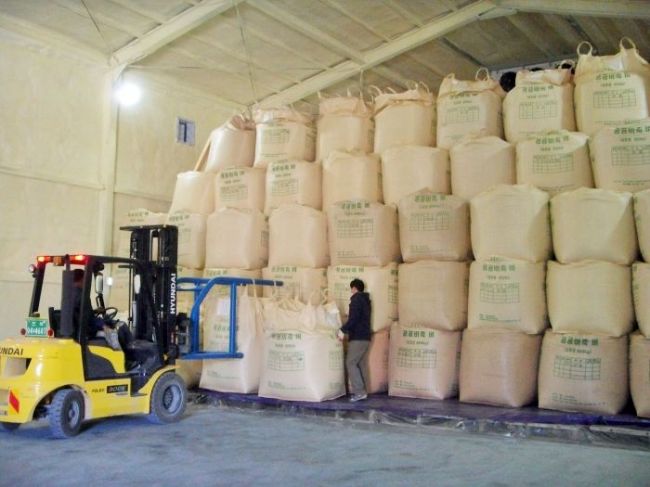
On the 27th, the Ministry of Agriculture, Food and Rural Affairs announced that it had convened the Grain Supply and Demand Stabilization Committee to discuss measures to stabilize the rice supply and demand, and decided to supply up to 150,000 tons of government rice stocks in stages.
According to the National Data Office, as of February 15, the producer price of rice stood at an average of 230,520 won per 80 kilograms. It has been on an upward trend for five consecutive ten-day periods this year.
The ministry previously announced a rice supply and demand stabilization plan on January 23, with the key measure of postponing the market segregation of 100,000 tons. Since then, to more closely analyze the rice supply and demand situation, it carried out a survey of rice inventories held by farming businesses and collected desired demand volumes for government rice from producer-area distributors through February 20.
The survey found that inventories at Nonghyup (National Agricultural Cooperative Federation) and private Rice Processing Complexes (RPCs) were 140,000 tons below the normal year level and 110,000 tons below last year. Producer-area distributors also submitted demand of approximately 160,000 tons.
Taking into account market trends, the survey results on inventories, the shortage in stocks, and the desired demand volumes from producer-area distributors, the ministry decided to supply up to 150,000 tons of government rice stocks (in milled-rice equivalent). However, it will first supply 100,000 tons from the 2025 harvest, and then monitor the market to determine the timing and volume of a second round of supply.
The supply method will be implemented in the same "rental method" as last year. Government rice stocks will be supplied only to companies that agree to comply with a government request to return the rice in the event of price instability, such as a decline in rice prices.
The eligible recipients of government rice stocks are approximately 209 producer-area distributors that received government rice purchase funds last year. Producer-area distributors that purchased 3,000 tons or more of rice paddy from farmers last year must, if they wish to receive government rice stocks, first provide proof of their purchase volumes and then submit their desired supply volumes.
Companies wishing to receive government rice stocks must submit their desired volumes by March 5 in accordance with the notice posted on the Nonghyup Agribusiness Group website. Before receiving government rice stocks, each company must also provide collateral to ensure fulfillment of the return obligation.
The government rice stocks supplied this time may not be resold as rice paddy. They must be sold as milled rice by the end of the grain marketing year. The ministry plans to verify whether the sales have been completed. Companies that receive government rice stocks must submit an implementation plan for returning the rice in August this year, and the government will proceed with the return in stages according to the submitted plans.
Park Junghoon, Director General for Food Policy at the Ministry of Agriculture, Food and Rural Affairs, said, "We have decided to supply government rice stocks to stabilize the rice supply and demand," adding, "Since rice is our staple food, we will work to ensure stable rice supply and demand for both producers and consumers."
© The Asia Business Daily(www.asiae.co.kr). All rights reserved.












