It has been revealed that there were four similar incidents even before Bithumb’s recent erroneous Bitcoin payout incident occurred.
According to the “Status of Errors in Bithumb Event Reward Payments” data that the office of People Power Party lawmaker Kang Min-guk received from Bithumb on the 26th, there were four reward payment errors related to events last year. This is two more erroneous payment cases than the two cases mentioned by Bithumb CEO Lee Jaewon during the emergency inquiry on pending issues at the National Assembly’s Political Affairs Committee on February 11.
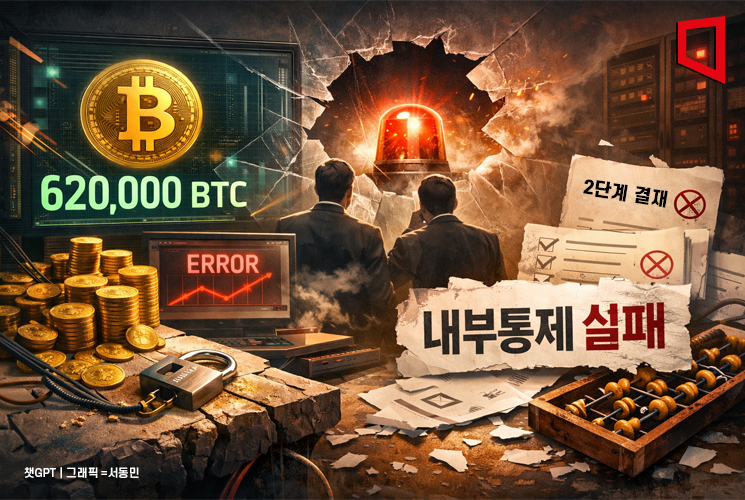
Including the incident on February 6, in which the unit “won” was mistakenly entered as “Bitcoin,” resulting in the erroneous payment of 620,000 Bitcoins instead of 620,000 won in total, there have been five erroneous payment incidents at Bithumb over the past year and six months.
The four erroneous payment incidents last year involved a total of 61 recipients, and the total amount paid was approximately 18.66 million won. Bithumb recovered 99% of the amount paid, but had to bear the remaining 1% as a loss.
By timing, on May 30 last year, due to an error in calculating the event period, about 40,000 won was paid to one person. On June 25 last year, due to an error in identifying the reward recipients, Bitcoin worth a total of 11.67 million won was sent to 13 people.
On July 10 last year, due to an error in not deducting withholding taxes and public charges, Bitcoin worth a total of 99,000 won was delivered to six people. Then, on December 2 last year, due to another error in identifying the reward recipients, 41 people received a total of 6.82 million won.
Lawmaker Kang said, “Even though Bithumb, the second-largest corporate group subject to disclosure in the virtual asset industry, had four erroneous payment incidents just last year, it failed to put in place countermeasures, which led to a major disaster in which Bitcoin worth 61 trillion won was paid out,” adding, “Once the financial authorities complete their on-site inspection of Bithumb, they must inspect the IT systems of the entire virtual asset industry and verify book-entry transactions and real-time asset holdings.”
© The Asia Business Daily(www.asiae.co.kr). All rights reserved.












