Apartment Prices Fall in the Three Gangnam Districts and Yongsan District
Tenanted Properties Flood the Market as Sellers Seek Exit Routes
Listings Increase, but Transactions Decline amid Loan Regulations
Experts: "A Breather in the Market, Not a Trend of Structural Decline"
With the end of the temporary suspension of the heavy capital gains tax on multi-homeowners approaching, multi-homeowners are rushing to put tenanted properties on the market, driving apartment prices down simultaneously in the three Gangnam districts and Yongsan District. Considering the time needed to apply for land transaction permits, there is effectively only about two months left, which is accelerating moves to cut prices and dispose of properties as urgent sales.
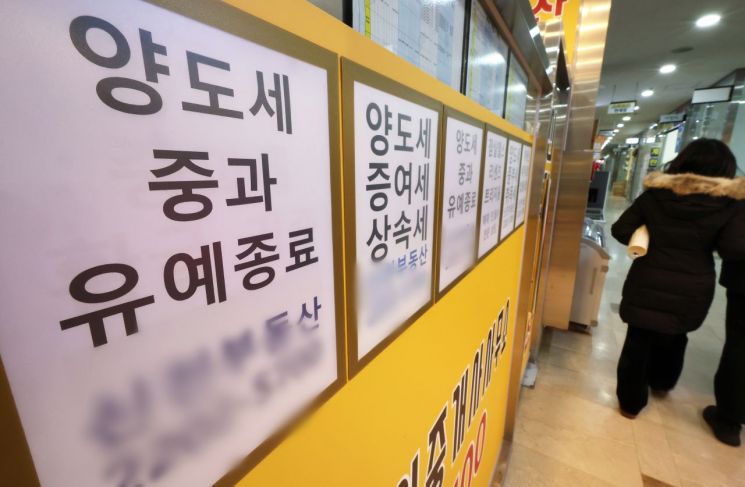
On the 26th, a 74㎡ Type B apartment in Raemian Leaders One in Banpo-dong, Seocho District, Seoul, was listed for 3.45 billion won. Given that 59㎡ units in the same complex are being offered at around 3.5 billion won, this is an unusual price. While other 74㎡ units are being listed at around 3.6 billion to 3.8 billion won, this one is an "ultra-urgent sale" priced about 200 million won lower. A 74㎡ Type A unit of the same size in the complex also had its asking price cut by 100 million won just one day after being listed on the 25th. A nearby licensed real estate agent said, "We have to find a buyer before April 10," adding, "Urgent-sale properties are quickly coming onto the market among multi-homeowners."
Reconstruction complexes in Apgujeong show a similar pattern. A 111㎡ Type B unit in Hyundai 8th complex, Building 91, in Apgujeong-dong was listed at 5.8 billion won on the 12th and had its asking price reduced by 300 million won in just 13 days. Considering that previous transaction prices had reached up to 6.2 billion won, the drop is substantial. A 38㎡ Type C unit in Helio City in Songpa District, which was listed for 2.1 billion won on the 10th, saw its price fall by 150 million won within three days. As listings accumulate within these complexes, price adjustments are being led by sellers who are in a hurry to offload their properties.
According to the weekly apartment price trend data released by Korea Real Estate Board on this day, as of the fourth week of this month (the 23rd), apartment prices in the three Gangnam districts and Yongsan District fell compared to the previous week. These areas are representative high-priced residential zones that have led the rise in Seoul apartment prices, and it is the first time in about two years that all four have turned downward at the same time. The largest decline was in Gangnam District (-0.06%), followed by Songpa District (-0.03%), Seocho District (-0.02%), and Yongsan District (-0.01%).
The background to the price correction lies in a surge in listings and a contraction in transactions. According to real estate big-data firm Asil, as of the previous day, there were 9,263 apartment listings in Gangnam District, up by about 2,000 units (21.9%) from January 22, when the government officially confirmed that it would end the temporary suspension of the heavy capital gains tax. The figures were 8,052 units in Seocho District, 5,223 in Songpa District, and 1,656 in Yongsan District.
Transactions, on the other hand, have plummeted. According to the Ministry of Land, Infrastructure and Transport's official actual transaction price disclosure system, from January 26 to this day, there were only 345 apartment transactions in the three Gangnam districts and Yongsan District over the past month. This represents a decline of more than 80% compared with the same period last year (1,886 transactions). In Gangnam District, transactions fell from 561 to 82, and in Seocho District, from 499 to 62.
Even taking into account the time lag between a transaction and its registration in the system, and the fact that this year transactions in land transaction permit zones require approval procedures from district offices, the overall trend of contracting transactions is clear. Comparing total transaction volume in Seoul over the same period, the number fell from 6,307 to 3,432, a decrease of about 46%. In relative terms, the decline in the three Gangnam districts and Yongsan District stands out more sharply.
Market participants say that, due to loan regulations, only buyers with sufficient cash liquidity can access the market, which has weakened buying interest. A licensed real estate agent in Songpa District said, "Listings from multi-homeowners have been increasing rapidly since the Lunar New Year holidays, but buyers are taking a wait-and-see approach, expecting further declines," adding, "Unless a property is an ultra-urgent sale, it is difficult to close a deal." A licensed real estate agent in Seocho District said, "Even when buyers secure an urgent-sale deal, in cases where they need to sell their own home first, some transactions fall through right before closing," explaining, "With so little time left, only those who have already secured cash on hand can buy."
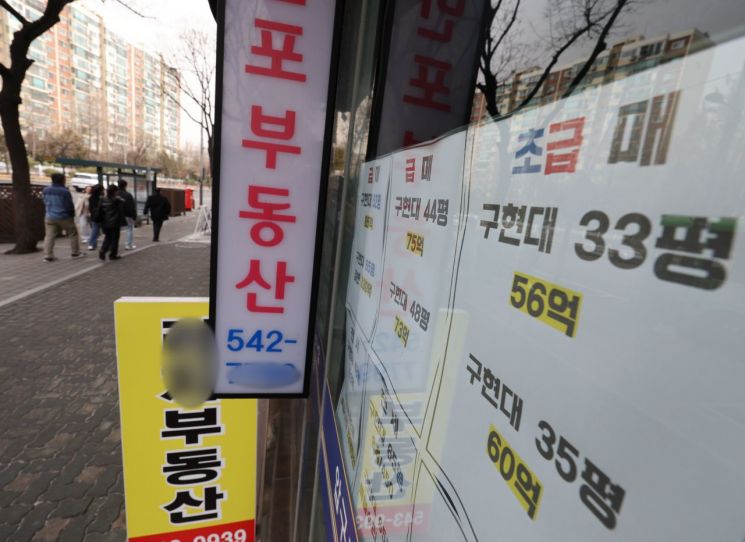
Experts point out that it remains to be seen whether this downturn will develop into a trend of citywide declines across Seoul. They view it largely as a correction limited to certain areas that have seen sharp price increases over the past two years. In particular, once properties that are traded after May 9 are absorbed by the market, a shortage of available listings could emerge, and many assess that this will not be enough to shake the medium- to long-term outlook for rising home prices in Seoul.
Yoon Jihae, head of the Research Lab at Real Estate 114, said, "In areas like the three Gangnam districts, where record-high prices have been repeatedly set over the past two years, it is normal for the market to take a brief breather," adding, "In outlying areas, prices are still low compared with past peaks, so there is not much room left for them to fall."
© The Asia Business Daily(www.asiae.co.kr). All rights reserved.













