Outline of governance overhaul and ELS penalties expected next month
CEO liability likely to expand in cases of internal control failures
Stronger household debt controls to intensify pressure on profitability
With the finalization of penalties related to the restructuring plan for corporate governance next month and the mis-selling scandal involving Hong Kong H-Share Index (Hang Seng China Enterprises Index, HSCEI) equity-linked securities (ELS) approaching, tension is mounting across the banking sector. As the financial authorities are emphasizing responsibility for internal control and consumer protection, if the policy direction of tightening household loan management also materializes, banks will inevitably have to revise their strategies across corporate governance and overall profitability.
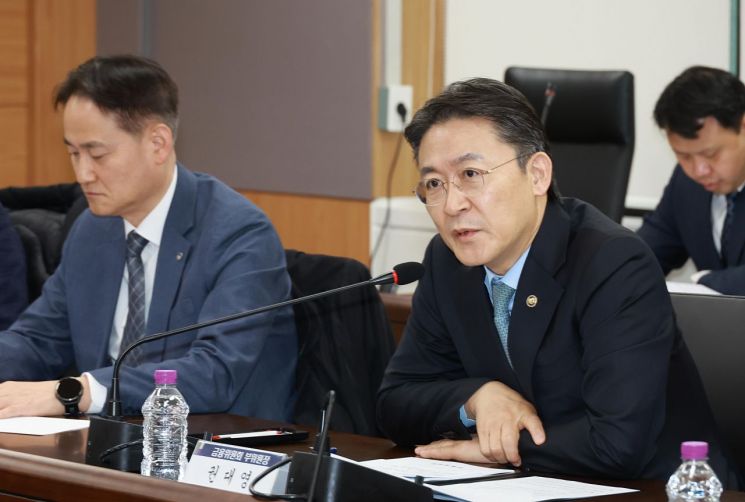
According to the financial sector on the 27th, the Financial Services Commission plans to finalize next month the amount of penalties to be imposed on banks in relation to the mis-selling of Hong Kong H-Share Index ELS, after deliberation by the Agenda Screening Subcommittee and the regular commission meeting. There had initially been expectations that the Securities and Futures Commission would decide the penalties, but as it failed to reach a conclusion, the final decision has been passed on to the subcommittee and the regular meeting.
The biggest concern for the banking sector is the size of the penalties. The Financial Supervisory Service’s Sanctions Review Committee previously reduced the penalties from the initially expected level of around 2 trillion won to approximately 1.4 trillion won. As a result, the penalty for KB Kookmin Bank, which had been around 1 trillion won, was lowered to the 800 billion won range, and the penalties for Hana Bank and Shinhan Bank, which had been around 300 billion won each, were reportedly reduced to the 200 billion won range. NH Nonghyup Bank and Standard Chartered Bank Korea, whose penalties had been in the 100 billion won range, are also said to have received reductions of around 15-20%.
Banks are pinning their hopes on the possibility of further reductions, given that they have completed voluntary compensation of about 1.3 trillion won for more than 90% of all victims. Under the current Financial Consumer Protection Act, if post-incident efforts to restore damages are recognized, penalties can in principle be reduced by up to 50%. If additional requirements are met, the reduction can be as much as 75%. Banks had been hoping for the maximum 75% reduction.
Depending on the size of the penalties, banks’ earnings this year are also expected to be inevitably affected. Because penalties are treated as expenses, they are likely to lead to a decline in net income. In fact, KB Financial Group’s net income for the fourth quarter of last year fell 57.2% from the previous quarter due to one-off factors such as the provisioning of liabilities related to ELS penalties. As of the end of last year, KB Kookmin Bank had set aside 263.3 billion won in provisions against the Hong Kong ELS penalties. If the penalties are finalized in the 800 billion won range without further reduction, the bank will have to accumulate more than an additional 500 billion won in provisions.
An official at a major commercial bank said, "In the case of ELS, after the Financial Services Commission makes its final decision at a future regular meeting, follow-up procedures such as additional provisioning will be carried out if necessary."
The corporate governance restructuring is also expected to place a considerable burden on bank management. The financial authorities have formed a task force (TF) on advancing corporate governance and are pushing for institutional reforms that include strengthening board responsibility and codifying the CEO’s internal control obligations. Financial Supervisory Service Governor Lee Chanjin’s remark that this is "a direction that must be followed regardless of the implementation timeline" is pressuring banks to respond preemptively. As this round of corporate governance reform is being interpreted not merely as a recommendation but as a message effectively demanding changes in management practices, analysts say that banks will have no choice but to revise their strategies related to internal control.
The financial authorities’ stance on tightening household loan management is another burden. Late last month, the Financial Services Commission announced that it is reviewing a plan to manage this year’s growth rate of household loans in the banking sector at a level lower than last year’s 1.8%. Additional measures are also being discussed for the household debt management plan to be announced next month, including restrictions on extending maturities for loans to multiple-home owners and rental business operators, and separate management of aggregate targets for mortgage loan volumes. If aggregate limits are tightened, a slowdown in loan growth across the banking sector will be unavoidable. This is highly likely to lead to a decrease in interest income, which is the core source of revenue.
Another bank official said, "As strengthened corporate governance responsibilities and aggregate household loan regulations intersect, banks will inevitably have to readjust their overall management strategies," adding, "They will have no choice but to accelerate the rebalancing of their revenue portfolios, including expanding non-interest income."
© The Asia Business Daily(www.asiae.co.kr). All rights reserved.












