Basic Income to Be Distributed on the 26th to Residents of Jangsu, Sunchang, and Yeongyang
Song Miryeong, Minister of Agriculture, Food and Rural Affairs, said on the 26th, "The basic income for rural and fishing communities is a policy experiment designed to promote balanced national development and to create rural areas where people can continue to live."
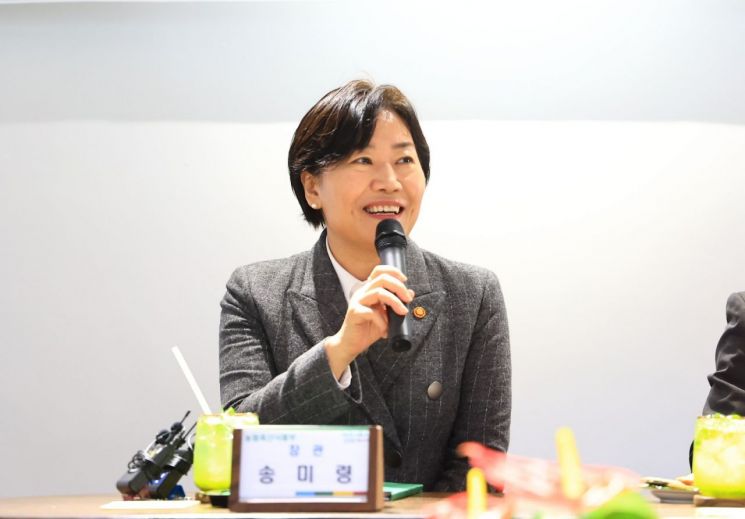
On this day, Minister Song visited Jangsu-gun, one of the pilot project sites for the basic income for rural and fishing communities, and said, "We will make every effort so that areas facing the risk of extinction can regain vitality and take off once again."
On the 26th, Jangsu-gun, Sunchang-gun, and Yeongyang-gun will distribute basic income, and on the 27th, basic income will be distributed to residents of Yeoncheon, Jeongseon-gun, Okcheon-gun, Cheongyang-gun, Sinan-gun, and Namhae-gun. Gokseong-gun plans to distribute basic income at the end of March, including the amount for February.
On this day at Jangsu County Office, Minister Song personally handed local gift certificates to the first recipient of basic income for rural and fishing communities. To commemorate the first distribution of basic income, various stores in Jangsu-gun set up sales booths in front of the county office.
An official from the Ministry of Agriculture, Food and Rural Affairs said, "The basic income for rural and fishing communities is designed to be used within each living area and has restrictions on where it can be spent, in order to encourage the creation of new stores in local neighborhoods," adding, "We expect that this initiative will help ease the concentration of commercial districts and contribute to revitalizing the economies of rural and fishing areas."
The government also considers it important to reduce inconveniences for recipients while generating policy effects. Therefore, it allows local governments to set living areas autonomously, and permits residents of townships (myeon) to use the basic income in towns (eup) for certain types of businesses that are mainly operated in towns (such as hospitals, pharmacies, cinemas, private educational institutes, and opticians). In addition, for residents of townships, the period during which basic income can be used has been extended to six months, which is longer than for town residents.
Changes are already taking place in the target areas ahead of the first basic income payments. In Sinan-gun, an electronics store, which did not exist before, has opened, and in Cheongyang-gun, an ice cream shop that had closed has resumed business. In Jangsu-gun, a new food court selling coffee, food, and other items has opened.
The Ministry of Agriculture, Food and Rural Affairs will operate an on-site situation room for the basic income program in rural and fishing communities on a permanent basis, and will establish communication channels between the ministry and local governments to identify difficulties in the field and seek improvement measures for issues deemed in need of correction. In particular, during March, the month of the first payments, the ministry plans to actively listen to a wide range of opinions from the field. In addition, to prevent fraudulent claims, it will thoroughly verify the actual residency criteria established together with local governments and will respond rigorously so that basic income is not paid to people who have falsified their address registration.
The Ministry of Agriculture, Food and Rural Affairs also plans to prepare for the full-scale rollout of the program in two years. In particular, it will work with the National Research Council for Economics, Humanities and Social Sciences to objectively evaluate the outcomes of the pilot project, and will continue to refine the basic income policy for rural and fishing communities so as to reinvigorate these areas and create a turning point for change.
© The Asia Business Daily(www.asiae.co.kr). All rights reserved.












