Threats of "Order Suspension" When Margin Targets Not Met
Suppliers Pressured via Calls and Texts to Make Up Coupang's Profits
Clampdown on Cost?Shifting Practices Leveraging Market Dominance
Coupang, the No. 1 online shopping operator, has been sanctioned by the Korea Fair Trade Commission (KFTC) for engaging in a wide range of unfair practices, including forcing its suppliers to cut unit prices and pay for advertising in order to meet its own target profit margin, and delaying payments for goods. The KFTC defined Coupang's conduct as an illegal practice that undermines the very essence of direct?purchase transactions, and ordered the company to immediately return to suppliers both the interest and product costs it had unlawfully taken, in addition to imposing an administrative fine of about 2.1 billion won.
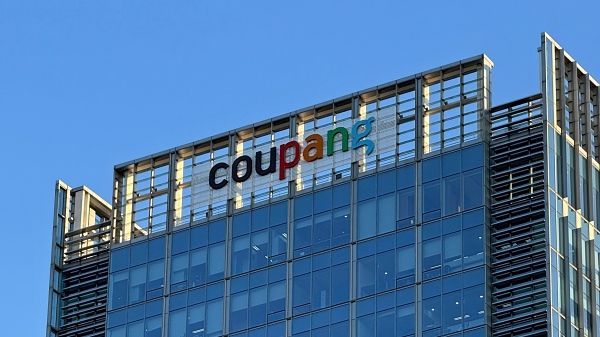
On the 26th, the KFTC announced that it would issue a corrective order and impose a fine of 2,185 million won on Coupang for violating the Act on Fairness in Large Franchise and Retail Business (the Large Retail Business Act). It also ordered the company to return to its trading partners approximately 850 million won in unpaid late?payment interest and about 530 million won in unspent product costs. The investigation found that Coupang had blatantly violated key provisions of the Large Retail Business Act, including: forcing unfair reductions in supply unit prices; passing on costs such as advertising expenses; delaying payment for goods; and failing to return products without justification.
According to the KFTC, for about three years starting in 2020, Coupang pressured suppliers to lower supply prices whenever their performance fell short of the agreed target "pure purchase margin rate (PPM)" by hinting at suspending or reducing purchase orders. In particular, Coupang's buyers (BMs) were found to have squeezed suppliers by contacting them individually via phone calls, text messages, and KakaoTalk messages that would leave no trace.
That was not all. To hit its target margin, Coupang also forced suppliers to run advertising campaigns they did not want, or shifted the cost of such advertising onto them. From the suppliers' perspective, they had no other choice but to accept these proposals, given the overwhelming platform power of Coupang. Regarding this, the KFTC imposed the maximum amount under its calculation standards, levying the highest fixed fine of 500 million won for each type of conduct (demands for price cuts and shifting of advertising costs).
This action marks the first case in which sanctions have been imposed by applying the "statutory payment deadline for direct?purchase product prices" provision introduced in 2021. It was found that Coupang paid a total of 280 billion won owed to 25,715 suppliers up to 233 days later than the statutory deadline, which is 60 days from the date of receipt of the goods. Coupang argued that "the standard date is the day the goods are warehoused after our own inspection and quality check are completed," but the KFTC firmly rejected this arbitrary interpretation, presenting the clear standard that "the date of delivery of the goods is the date of receipt." Accordingly, the KFTC also ordered the immediate refund to suppliers of 853 million won in unpaid late?payment interest.
Coupang also engaged in unfair practices in the operation of its "Coupang Experience Group" program. It appropriated more than 25,000 items, worth about 536 million won, that remained because customers did not participate in the product trials, instead of returning them to the suppliers. The KFTC issued a remedial order to ensure that these costs are effectively returned to the suppliers.
This sanction is significant in that it puts a brake on the practice of large, market?dominant platforms in the rapidly expanding online shopping market unfairly shoring up their profits at the expense of suppliers.
Cho Wonsik, head of the Distribution and Agency Investigation Division at the KFTC, stated, "Going forward, we plan to closely monitor and strictly crack down on any unfair practices by large retailers that abuse their superior bargaining position to shift the risks and costs associated with direct?purchase transactions onto suppliers and infringe upon the legitimate interests of suppliers in order to maintain their own profits, and to take stern action whenever violations of the law are confirmed."
© The Asia Business Daily(www.asiae.co.kr). All rights reserved.












