Licensing Verification and Management Responsibility
Under Fire Amid Claims of Damage by Some 1,200 People
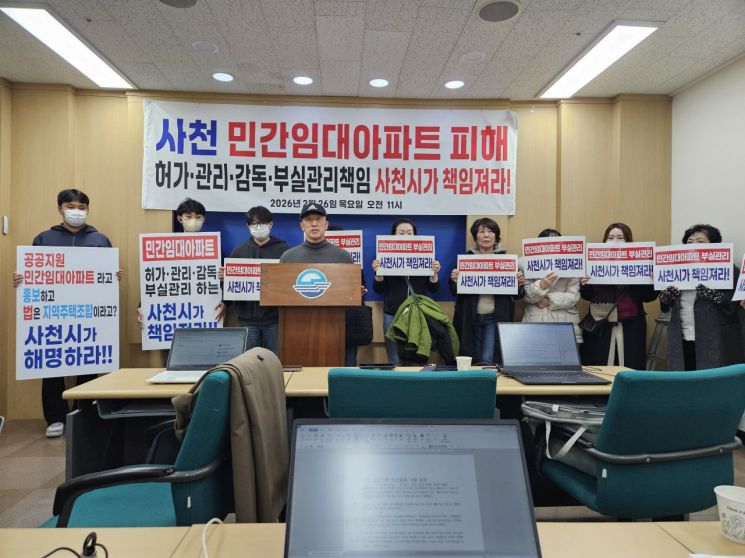
Controversy is growing as approximately 1,200 union members are claiming damages in connection with a publicly supported private rental housing project promoted in Yesu-ri, Jeongdong-myeon, Sacheon City, South Gyeongsang Province.
As project delays drag on for an extended period, union members are complaining of economic hardship, including the burden of loan interest and pressure on living expenses, and attention is turning to similar cases in other cities and counties and to how local governments have responded administratively.
This case is leading to a broader discussion about the structural characteristics of the publicly supported private rental housing system, which is led by the private sector, and about the scope of management and oversight responsibilities of local governments that hold licensing and permitting authority.
◆ Conflicts Repeated in Other Regions
In Yangju City, Gyeonggi Province, privately rented and regional housing cooperative projects in the past were delayed for a long time, sparking disputes over the return of deposits and the transparency of the projects. Some promotional materials highlighted phrases such as "government support" and guarantees, which created expectations regarding project stability, but complaints mounted after it later became known that licensing/permits and financial guarantees are separate matters. At the time, the city held briefing sessions for union members and publicly explained the scope of its administrative approvals and the limits of its authority.
In another Gyeonggi region, Pyeongtaek City, a private rental housing project drifted due to delays in securing land and problems with raising funds, prompting claims of damages from union members. The city set up a dispute mediation channel and established internal guidelines to strengthen the submission requirements for data on funding plans and land acquisition rates when granting permits for similar projects in the future.
In Gwangju City, when questions were raised about the business feasibility of a publicly supported private rental project, the city introduced a regular inspection system and produced and distributed a citizen information notice specifying the meaning of the term "public support" and the scope of the administrative role.
◆ Dispute Over Perceptions of "Public Support" and the Scope of Administrative Responsibility
Publicly supported private rental housing is structured so that private operators take the lead, while a certain level of public interest is incorporated through rent regulation, fund support, and guarantee institutions. However, the general interpretation is that local government licensing and permitting procedures mainly involve reviewing compliance with construction and housing-related legal requirements, and do not constitute a direct guarantee of the stability of project financing or the success of sales or leasing.
The problem arises when terms such as "government support" and "guarantee" are used, as citizens may then perceive that administrative agencies manage and guarantee the project as a whole. Some union members claim that they trusted the stability of the project based on the fact that permits had been granted and that it carried the label of public support.
◆ Calls for Institutional Improvements to Prevent Recurrence
Experts suggest that, to prevent similar disputes from recurring, institutional improvements are needed, including: making it mandatory at the licensing stage to disclose land acquisition rates and the structure of project financing; preparing guidelines for wording in promotional materials that could cause misunderstanding; strengthening step-by-step inspection systems for projects that are significantly delayed; and making dispute mediation channels within local governments permanent.
In particular, given the trust effect created by the policy term "public support," some point out that procedures must be systemically established to clearly notify citizens of the scope of administrative approvals and the limits of administrative responsibility.
◆ Focus on Criminal Investigation and Legal Judgment
In the Sacheon City case as well, criminal complaints are reportedly underway, drawing attention to the results of the investigation and the legal judgments to come. The extent of the damages and the scope of responsibility are expected to be determined through the relevant procedures.
This case is likely to expand beyond an individual dispute in a specific region into a broader social discussion on the need to redefine both the operational structure of the publicly supported private rental housing system and the scope of administrative responsibility.
© The Asia Business Daily(www.asiae.co.kr). All rights reserved.












