Increase of 2,000 won from March 1
Rising production costs of next-generation electronic passports
For reissuance, filing by the 28th is advantageous
Passport issuance fees will increase by 2,000 won starting March 1 next month. This is the first hike in 20 years, driven by higher passport manufacturing costs following the introduction of next-generation electronic passports. For those preparing for overseas travel or considering reissuance of their passports, completing the application within this month will be more economical.
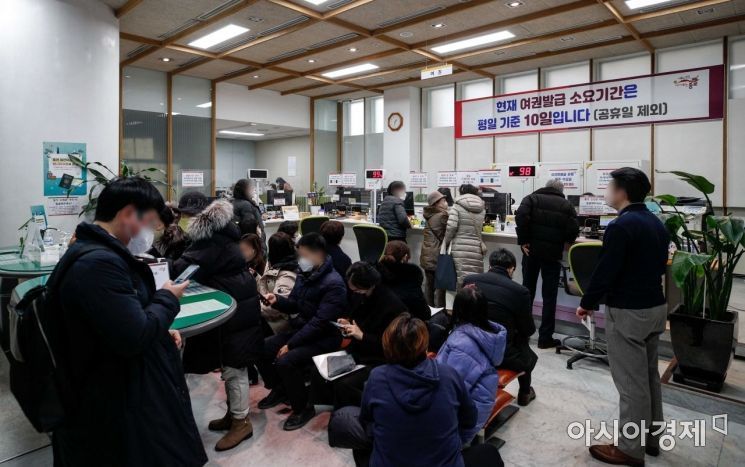 A passport service desk at a district office in Seoul is crowded with applicants seeking to obtain passports. Kang Jinhyung, Reporter
Increase of 2,000 won from March 1... 52,000 won for 10-year multiple-entry passport
On the 25th, the Ministry of Foreign Affairs announced that it will uniformly raise passport issuance fees by 2,000 won from March 1 next month. This measure follows the revision of the Enforcement Decree of the Passport Act. This is the first adjustment of issuance fees in about 20 years since 2005, and the increased fees will apply to applications received from 9 a.m. on March 1.
For the most commonly issued 10-year multiple-entry passport, the fee for a 58-page passport will rise from 50,000 won to 52,000 won. The fee for a 26-page passport will also increase from 47,000 won to 49,000 won. Five-year multiple-entry passports and single-entry passports, which can be applied for by those aged 8 and older, as well as emergency passports, will all increase by the same amount of 2,000 won.
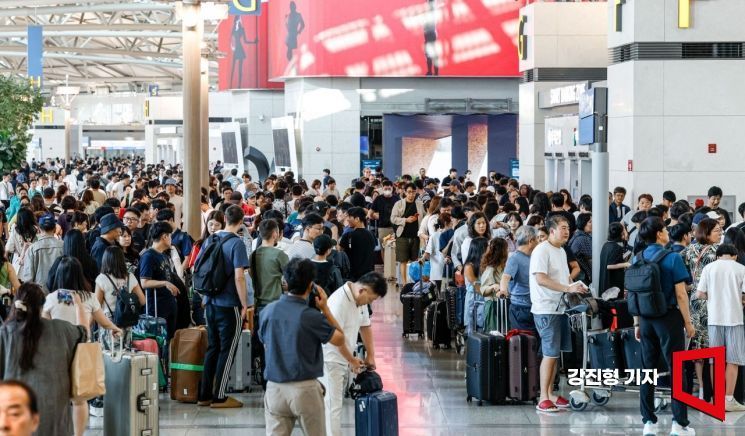 A view of Terminal 1 at Incheon International Airport crowded with travelers. Photo by Kang Jinhyung
Higher production costs... Fee adjustment unavoidable
The main reason the government is moving to raise the fee is higher production costs. Since the introduction in 2021 of next-generation electronic passports made of more secure polycarbonate (PC) materials, rising international raw material prices and semiconductor chip costs have increased the burden of manufacturing expenses, according to the authorities.
The government had frozen the fees in consideration of inflationary pressures, but as the actual production cost continued to exceed the issuance fee, it concluded that a fee adjustment was unavoidable. However, it explained that the scale of the increase was kept to a minimum in consideration of the public burden.
However, the International Exchange Contribution will be kept at its current level. Last year, the government cut the International Exchange Contribution, which is paid together with the passport issuance fee, by 3,000 won, partially easing the burden on the public. With the latest fee hike, however, the perceived effect of that reduction is expected to diminish to some extent.
Applications filed by the end of February will be charged at the current rate
Those considering passport reissuance will benefit by completing their applications by the end of February. In particular, for online reissuance, the applicable fee is determined not by the time of application but by the time of payment, so if payment is completed within this month, the pre-increase amount will apply.
The Ministry of Foreign Affairs stated, "To make it more convenient for citizens to use passports, we will expand passport service agencies to improve access to passport administrative services," adding, "We also plan to introduce new services, such as a mobile passport information verification service."
© The Asia Business Daily(www.asiae.co.kr). All rights reserved.













