Use of Human Botox and Fillers
Undermining the Contest's Focus on Natural Beauty
Manipulation Scandals Recur After Saudi Arabia Case
Animal Rights Group Condemns It as "Clear Abuse"
At a Camel Beauty Contest held in Oman, a large number of camels were disqualified after being caught having been treated with Botox and cosmetics intended for humans. Criticism is resurfacing that human obsession with beauty is now being imposed even on animals.
On February 25, Yonhap News TV, citing the Arab media outlet Al Fallujah TV, reported that controversy has arisen after it was confirmed that 20 camels participating in the Camel Beauty Contest held in Al Musannah on February 8 had undergone artificial cosmetic procedures.
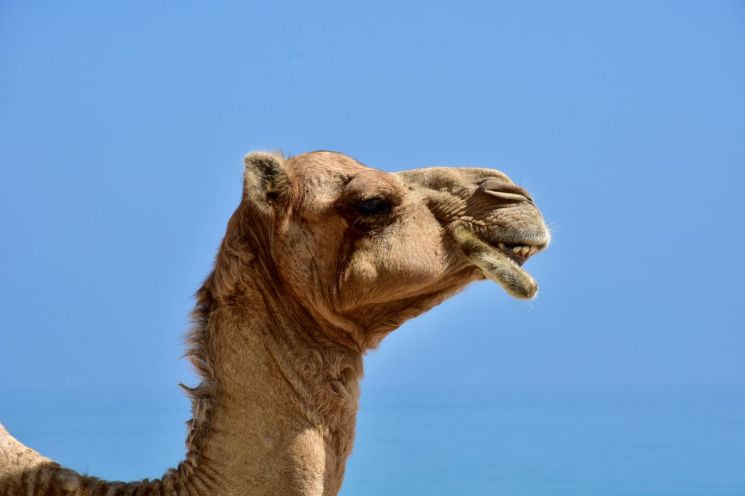 The Beautiful Camel Contest is not merely a competition to select the most beautiful camels; it is a cultural festival that preserves Bedouin traditions and camel culture. Key judging criteria include long eyelashes, a well-balanced hump shape, full lips, and a straight nose line. The winning camel receives a large cash prize and its breeding value rises dramatically, causing its price on the camel market to soar. The photo is not related to the specific content of the article. Pixabay
This contest is regarded as a regional festival held annually with participation from Oman as well as Saudi Arabia, the United Arab Emirates, and other Arabian Peninsula countries. During the judging process, the organizing committee became suspicious when they noticed that the camels' faces and areas around their mouths were abnormally swollen, and carried out detailed examinations. As a result, it was revealed that some camels had been injected with Botox for humans or treated with human cosmetics. The judging panel stated, "We have detected clear violations," and declared, "We apply a zero-tolerance policy to any actions that undermine the purpose of the contest, which is to evaluate natural beauty."
In particular, the contest is not simply an event to select beautiful camels; it is a cultural festival that preserves Bedouin traditions and camel culture. Long eyelashes, a well-proportioned hump, full lips, and a straight nose line are key judging criteria. The winning camel receives a large cash prize and a significant rise in pedigree value, causing its price to surge in the camel trade market. The problem is that, because enormous prize money and prestige are at stake, some participants are resorting to illegal methods. Under the contest rules, all acts that artificially alter appearance, including Botox, fillers, hormones, and plastic surgery, are strictly prohibited.
Such attempts at manipulation are nothing new. Back in 2021, at a large-scale camel festival held in Saudi Arabia, more than 40 camels were also disqualified after being found to have undergone cosmetic procedures. At the time, some camel owners were found to have injected Botox into the nose and jaw and used collagen fillers to enlarge the lips and nose. In some cases, there was evidence that hormones had been administered to promote muscle growth or artificially modify body shape. The organizing committee mobilized veterinary experts and used scientific methods such as X-rays and ultrasound scans to determine whether procedures had been performed. The incident caused a major stir across Middle Eastern society, and the organizers subsequently toughened fines and participation bans. Animal rights group PETA also issued a statement at the time, strongly criticizing that "administering cosmetic procedures to animals is a cruel act" and that "the practice of exploiting animals as tools for human desire must stop."
Above all, Botox and fillers can cause serious side effects in animals. They carry risks such as swelling, inflammation, tissue necrosis, and breathing difficulties, and if procedures are performed by non-professionals, they can lead to fatal outcomes. Experts especially point out that camels have a unique physiological structure adapted to desert environments, making it even more dangerous to apply medications designed for humans to them without modification.
© The Asia Business Daily(www.asiae.co.kr). All rights reserved.