Naver, Toss, and Banksalad Announce Service Launch on the 26th
App Integration as Standard... Linked with Credit Score Boosting Services
After the Financial Services Commission announced that it will introduce a service in which artificial intelligence (AI) agents automatically exercise the right to request interest rate reductions on behalf of consumers, major fintech companies such as Naver, Toss, and Banksalad all announced on the 26th that they are launching related services.
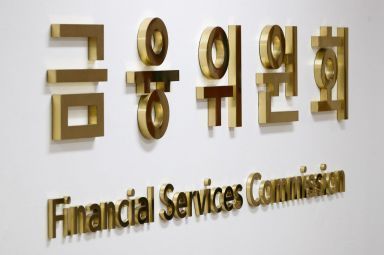
The Financial Services Commission said the previous day that it would begin implementing the "MyData-based interest rate reduction request service" from today. The key idea is that MyData operators (AI agents) detect events such as income growth or higher credit scores and submit interest rate reduction requests on behalf of customers.
The right to request an interest rate reduction is a system under which borrowers whose credit status has improved, for example through employment, promotion, higher income, or a higher credit score, can ask financial companies to lower their interest rates. Until now, consumers had to check changes in their own credit status and file separate applications with each financial institution, which was cumbersome.
MyData refers to a service that allows individuals to ask companies or institutions holding their personal information to transfer that information to another destination of the individual’s choosing.
Previously, in December last year, the Financial Services Commission designated this service as an innovative financial service.
Naver was first to move, announcing that it has opened its "Loan Interest Rate Care" service, which automatically exercises the right to request interest rate reductions.
Once a user applies just once through Naver Pay, the service can continue to be applied to that user’s existing loans. The results of applications are then provided via monthly notifications on the Naver application, in line with the approval schedules for interest rate reduction requests at the financial institutions where the user obtained the loans.
Once an interest rate reduction is confirmed, the reduced rate is automatically applied from the next interest payment date. If the rate is not reduced, the service provides guidance on how to increase the likelihood of approval for a future reduction.
For example, if the borrower is not actively using financial services at the lending institution, the system may recommend opening or increasing deposits or savings accounts, increasing account balances, or adding automatic transfer transactions. If there has been no change in the borrower’s credit score, it connects the user to Naver’s in-app services that can help raise the credit score.
Toss also announced the launch of a related service. With advance applicants for its "Automatic Interest Rate Reduction Application" service, introduced on the 5th of this month, having already exceeded 400,000, the company decided to accelerate the business on the back of the Financial Services Commission’s rollout of the official service.
In the case of Toss, the timing at which each financial institution actually accepts interest rate reduction applications may differ, so Toss has built a function in its app that sequentially informs users, for each partner financial institution, whether applications are currently being accepted.
Banksalad has introduced a similar service. The company plans to differentiate its offering from competitors by automatically applying a "credit score boosting" function before executing an interest rate reduction request.
The Banksalad credit score boosting service is characterized by its use not only of financial MyData, but also of public MyData such as medical information. Its strategy is to conduct a detailed analysis of customers’ credit data, raise their credit scores as much as possible, and thereby help them lower loan interest rates under the most favorable conditions.
According to the company, among mid- to low-credit borrowers who recently used the credit score boosting service, the maximum increase in credit score reached 226 points. Analysis of preliminary loan approval data showed that the expected interest rate could fall by up to 4.6 percentage points.
With fintech companies launching these services, consumer acceptance rates for interest rate reduction requests are expected to rise.
According to the Financial Services Commission, the number of applications for the right to request interest rate reductions came to 1,638,000 last year, down 2,257,000 from 3,895,000 a year earlier. The acceptance rate also dropped to 28.8%, down 4.9 percentage points from 33.7% the previous year. As a result, the amount of interest reduced over the same period fell by 146.9 billion won.
The Financial Services Commission estimates that, once the new services are fully activated, interest payments on loans to individuals and sole proprietors could be cut by up to an additional 168 billion won per year.
© The Asia Business Daily(www.asiae.co.kr). All rights reserved.












