Building a transportation hub, fostering the space and aviation industry, and creating a stay-type tourism city in preparation for the Southern Inland Railway era
With the groundbreaking ceremony on February 6, the construction of the Nambu Naeryuk Cheoldo (Southern Inland Railway) has entered full swing, and Jinju City is systematically preparing to leap forward as a "premium city" that integrates transportation, industry, culture, and tourism, evolving into a future-oriented city where transportation, industry, culture, and tourism are fused.
The city plans to realize its "premium city" vision by ensuring that the benefits of the railway opening go beyond reduced travel time to drive industrial growth, population inflows, and revitalized tourism, while pursuing strategies to build a transportation hub, foster the city as a center of the space and aviation industry, and strengthen the tourism and MICE industries.
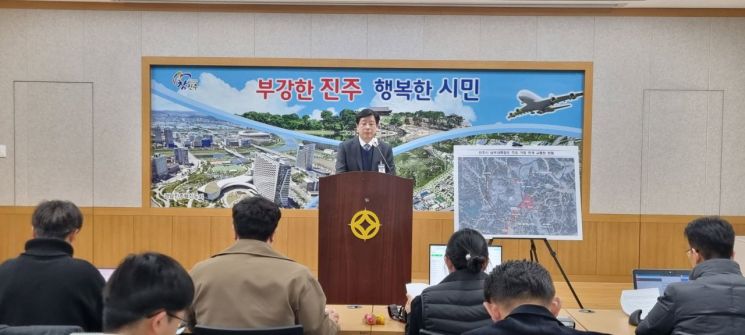
◆Transportation hub of western Gyeongnam... Building an integrated transfer hub
Jinju City is improving accessibility around Jinju Station and strengthening its function as a transportation hub for western Gyeongnam so that citizens can fully experience the benefits of the railway opening.
The city is promoting an expansion project for the station waiting room by utilizing the southern railway space, with the goal of completion by 2031, and will build a public parking tower in the station area by 2027 to respond to increasing railway demand. In addition, the Jinju Passenger Bus Terminal, which is in the process of being relocated, will be connected with Jinju Station and developed into an integrated transfer hub where rail, intercity, express, and city buses are organically linked.
The city has already implemented the Jinju-Sacheon metropolitan transfer discount and the Jinju-type MaaS integrated transportation service. Once the construction of a vertiport, an urban air mobility (UAM) terminal, is completed in the future, a future-oriented integrated transfer system combining rail, buses, UAM, and MaaS is expected to be realized.
In addition, to prepare for growing demand in the space and aviation industry, the city is working to ensure that the construction of a space and aviation railway connecting Jinju Station with the Korea AeroSpace Administration and Samcheonpo Port is reflected in the national railway network plan. At the same time, it plans to expand the metropolitan transportation network in parallel through projects such as the construction of the Jeongchon-Chukdong Road, the connection road between the new Jinju Station area and Jeongchon Maedong, the Munsan-Geumsan Bridge section, and the Jiphyeon-Munsan national highway bypass road.
◆Concentrating the space and aviation industry... Strengthening future growth engines
The city plans to accelerate its leap into a central city for the space and aviation industry, using the railway opening as a catalyst. According to the station area development plan established together with Gyeongsangnam-do, the area around Jinju Station will be expanded and developed into a complex city that combines residential, cultural, industrial, MICE, and logistics functions. Space and aviation companies and future aviation mobility (UAM) companies will be clustered in an urban high-tech knowledge industrial complex, and the construction of a convention center will lay the foundation for attracting international conferences and industrial exhibitions.
The city is also focusing on building infrastructure to become a central city for space and aviation testing and certification. In 2024, it completed and began operating the Korea Aerospace Industries (KAI) Rotary Wing Flight Center, and is also promoting the establishment of a future aircraft (AAV) demonstration center and a space environment testing facility. Going forward, it plans to expand projects to strengthen global competitiveness, including the establishment of an AI platform for safety evaluation of future aircraft for both military and civilian use.
◆Creating a "regional growth innovation belt" linked to the railway
To prevent growth demand from being concentrated in specific areas after the railway opens, Jinju City is creating a "regional growth innovation belt" that connects the station area, Munsan public housing site, Innovation City, and Chojon new urban center.
Through the New Jinju Station Area Urban Development Project, the city has secured land for residential, commercial, and distribution uses and is promoting phased expansion and development of the station area. The public housing development in Munsan-eup will continue until 2032 and will be developed as land for residential and public facilities in preparation for the second relocation of public institutions and the attraction of space and aviation companies. Through the development of the new urban center in Chojon-dong, public office, residential, and commercial functions will also be expanded.
This innovation belt is expected to establish an industry-academia-research cooperation system that links public institutions, relocated public institutions, space and aviation companies, and universities.
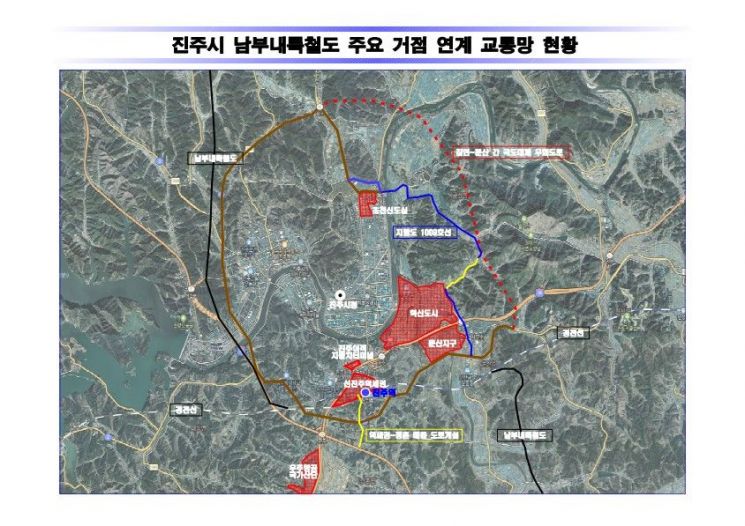 Jinju-si, Nambu Naeryuk Cheoldo - Current status of the transportation network connecting major hubs (Photo)
◆Creating a stay-type culture and tourism hub city
Based on improved accessibility brought by the railway opening, the city is also promoting the creation of a stay-type tourism city. Through the "Three Major Projects for a Prosperous Jinju" - the Wonderful Nam River Project, the regeneration of the former Jinju Station railway site, and the Jinjuho Renaissance Project - the city plans to strengthen region-specific culture and tourism content.
In addition, in cooperation with neighboring local governments, the city will expand a wide-area tourism belt that includes the Yi Sunshin Victory Road, tourism products along the South Coast, and western Gyeongnam tourism programs linked to Jirisan. It also plans to strengthen the foundation for extended stays by expanding accommodation infrastructure such as traditional culture experience centers, Hanok stay facilities, and Wolasan Forest Jinju, and by upgrading tourism incentives.
◆A future premium city completed together with the railway
A city official stated, "The opening of the Nambu Naeryuk Cheoldo (Southern Inland Railway) is a new opportunity factor that will promote the inflow of young people, businesses, and tourists," adding, "We are steadily preparing for a future in which Jinju leaps forward as a key hub city in the southern and central regions."
On the brink of the Nambu Naeryuk Cheoldo era, Jinju City is going beyond being a transportation hub to build a future-oriented urban model that integrates industry, culture, and tourism, thereby fully launching its leap forward as a central city in the southern region of the Republic of Korea.
© The Asia Business Daily(www.asiae.co.kr). All rights reserved.













