Three-year long-term observation in type A hemophilia patients with inhibitors
Adverse drug reactions absent in 91% of patients
JW Jungoe Jeyak announced on the 25th that the final analysis results of a post-marketing surveillance (PMS) study in Japan for the type A hemophilia treatment "Hemlibra" (ingredient name: emicizumab) were recently published in the international journal "Haemophilia."
Hemlibra is an innovative new drug that mimics coagulation factor VIII, which is deficient in patients with hemophilia. Among type A hemophilia treatments, it is the only therapy that can be used by both patients with inhibitors who are resistant to existing treatments (factor VIII products) and patients without inhibitors. It also has the characteristic of maintaining preventive efficacy with a subcutaneous injection given as infrequently as once every four weeks. In May 2023, the scope of National Health Insurance reimbursement was expanded to include patients aged 1 year or older with severe type A hemophilia without inhibitors. In October 2025, it was added to both the World Health Organization (WHO) Model List of Essential Medicines (EML) and the Model List of Essential Medicines for Children (EMLc).
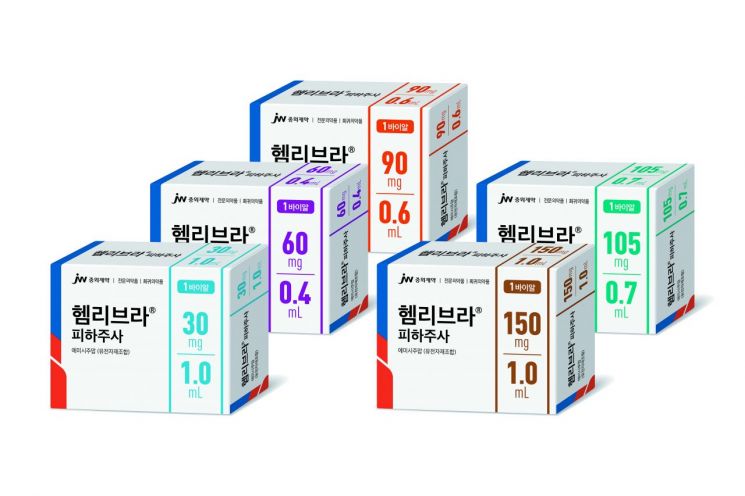
A research team led by Professor Midori Shima of Nara Medical University in Japan evaluated the long-term safety and efficacy of Hemlibra in 134 Japanese patients with congenital type A hemophilia with inhibitors between May 2018 and January 2023. The team set up an "safety analysis set" (134 patients) comprising all treated patients and an "efficacy analysis set" (101 patients) consisting of newly treated patients, and monitored them for up to three years. Among the study subjects, 116 patients (86.6%) had severe hemophilia, and ages ranged from infants aged 0 years to elderly patients aged 78 years.
In the safety assessment, 122 out of 134 patients (91%) in the safety analysis set experienced no adverse drug reactions (ADRs). Notably, during the observation period, a total of 30 patients underwent surgery, including high-risk procedures such as artificial joint replacement. Even when hemostatic agents such as bypassing agents (BPA) were used concomitantly for bleeding control, no thromboembolic events (TE) or thrombotic microangiopathy (TMA) occurred. This suggests that, when hemostatic agents are used concomitantly in accordance with guidelines, surgery can be performed safely in real-world clinical practice without an increased risk of thrombotic adverse events.
In terms of bleeding prevention, the median "annualized bleeding rate (ABR) requiring treatment" in the efficacy analysis set was 1.3 events, indicating a stable level of control. In addition, 53 patients (39.6%) in the overall study population maintained a "zero bleed" status, experiencing no bleeding episodes at all during the treatment period.
A JW Jungoe Jeyak representative said, "These study results are a case that demonstrates the long-term safety of Hemlibra in high-risk situations such as surgery among Asian patients, who share similar genetic predispositions with Koreans," adding, "The fact that more than 91% of patients who received long-term treatment in real-world settings continued therapy and even completed surgeries without adverse reactions will serve as evidence supporting Hemlibra's safety profile."
© The Asia Business Daily(www.asiae.co.kr). All rights reserved.

![Clutching a Stolen Dior Bag, Saying "I Hate Being Poor but Real"... The Grotesque Con of a "Human Knockoff" [Slate]](https://cwcontent.asiae.co.kr/asiaresize/183/2026021902243444107_1771435474.jpg)















