January Nonfarm Payrolls Show "Upward Bias"
Signals Possible Support for Rate Hold if February Jobs Data Remain Solid
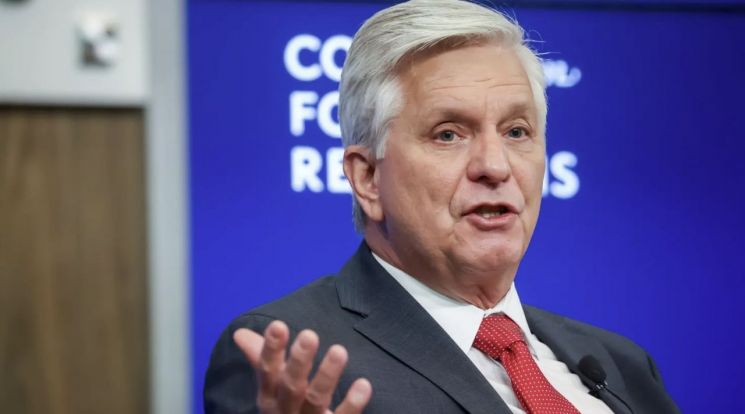
Christopher Waller, a dovish member of the Federal Reserve who is seen as favoring monetary easing, said on the 23rd (local time) that if the February employment data remains solid as in the previous month, he could join the camp supporting a rate hold in February.
In the text of a speech released in advance for the National Association for Business Economics (NABE) conference, Governor Waller said, "If the improvement in January nonfarm payrolls continues into February and we see additional progress toward the 2% inflation target, my outlook could turn more positive," adding, "At the next meeting, I could lean toward holding rates steady."
The U.S. January nonfarm payrolls data released last week showed an increase of 130,000 jobs from the previous month, far exceeding market expectations. The unemployment rate also fell to 4.3%, down 0.1 percentage point from 4.4% in the previous month.
Waller characterized the January nonfarm payrolls figure as having an "upward bias," meaning it was measured higher than the underlying reality. He added the caveat, "If the strong January employment figures are revised down or are not reflected in the February data, then a 0.25 percentage point cut in the federal funds rate would be appropriate."
At the same time, Waller said that, in the current situation, the probability that he will support a rate cut is "close to 50-50."
The Fed cut its policy rate three times in the second half of last year. As the January nonfarm payrolls numbers for this year far exceeded expectations, markets now largely expect the Federal Open Market Committee (FOMC) to keep the policy rate unchanged at its March meeting.
According to the minutes of the January FOMC meeting, most participants indicated that they needed greater confidence that inflation was easing. A few even supported revising the statement to reflect the possibility of a rate hike if inflation were to persist.
Waller also said that the Supreme Court ruling that recent tariffs were unlawful is unlikely to have much impact on Fed monetary policy. He noted, "Central banks have traditionally looked through the effects of tariffs as temporary," adding, "That was the case when tariffs went up, and it is the same when they go down."
Waller said, "Current inflation appears to have risen primarily because of tariffs imposed under the Donald Trump administration," and added, "As companies complete their adjustments to those tariffs, there is a strong likelihood that inflation will also ease."
© The Asia Business Daily(www.asiae.co.kr). All rights reserved.

![Clutching a Stolen Dior Bag, Saying "I Hate Being Poor but Real"... The Grotesque Con of a "Human Knockoff" [Slate]](https://cwcontent.asiae.co.kr/asiaresize/183/2026021902243444107_1771435474.jpg)















