Korea's Animation Industry Has Lost Its Export Momentum
The Breakthrough Lies in Global Multilingual Dubbing and Phased Market Entry
An All-Out "Cultural Transplantation" Strategy Through Localization Is Urgently Needed
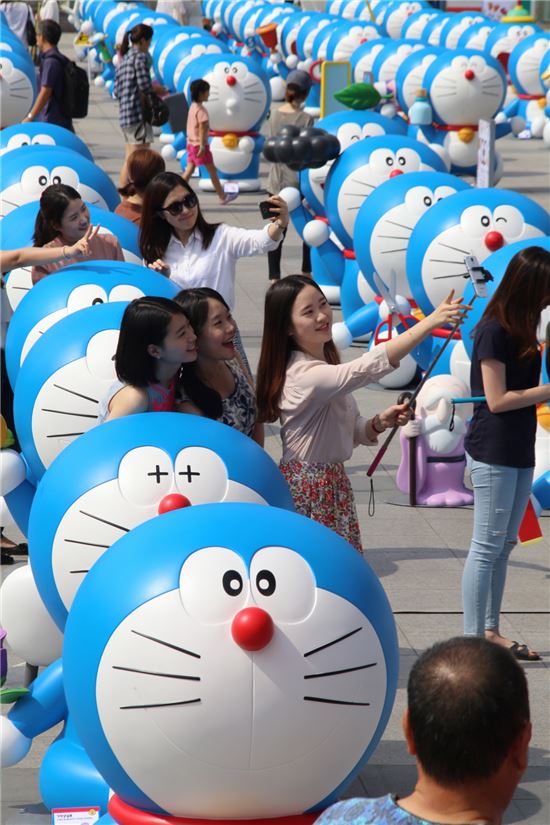 On the 28th, citizens at the Yongsan I'Park Mall plaza are enjoying looking at a line of large Doraemon models.
The Korean animation industry stopped creating global intellectual property (IP) a long time ago. It has been stuck in a prolonged stagnation due to its small domestic market, its heavy focus on infants and toddlers, and its passive, subtitle-centered exports. In this situation, where a breakthrough is desperately needed, the report recently published by the Korea Creative Content Agency (KOCCA), titled "Current Status of Overseas Expansion and Internationalization Strategies of the Japanese Content Industry," offers a survival manual for domestic companies.
According to the report, overseas sales of Japanese animation surpassed 2.1702 trillion yen in 2024, hitting an all-time high. It expanded its territory by using global platforms such as Netflix, Disney+, and Crunchyroll as leverage. The number of overseas contracts surged to 2,152, a sharp increase from the previous year, and the number of countries it entered also grew to 154. By drawing in young people in their 20s and under as its core consumer base, it built a powerful fandom.
The key factor determining overseas sales is not the production company's brand but the intrinsic fun and appeal of the content itself. However, no matter how well-made a title is, it still needs agile sales mechanisms and strategic backing to cross borders.
 Animation 'Pokemon' poster
Japan has increased its chances of success through thorough "cultural adaptation." A prime example is TV Asahi, which has dominated living-room TV in India by broadcasting Doraemon and Crayon Shin-chan there for nearly 20 years. The company not only provided meticulous dubbing tailored to the country's many official languages, but also reconstructed the narratives so they would fit within the context of Indian culture. It fixed viewing habits by concentrating programming in the morning and evening time slots to match children's daily rhythms.
Last year, it also co-produced and aired the 1980s hit title "Obocchama-kun" with a local partner. It reinvented Japanese-style wordplay to suit Indian culture, and even adjusted directing techniques by aligning Japan's traditionally hand-drawn production methods with India's digital production environment.
Its phased localization tactics, which use animation as bait to diversify revenue models, also stand out. Pokemon, the world's No. 1 IP in terms of revenue, has named India as its next target market and set up a local marketing office, investing 2.5 billion yen by March 2028. Taking into account the low penetration rate of console devices in India, it chose an indirect route instead of a head-on approach. It is implementing a four-stage strategy: first securing brand awareness through free distribution of multilingual animation; then building a community through low-priced licensed merchandise and card games in local languages; and finally selling console games.
The publishing industry is also deploying a three-dimensional strategy that leverages animation. Poplar Publishing's "Kaiketsu Zorori" has already dominated the Taiwanese market by combining book publishing with animation broadcasts. Its children's books ranked No. 1 for three consecutive years in the 6-11 age category on the borrowing list of the National Central Library of Taiwan, and its single-volume sales reached 10,000 copies, about ten times the local average. The publisher directly invited the original author to overseas events so local fans could experience the excitement firsthand, and based on that response, it boldly overhauled puns and "old-man jokes" to match local sensibilities.
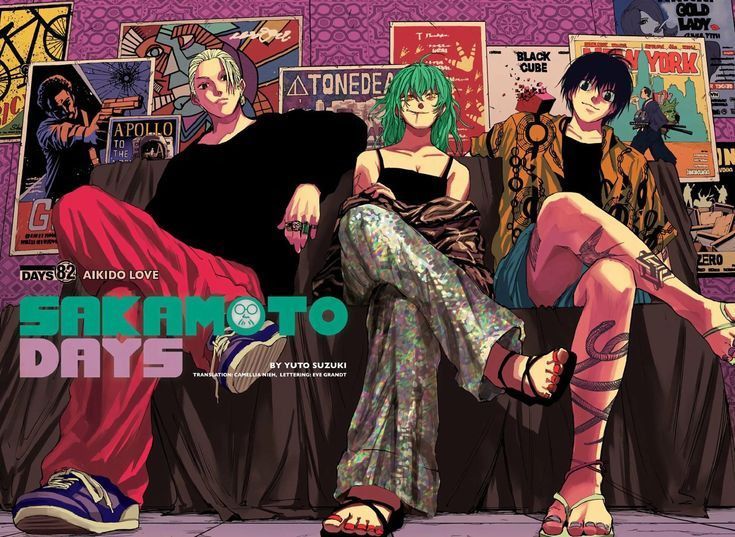
Recently, Japan has expanded the scope of localization through multilingual dubbing and global distribution networks. The standout success story is undoubtedly "Sakamoto Days." Breaking with the convention of staggered country-by-country releases, the producers partnered with Netflix to carry out a simultaneous launch in more than 190 countries. Netflix promotion teams in each country actively ran social media (SNS) campaigns to imprint the weekly-release format on overseas viewers accustomed to binge-watching.
By supporting dubbing in twelve languages, including Indonesian and Arabic, they dramatically lowered the barrier to entry for viewers. In particular, the decision to include Indonesian dubbing was a strategic move based on data showing an increase in animation fans in that country. This is a strategy that Korea's animation industry, which still relies on one-dimensional subtitle exports, urgently needs to adopt.
Lee Hye-eun, head of KOCCA's Tokyo Business Center, who supervised the report, stressed, "To establish a firm foothold in the global market, we must go beyond simply supplying titles, analyze data, and aggressively pursue crossovers that utilize intellectual property (IP) across a wide range of fields."
© The Asia Business Daily(www.asiae.co.kr). All rights reserved.












