Fungal infection spreads in Minnesota
14 confirmed cases, 27 suspected
Difficult to treat with common topical creams
Early diagnosis and blocking contact are key
A rare fungal infection that is transmitted through sexual contact has broken out in clusters in Minnesota, prompting health authorities to issue a public health alert. Officials have warned that it is not easy to treat with common over-the-counter antifungal medications and have urged the public to exercise particular caution.

According to Fox News and other outlets on the 19th (local time), Minnesota health authorities recently warned medical staff and residents that skin infections caused by Trichophyton mentagrophytes genotype VII (TMVII) are spreading in the state.
Spreading through sexual contact...risk of cluster infections
According to the Minnesota Department of Health (MDH), the first confirmed case in the state was reported in July 2025. Since then, 13 additional cases have been confirmed, and 27 cases have been classified as suspected and are under epidemiological investigation.
TMVII belongs to the same group of fungi that commonly cause tinea (ringworm), jock itch, and athlete's foot, but this outbreak is drawing attention because it has been spreading through sexual contact. In the United States, it was first reported in New York in 2024, and the U.S. Centers for Disease Control and Prevention (CDC) has also identified cases in multiple cities. Health authorities said, "As several patients mentioned additional potential contacts during clinical consultations, patterns of cluster transmission have been identified," adding that they have strengthened surveillance systems.
Symptoms similar to ringworm...treatment is more difficult
The main symptoms are round, red rashes that appear on the trunk, groin, genitals, and face. They may be accompanied by itching and pain, and can easily be mistaken for eczema or psoriasis in appearance.
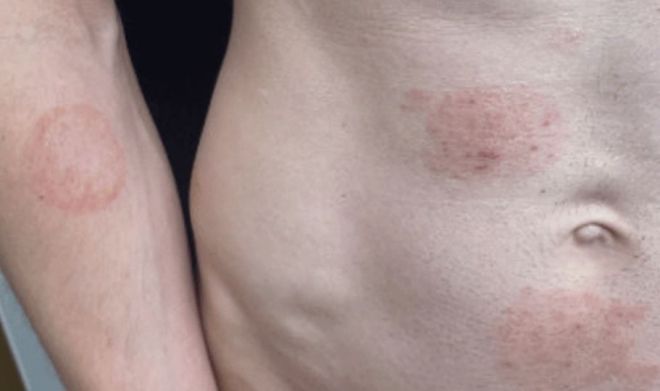 The U.S. Centers for Disease Control and Prevention (CDC) has confirmed that Trichophyton mentagrophytes type 7 (TMVII), a species of fungus, can be transmitted through sexual contact.
Dr. Hayden Andrews, an infectious disease specialist at UT Southwestern Medical Center, explained, "It is similar to typical ringworm, but its presentation can vary depending on the affected area, and it is often misdiagnosed as eczema."
Treatment difficulty is also an issue. Ordinary ringworm usually improves within a few days with antifungal creams, but in many TMVII cases, patients need to take oral antifungal medications for several weeks. Professor Todd Wills of the Morsani College of Medicine at the University of South Florida in Florida said, "TMVII is, so far, the only known sexually transmitted fungal infection," stressing, "If a rash does not respond to initial treatment, additional testing is necessary."
Blocking contact and maintaining hygiene are essential
The infection is transmitted through direct skin-to-skin contact with the affected area. Sexual contact has been identified as the main route, but sharing towels at a gym or walking barefoot in communal showers can also be risk factors.
In particular, people with weakened immune systems may develop more extensive and severe lesions, and if treatment is delayed, the condition may lead to scarring or secondary bacterial infections.

Health authorities have advised that anyone with suspected symptoms should visit a medical facility immediately, avoid skin-to-skin contact, and not share personal hygiene items such as towels and bedding. They also emphasized that thorough hygiene practices, including washing at high temperatures and disinfecting bathrooms, are important to reduce the spread of infection.
© The Asia Business Daily(www.asiae.co.kr). All rights reserved.



















